

























































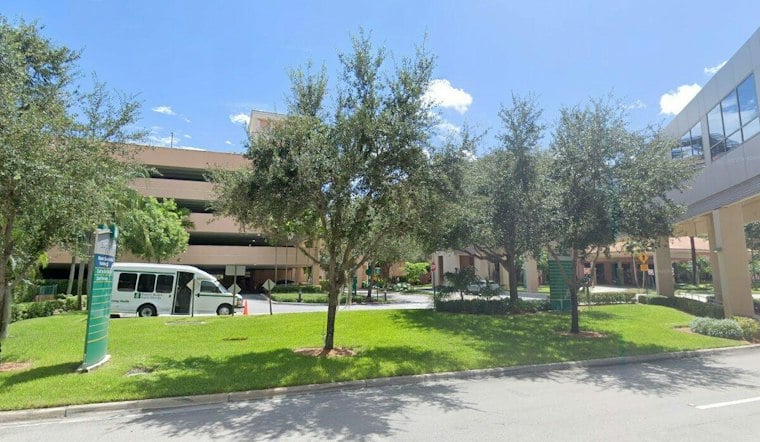
Citadel CEO Ken Griffin has added another $25 million to his philanthropic commitment to Baptist Health South Florida, pushing his total support for the health system's neuroscience program to $75 million. The gift accompanies the renaming of the Miami Neuroscience Institute, which will now be known as the Baptist Health Kenneth C. Griffin Neuroscience Institute, and a groundbreaking for a new 197,000-square-foot facility on the Baptist Hospital main campus in Kendall.
Baptist Health announced the additional $25 million gift on Wednesday, bringing Griffin's total philanthropic support for neuroscience at the health system to $75 million, according to South Florida Hospital News. The new facility is slated to open in early 2029 and will bring clinical care and research together under one roof, allowing physicians and researchers to work side by side, per the same outlet's report.
Griffin's additional gift will also establish the Kenneth C. Griffin Neuroscience Institute Transformational Impact Fund, which will support research, innovation, education and disease prevention, the report notes. Baptist Health board member Bo Boulenger said Griffin's generosity will accelerate research and innovation, educate neuroscience leaders, advance prevention and expand specialized brain and spine care, as reported by the Miami Herald. Griffin himself said Baptist Health's team gives hope to patients and families living with neurological disease, according to the Herald's report.
What the New Building Will Offer Patients
The new institute, located on the Baptist Hospital main campus off Kendall Drive, is expected to add 16 subspecialty providers once it opens, according to the South Florida Hospital News report. The facility will also expand the number of exam rooms and include Baptist Health's first academic lecture theater, the outlet notes.
Beyond added capacity, the building will house outpatient physical, speech and occupational therapy, along with rehabilitation and neuroinfusion services, all under one roof. The expanded space is also designed to grow opportunities for clinical trials and support cutting-edge technologies for treating complex neurological conditions, including dementia, Alzheimer's disease, epilepsy and Parkinson's disease, per the same report.
Building on a Record-Setting 2024 Gift
Griffin's involvement with Baptist Health's neuroscience program began in 2024, when he made a $50 million transformational gift to what was then the Miami Neuroscience Institute. Baptist Health South Florida has said that 2024 donation was the largest single gift in the health system's nearly 65-year history, according to the Miami Herald. At the time, Baptist Health said the gift could potentially double or triple its research capabilities.
The Herald's earlier reporting on the 2024 announcement said groundbreaking would happen in 2025 and the building would open roughly three years later, while the 2026 announcement from Baptist Health places the opening in early 2029. Griffin, who serves as chief executive officer of Citadel, has also made headlines well beyond South Florida's hospital system this year. In late September, his $3 billion pledge to Carnegie Mellon University, intended largely to help build a campus in Wynwood, was described by the New York Times as the biggest single gift in the history of U.S. higher education.
A Broader Push to Expand Brain and Spine Care
Griffin's investment comes amid a wider regional push to build out neurological care capacity. Elsewhere in South Florida, the Marcus Neuroscience Institute received a $32 million grant from The Marcus Foundation, according to Baptist Health South Florida. The scale of Griffin's commitment, now totaling $75 million across two gifts, stands out even against that backdrop as hospital systems across the region compete to expand specialized brain and spine programs.



