

























































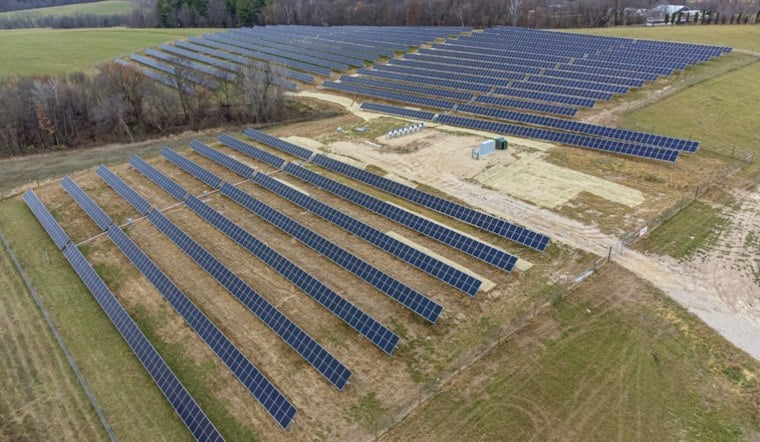
Knox County commissioners voted Wednesday to overhaul the county's solar energy ordinance, expanding setback distances near homes and adding new soil and water monitoring requirements after months of pressure from residents worried about the county's fast-growing utility-scale solar industry. The revised rules increase the setback for a home located on one side of a solar project by 100 feet, and set a 500-foot buffer when a home sits on more than one side of a project.
According to WTHI-TV, Knox County Commission President T.J. Brink said the added monitoring requirements are meant to help protect nearby residents and their well water. Brink said the ordinance changes were crafted to comply with state law while still adding safety measures county officials felt residents needed. The proposed changes now head to the Knox County Area Plan Commission for review, and if approved there, they will return to commissioners for further consideration.
The vote itself cleared on a 2-1 margin during the ordinance's first reading, according to GIANT fm, which reported that commissioners also debated expanding setbacks even further, to 750 feet, before that proposal failed for lack of a second. The station noted the measure heads to the Area Plan Commission before returning for second and third readings.
A 2020 Baseline That Residents Called Too Thin
Knox County first adopted commercial solar standards under Ordinance No. 2020-2, which set a baseline setback of just 200 feet from non-participating residential properties, according to a Purdue Extension review of the county's zoning guidelines. That baseline covered incorporated and unincorporated areas of the county alike, but residents later argued it left too little room between industrial-scale solar arrays and their homes.
More than 600 Knox County residents organized into the Knox County Coalition for Safe Solar, campaigning for expanded setbacks and new rules governing battery energy storage systems. The group highlighted that Knox County's 200-foot setback was among the shortest in Indiana, per the coalition's own account on its website.
State Law Sets Limits on How Far Counties Can Go
Brink said Indiana law limits how restrictive county solar rules can be, even as it allows for added safety measures, a constraint rooted in state legislation passed years before this week's vote. Indiana lawmakers enacted Senate Enrolled Act 411 in March 2022, establishing voluntary statewide siting guidelines for commercial solar and wind projects, according to a LegiScan record of the law. The act set voluntary default standards covering setbacks, noise, fencing, glare, and decommissioning for what the law calls solar energy ready communities.
A Purdue Extension land-use study published in February 2023 found that 54 Indiana counties had adopted commercial solar regulations in their zoning codes, but none fully aligned with all 11 voluntary standard categories created under the 2022 state legislation. That study underscores the patchwork of local rules county officials elsewhere in Indiana have also had to navigate while trying to satisfy both residents and state guidelines.
Months of Hearings Preceded the Vote
The revisions followed discussions with residents about potential changes to county solar regulations, and Brink said officials tried to address constituents' requests within the bounds of state law. That process included formal input from the Knox County Area Plan Commission, which passed Resolution No. 2026-1 in February to transmit non-binding recommendations to commissioners following public hearings held in December 2025 and January 2026.
Commissioners also held a public informational meeting in August at the Blue Jeans Center in Monroe City, bringing in panelists to address emergency response, property values, economic development, and vegetation management tied to utility-scale solar and battery storage, according to coverage from WVUT-TV at the time. The outreach came as multiple large solar developments have moved through the county's pipeline in rapid succession.
A County Already Hosting Massive Solar Investment
Knox County's first operational utility-scale solar farm, Origis Energy's 210-megawatt Wheatland Solar project, came online in February under a 20-year power purchase agreement with CenterPoint Energy, according to a release carried by PR Newswire. The project supported roughly 360 peak construction jobs and now supplies power to utility customers across southwestern Indiana.
The county council also approved a final Economic Revitalization Area designation and a 10-year, 75% tax-abatement schedule in July for Iona Solar LLC, a proposed solar and battery storage project valued between $675 million and $1 billion spanning roughly 2,400 acres in Harrison and Johnson townships, according to WVUT-TV. Representatives of that project estimated it would generate $400 million in property taxes over its lifespan along with $1 million in annual economic development payments to the county. Clean energy developers Arevon and Tenaska are separately developing the 150-megawatt Blue Jeans Solar project in southern Knox County, which held community open house meetings in Monroe City to brief nearby residents on its plans, per WVUT-TV's earlier reporting.





