

























































The Pacific Marine Mammal Center has reopened its doors in Laguna Beach after a three-year, $20 million expansion, welcoming back visitors for the first time since the facility closed to the public in October 2023. The nonprofit spent the closure operating out of a temporary field hospital while crews upgraded its campus, expanding from seven pools to 10 and adding a closed-loop water recycling system designed to support the center's marine mammal rescue operations.
According to the Los Angeles Times, the center was founded in 1971 and had previously ranked behind only municipal government in the city's water usage, since staff were cleaning and filling pools three times a day before the upgrade. The new $5 million water recycling facility covers 2,000 square feet and allows the center to reclaim roughly 5 million gallons of water annually. Kelly Hawkins said the closed-loop system improves water quality and animal care, reduces eye and health issues in patients, and helps with open wounds, according to the same report.
New Pools Built for Bigger Patients
Pool temperatures across the facility can now be held within a four-degree range year-round, with specific pools isolated to meet individual animals' needs, the Los Angeles Times reported. A new 10,000-gallon rehabilitation pool means the center can now treat larger marine animals such as dolphins, a capability it didn't previously have. A 5,000-gallon pre-release pool, named in honor of the Nicholas W. Gross family, is used to assess whether patients can forage on their own before they're released back into the wild; it also includes an underwater viewing window that Kelsey Reames called a main attraction.
Per the Orange County Register, the completed 10-pool expansion increased the number of pools from seven to 10 and expanded the center's capacity for marine patient care. The timing of the reopening means the center currently has zero animals on-site to show off that new capacity — as of last Thursday, the facility had no patients, according to the Los Angeles Times — though Kelsey Reames said she expected animals eventually. Kelsey Reames said visitors still came to see the reopened facility even with no animals present.
A Century-Old Barn Becomes a Modern Hospital
The campus sits on the site of a Society for the Prevention of Cruelty to Animals barn; city leaders offered the site to the nonprofit in 1976, according to the center's own history as cited by Stu News Laguna.
Beyond the pools, the rebuilt campus includes a 1,600-square-foot education classroom and a media center and studio — funded by Greg and Barbara MacGillivray — that will support distance learning programs, speaker series and presentations, per the Los Angeles Times. The treatment suite now includes a public viewing window, and the center added Winston, a life-sized inflatable gray whale used as a mobile classroom, along with a remote podcast studio built to deliver healing seals programming to children's hospitals across the country. Interim Chief Executive Blair Contratto said the center's mission includes inspiring ocean stewardship.
Shared Space and Public Art
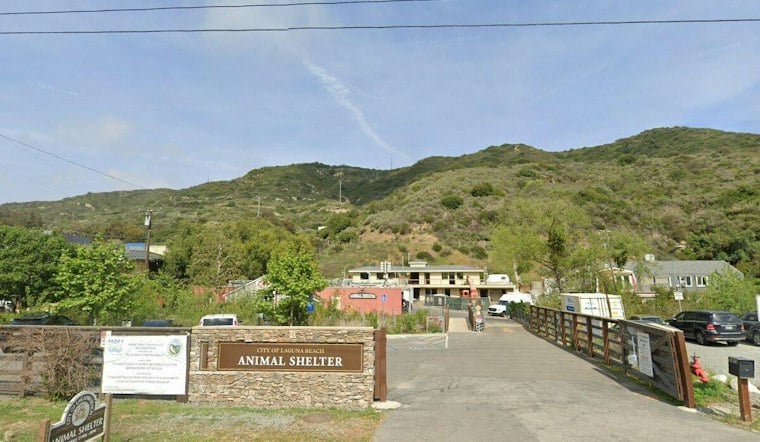
A new 2,000-square-foot Center for Collaboration houses PMMC's necropsy suite, development office and reception deck, and the building shares space with the Laguna Beach Animal Shelter, the Laguna Beach Police Department and the Orange County Sheriff's Department, the Los Angeles Times reported. The campus also features new public art: Casey Parlette created a sculpture called In Pursuit depicting marine mammals within an ecosystem, Mike Tauber built the Friends of the Sea Lion tile wall using tiles painted by PMMC donors, and Chris Barela worked with Emma Crespo and Jordan Tacker — both of whom attended Laguna College of Art and Design — on a dolphin and elephant seal pool mural. Laura Frost, who coordinates the center's distance learning and after-school programs, created an underwater marine mammal mural for the education center.
NOAA officials certified on October 6 that PMMC met the facility, husbandry and veterinary rehabilitation requirements necessary to resume operations, according to the Los Angeles Times. Federal law and NOAA regulations prohibit untrained civilians from attempting marine mammal rescues or disentanglements, restricting that work to authorized organizations operating under specific permits, as Hoodline has previously reported.
A Growing Caseload Driving Regional Expansion
So far this year, PMMC has responded to 146 stranded marine mammals, including 102 sea lions, 16 fur seals, nine cetaceans, eight elephant seals, seven sea turtles and four harbor seals, per the Los Angeles Times. Those numbers follow a far more severe stretch in 2025, when a toxic algae bloom led PMMC to care for more than 500 animals in a single year, according to the center's own officials. During that unprecedented domoic acid outbreak, the center responded to 337 stranded marine mammals in just six months — well above its historical baseline of 150 to 200 responses per year, per the organization's figures.
The scale of that crisis extended beyond pinnipeds. PMMC necropsy biologists confirmed in April 2025 that severe domoic acid toxicosis from harmful algal blooms was linked to the deaths of multiple large marine mammals off Orange and Los Angeles counties, including a juvenile humpback whale in Huntington Beach and a minke whale in Long Beach, according to the center's necropsy findings. Marine mammals also face climate change and human-related threats, per The Marine Diaries.
PMMC's rebuild is not happening in isolation. Hoodline has reported that the campus overhaul reflects a broader regional push to modernize marine wildlife infrastructure across Southern California, including a planned $65 million marine mammal hospital at King Harbor in Redondo Beach. Nationally, confirmed marine mammal strandings reached 8,028 cetaceans and pinnipeds in 2024, noticeably above the 2006-2023 annual baseline average of 6,333 strandings, according to NOAA Fisheries data cited by Hoodline. In May 2025, California State Senator Tony Strickland recognized PMMC as the 2025 California Nonprofit of the Year for Senate District 36 for its rescue and educational work across 52 miles of Orange County coastline, a nod to the role the Laguna Beach center plays in a stretch of coastline that keeps testing its limits.





