

























































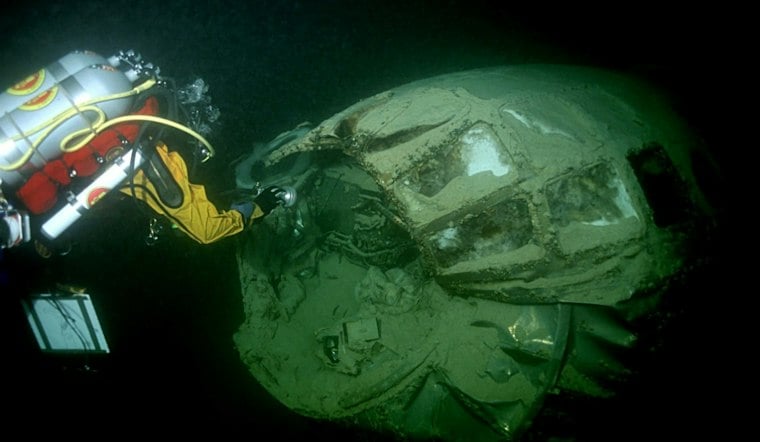
A World War II-era B-29 Superfortress bomber resting on the bottom of Lake Mead is edging closer to the surface as the reservoir's water level continues its long decline, giving divers an increasingly clear view of a plane that has sat submerged since July 21, 1948. The 85-foot aircraft once rested beneath roughly 260 to 280 feet of water, but decades of drought have brought it up to a depth of around 100 feet, a shift that has made the wreck far more reachable for advanced recreational divers.
A Crash That Became a Cold War Secret
According to KLAS 8 News Now, the bomber struck Lake Mead at 230 miles per hour around 12:30 p.m. on July 21, 1948, and sank to the bottom soon after. All crew members survived the crash, and the station reports it has asked Lake Mead officials to confirm the plane's current depth and another report about the historic aircraft, with plans to update the story once officials respond. The plane's location stayed hidden for decades until a B-29-shaped mass appeared in map data of the lake's Overton Arm in the early 2000s, finally revealing where the bomber had come to rest.
What the station's report doesn't dwell on is just how unusual this particular B-29's mission was. The bomber, serial number 45-21847, rolled off the assembly line at Boeing's Wichita plant on September 13, 1945, 11 days after Japan's surrender. Instead, it was stripped of its weapons and converted into a flying laboratory. At the time it went down, the aircraft was assigned to Project APOLLO, but its specific flight assignment was unclassified. It was testing an experimental optical system called the Sun Tracker, which measured light intensity at different altitudes, including infrared, and may have contained components later adapted for heat-seeking missiles.
How the Plane Hit the Water and Survived Intact
The ditching itself was violent. The plane slammed into the lake at 230 miles per hour, tearing off three engines and setting the fourth ablaze, yet the pilots managed to keep the aircraft level long enough for all five crew members to climb into life rafts before it slipped beneath the surface 12 minutes later, according to the Nevada Independent. The bomber is remarkably intact and is considered the most original of its kind remaining. The aircraft earned a spot on the National Register of Historic Places on April 20, 2011, cementing its status as a protected heritage site rather than just another lake-bottom curiosity.
Open to Divers, But Strictly Look-Don't-Touch
The fuselage was once restricted to a small pool of qualified divers, but per Lake Mead officials cited by KLAS 8 News Now, it is now open to any diver up to the challenge. Lake Mead National Recreation Area says it is working to balance recreational access with protection of the site, and per the same officials, the area is open for observing, not touching, with divers expected to follow leave no trace principles. Diving resumed in April 2015 under a commercial-use authorization.
That open-access approach rests on a legal backbone that gives the wreck permanent federal protection. Under the Sunken Military Craft Act of 2004, every submerged U.S. military aircraft, this B-29 included, remains sovereign government property indefinitely, meaning any unauthorized disturbance, recovery, or salvage attempt is illegal regardless of how shallow the water gets.
Quagga Mussels and Staffing Gaps
Invasive quagga mussels are present in Lake Mead.
As Hoodline reported in August, the National Park Service quietly suspended its internal dive team operations at Lake Mead in mid-May 2026 due to staffing shortages and unmet training standards, handing underwater recovery and site monitoring duties to local agencies including the Las Vegas Metropolitan Police Department dive team.





