

























































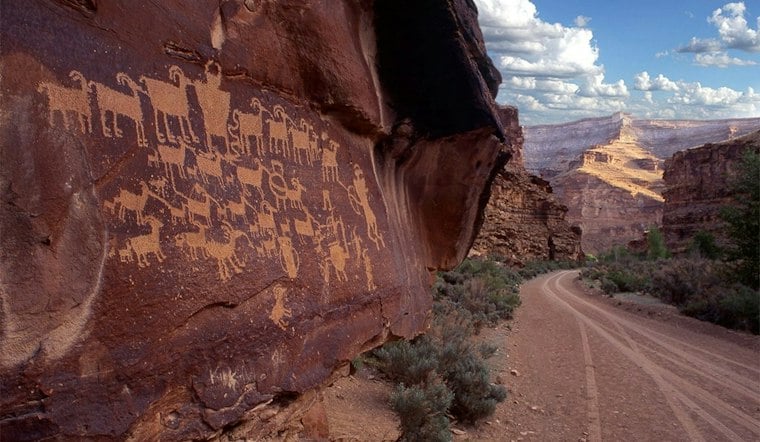
A coalition of conservation groups has sued the federal government over a plan to blast 100-foot canyon walls and pave a winding dirt road in eastern Utah to create a highway for oil tankers. The project, known as Gate Canyon Road, sits just north of Nine Mile Canyon, a corridor the Bureau of Land Management itself has called the world's longest art gallery for its thousands of ancient rock art images.
The Nine Mile Canyon Coalition, the Southern Utah Wilderness Alliance and the Center for Biological Diversity filed the 50-page federal lawsuit on Tuesday in the U.S. District Court for the District of Utah, according to Courthouse News. The groups had already issued formal statutory notices of intent to sue months earlier, per the Southern Utah Wilderness Alliance. The U.S. Bureau of Land Management is named as the defendant, and the lawsuit was filed in the court's central division, as the New York Post reports.
The contested project, formally titled the Wells Draw Road Amendment – Gate Canyon, was authorized on April 28 by the BLM's Vernal Field Office. It grants Duchesne County Special Service District #2 permission to realign and pave 5.3 miles of road, according to the Bureau of Land Management.
Massive Earthmoving Planned in a Scenic Backcountry Byway
The project would straighten the route and blast through 100-foot canyon walls, the coalition said in a statement reported by Courthouse News. Conservation groups argue the work would damage the canyon.
Gate Canyon runs north off Nine Mile Canyon, located roughly 100 miles southeast of Salt Lake City, per the Post's reporting. Nine Mile Canyon stretches about 46 miles and holds more than 1,000 native rock art sites containing over 10,000 images, some dating to prehistoric times, according to the same report. The BLM designated the road through Nine Mile and Gate Canyons as a Scenic Backcountry Byway in 1991 and later established Nine Mile Canyon as an Area of Critical Environmental Concern in 2008, the coalition noted in its statement.
Buffalo Soldiers' Carvings Among 47 Historic Sites
In 1886, Buffalo Soldiers of the U.S. Army's 9th Cavalry built a road and strung a telegraph line through Nine Mile Canyon, according to research published by Utah State University Digital Commons. The lawsuit says soldiers carved their names into the canyon's rock walls, and freighters and pioneers later inscribed their own names using axle grease, according to the Post.
Federal surveys cited in the lawsuit found that 43 of the 47 historic sites identified along or near Gate Canyon Road are eligible for listing on the National Register of Historic Places, The Times of India reports. The canyon's cliffs also provide habitat for threatened species including the Mexican spotted owl, according to the Post.
A Third Attempt After Two Failed Proposals
Duchesne County previously submitted similar proposals to realign and pave Gate Canyon Road in 2015 and 2022, but both earlier efforts stalled or were abandoned following strong public opposition, according to the Southern Utah Wilderness Alliance. Plaintiffs argue the BLM bypassed public involvement this time specifically to avoid the backlash that sank the earlier attempts.
The complaint alleges the BLM posted minimal project details in March 2026 and denied requests for public participation before approving the project the following month, Courthouse News reports. Plaintiffs also claim the approval violated the National Environmental Policy Act, the National Historic Preservation Act and the Endangered Species Act, per the Post. The lawsuit states the BLM rushed its April decision and hid the process from the public.
Why the County Wants an Oil Truck Highway
Environmental filings project the upgraded corridor would carry up to 1,000 vehicles daily, turning the route into an industrial truck corridor where 70-foot oil tankers pass through at a rate of one every seven minutes, according to the Center for Biological Diversity. Those trucks would move Uinta Basin crude oil to transloading facilities in nearby Carbon County.
The U.S. Department of the Interior said it had no comment on the matter due to pending litigation, according to the Post. The dispute arrives amid a broader push by the Trump administration to expand domestic oil and gas production, speed permitting and loosen environmental restrictions in pursuit of what it calls energy dominance, the Post reports. A U.S. judge separately blocked the administration from building a border barrier through Big Bend National Park in Texas weeks before the lawsuit was filed, per the same report.



