

























































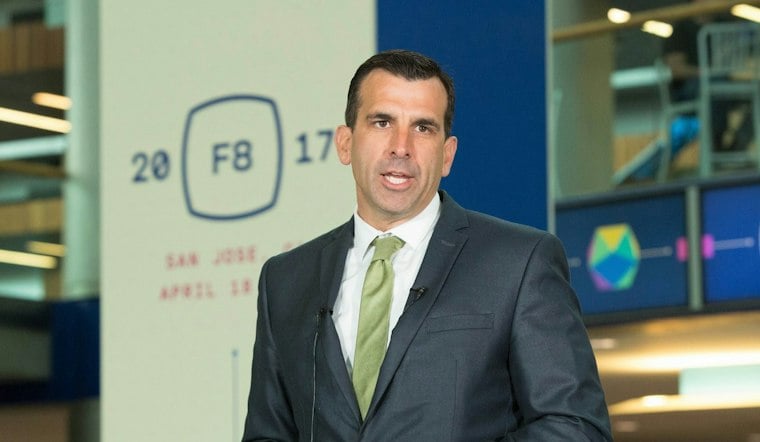
Rep. Sam Liccardo's bill to restore deportation protections for Afghan refugees has gone nowhere since lawmakers introduced it this summer, so the Silicon Valley Democrat is reaching for an unusual tool: a discharge petition that could force a floor vote without House leadership's blessing. Liccardo plans to file the petition once Congress returns from recess, aiming to bypass the committee process that has left the Afghanistan TPS Act of 2026 stuck in limbo.
As reported by The Mercury News, Liccardo co-authored the bill with Reps. Jason Crow, Don Bacon and Maria Salazar, and he has said the measure now carries five Republican co-sponsors. The legislation would make Afghan immigrants eligible again for Temporary Protected Status and shield them from deportation while their immigration cases proceed. Liccardo has argued that the country should keep its promises to Afghans who risked their lives supporting the U.S. military, a commitment he says has frayed since American forces withdrew from Afghanistan in 2021.
Temporary Protected Status exists to protect people who cannot safely return home because of conflict or disaster, and the Biden administration granted it to eligible Afghans in 2022. According to AfghanEvac, the new bill would designate Afghanistan for TPS through July 1, 2029, while still requiring applicants to undergo biometric and national-security vetting, with the Department of Homeland Security required to decide each case within 90 days. The organization describes the measure as one that protects vetted allies already in the United States from deportation to the Taliban and restores their right to work.
A Termination With Conflicting Dates
The Trump administration ended Afghan TPS in 2025 as part of a broader rollback that halted protections for immigrants from 13 countries. The federal record on exactly when that termination took hold is not entirely consistent: the U.S. Citizenship and Immigration Services stated that TPS benefits for Afghanistan were no longer in effect as of July 22, 2025, while a notice in the Federal Register listed the termination's effective date as July 14, 2025.
Per the Bay Area News Group's reporting, more than 8,000 Afghan refugees nationally face deportation risk as a result. Fremont is described in that reporting as home to one of the largest concentrations of Afghan immigrants in the country, giving the stalled bill outsized local stakes even as it sits in Washington gridlock. H.R. 9899 was read twice and referred to the House Committee on the Judiciary, according to a bill-status record from GovInfo, where it has remained since.
Why a Discharge Petition
House leadership controls which bills proceed out of committee, and a discharge petition is the rarely used workaround: once it collects at least 218 signatures, it forces a floor vote regardless of what leadership wants. The Office of the Clerk of the U.S. House maintains a public search page for discharge petitions filed in the current session. Once considered rare, the maneuver has become more common during the Trump era, the Mercury News reporting notes.
A recent precedent shows how the tactic can work. A discharge petition tied to a Haitian immigrant TPS bill reached 218 signatures after four Republican House members signed on, and the House went on to pass that Haiti TPS measure on April 16, 2026, according to House floor records. Rep. Ro Khanna and Rep. Thomas Massie also used a discharge petition last year in their effort to obtain investigative records related to Jeffrey Epstein, another example of the rule cutting across party lines when lawmakers want to force leadership's hand.
The Political Math Ahead of the Midterms
House Speaker Mike Johnson is governing with a razor-thin majority, where Democrats hold 214 seats, and the House majority faces real electoral risk in the upcoming midterm election. A spokesperson for Johnson did not respond to a request for comment for the Mercury News story, but the spokesperson previously told reporters that discharge petitions are typically used against the majority party and are unwelcome.
Liccardo has said he expects increased interest in his bill after the election, particularly from Republicans and especially those with Afghanistan military service in their backgrounds, and he has suggested that Republicans up for reelection may be more willing to sign on once voting is behind them. Control of the U.S. House will be decided on November 3, 2026, just days before Liccardo says he plans to file the petition.
Donna Crane, a lecturer in San Jose State University's political science department, told the Mercury News that discharge petitions give the minority party a powerful means of influencing the House floor schedule, and that Republicans have used the tool in the past to distance themselves from President Donald Trump. Joseph Azam, a Berkeley resident and board chair of the Afghan-American Foundation, said the stalling of Liccardo's bill has been frustrating but that he supports the discharge petition strategy. Azam has said that ending TPS shook people's belief that protecting Afghans is a bipartisan priority, and he has urged supporters to use every available tool to defend Afghans and hold members of Congress accountable.





