

























































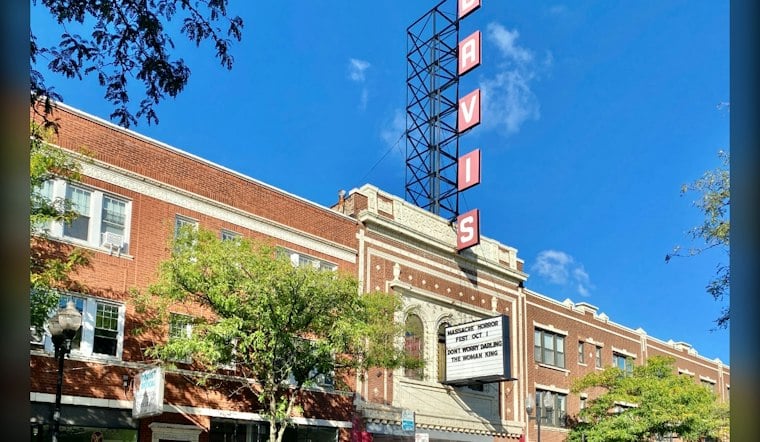
A brand-new Chicago film festival is drawing a hard line against artificial intelligence this week, banning AI-generated art from its lineup while spotlighting queer, BIPOC, neurodivergent, disabled and women filmmakers. The inaugural Dare To Dream Film Festival takes over the historic Davis Theater in Lincoln Square on Wednesday, with doors opening at 6 p.m. and an 11-film showcase starting at 6:30 p.m.
The festival was founded by Bridget Johnson, a queer Chicago filmmaker who built the event to give independent filmmakers lacking resources a place to make and show their work, according to Block Club Chicago. “Story was always our number one priority,” Johnson said, per the same report. The festival drew more than 80 submissions through FilmFreeway and social media solicitations, and Johnson said she selected shorts based on the strength of the filmmaking rather than a project's budget or resources.
Every filmmaker who submits, whether accepted or not, gets free, actionable feedback from the festival's programmers. “I wanted filmmakers to leave with something useful for their next project,” Johnson said, according to the outlet's report. That ethos extends to the festival's explicit ban on AI-generated art, a policy Johnson tied directly to the craft itself: “Filmmaking takes so much creativity, collaboration and perseverance,” she said.
A Festival Built Around Queer Joy and Hard Stories
The 11-film lineup spans comedy, drama, documentary and animation, with the festival explicitly built to celebrate queer joy alongside weightier stories. Among the selections is an Italian short about an older lesbian grieving a past relationship while celebrating her first Pride without her ex-wife, and a handmade animated film tracking a queer couple through six years of their relationship, including a gender transition. A documentary turns its lens on Chicago's prison-abolition community and incarcerated artists finding connection through theater, while another documentary short follows a young Irish Catholic queer woman in 1940s Chicago who became a nun.
Before the screening, attendees can take part in interactive networking, tarot readings and other activities, with a Q&A and award ceremony following the films. General admission runs $25, with a $50 VIP ticket also available, and award-winning filmmakers will receive professional cameras through a collaboration with Canon.
Dare To Dream's Stand Fits a Larger Industry Fight
Dare To Dream's anti-AI stance lands amid a widening split in the film world. The 79th Festival de Cannes formally barred generative AI-driven films from its Official Competition and Palme d'Or eligibility in April 2026, with festival leadership arguing that a film is a personal vision rather than an assembly of data, according to AI FILMS Studio. Meanwhile, the number of global film festivals accepting AI-generated submissions jumped from eight in 2024 to more than 30 in 2026, generating over 12,000 AI film entries across the 2025-2026 circuit, per the AI Film Institute's festival tracker as reported by the NerdFX Blog. Federal legal rulings in 2025 and 2026 also established that purely AI-generated artwork lacking substantial human creative input cannot receive copyright protection, affirming the U.S. Copyright Office's human-authorship requirement, according to the Legal Compliance Guide.
Johnson's own track record runs through youth and queer representation in independent film. She founded Dare to Dream Productions at age 17 and first gained online attention for her short film The Girl at the Library, which racked up more than 1.2 million views on YouTube, according to her FilmFreeway profile. She also won Best Documentary at DePaul University's film festival in 2022 for Breaking the Barrier, a short about an inclusive Chicago skate collective.
Ticket Proceeds Head to Immigrant Rights Group
A portion of festival proceeds will support Organized Communities Against Deportations, which works to support immigrant communities in Chicago. OCAD was co-founded in 2013 as an undocumented-led grassroots advocacy group fighting immigration detentions, deportations and the criminalization of Black, brown and immigrant Chicagoans, according to Justice Power. The group evolved out of the Immigrant Youth Justice League, which pioneered undocumented youth organizing in Chicago starting in 2009.
OCAD's advocacy record extends beyond immigration defense. The group co-led the “Erase the Database” coalition campaign, which contributed to a 2023 vote by the Community Commission for Public Safety and Accountability that called off plans for a new police gang tracking database critics argued targeted Black and Latino residents, according to Organizing My Thoughts. An official 2019 audit had found more than 134,000 individuals listed in the existing police database, 95 percent of whom were Black or Latino, per the same account.
Lincoln Square's Historic Theater Sets the Stage
The festival's home, the Davis Theater at 4614 N. Lincoln Ave., has anchored Lincoln Square's cultural life since it was built in 1918 as the Pershing Theater, designed by architect Walter W. Ahlschlager. It's one of Chicago's oldest continuously operating movie houses and was added to the National Register of Historic Places in April 2016 following a major restoration, according to Wikipedia. The theater originally showed vaudeville and silent films, and neighborhood residents organized in 1999 to save it from condo demolition. It's the sole survivor of five movie theaters built in Lincoln Square during the early 20th century, standing alongside the nearby Old Town School of Folk Music as a key commercial and cultural anchor.
After the screening and award ceremony, networking continues at Fathom, 1622 W. Belmont Ave. in Lakeview.
Looking Beyond a Single Night
For now, Dare To Dream is a one-night affair, but Johnson hopes that could change if the inaugural event succeeds. She wants to expand beyond a single day with more breakout sessions, group discussions and resources for both filmmakers and audiences. “There's so much power in community, especially when we're willing to listen to experiences different from our own,” Johnson said.




