

























































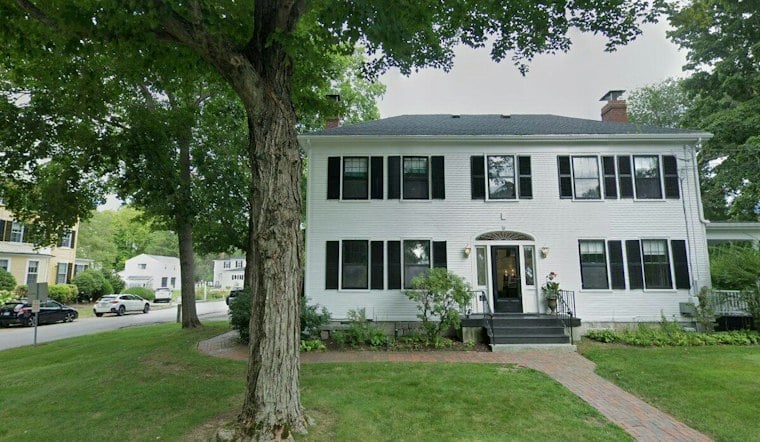
Rob Blood was 28 years old when he bought a nine-room inn in Kennebunkport, Maine, with little hospitality experience and even less money in the bank. More than two decades later, the company he built from that single property, Lark Hotels, pulls in $150 million a year and manages more than 80 boutique hotels stretched across the country.
Blood's start was about as scrappy as it gets. According to The Boston Globe, he had learned the hospitality trade by working for a year at a Nantucket inn and had studied English at Bates College before striking out on his own. His first big purchase, the nine-room Captain Fairfield Inn, cost $1.725 million in 2004, and he covered the down payment with a $350,000 loan from his mother at 6% interest, layered on top of SBA and bank financing, according to Lodging Magazine. Blood managed to repay his mother's note in just five years, well ahead of its 10-year term, after a cash-out refinance following a repositioning of the property.
From One Inn to a Multi-Brand Collection
That single Kennebunkport property eventually became the seed for something much bigger. In May 2021, Lark consolidated four neighboring 19th-century ship captains' homes in the town, including the original Captain Fairfield Inn, into the 64-room Kennebunkport Captains Collection, according to Down East Magazine. The redesign came courtesy of Elder & Ash, the hotel design consultancy Lark formed in-house, blending historic preservation with modern luxury touches.
Along the way, Blood partnered with Megan Kennedy, and the company grew a portfolio of distinct brands rather than a single uniform look. Lark now operates under the Bluebird, AWOL, Blind Tiger, and flagship Lark names, the Globe reports.
Building a Boutique Hotel Portfolio
Lark has built its business around boutique hotels.
Recent additions include SummerCamp on Martha's Vineyard, opened in 2016 inside an 1879 Methodist camp building, and Blind Tiger Burlington in Vermont, a 14-room property housed in an 1881 brick mansion.
A Wave of New Openings and a Tech-Powered Merger
This year alone, Lark has opened four new hotels, including the Penny Lane Hotel in Hampton Bays, New York, a former waterfront motor inn, the Globe reports. Massachusetts saw three of its own: Cambridge Common House in Harvard Square, set inside an 1835 building; the Drew in Plymouth, originally built as a sea captain's home in the 1800s; and Shore Haven in Falmouth, a converted 1960s motor lodge. Peter Twachtman, who joined the company in 2019, has helped steer that expansion into Texas and California alongside Blood.
The company's biggest structural shift came in December 2024, when Lark entered a joint venture with tech-driven operator Life House to form Lark Hospitality LLC. The deal, reported by Hospitality Design, doubled Lark's portfolio to nearly 100 properties with over 3,000 keys spread across 27 states and Mexico, scaling the business to its current $150 million in annual revenue and a real estate portfolio worth nearly $1 billion. Investors Inovia Capital and Thayer Investment Partners backed the transaction. Blood took the title of Chairman following the merger, Twachtman stayed on as CEO, and Life House CEO Marc Ghobriel joined to oversee the transition, according to Hotel Investment Today.
New Distribution Deal and a Shrinking Field of Rivals
Lark has also been working to widen its reach beyond traditional hotel booking channels. In August, Airbnb signed a distribution agreement with the company to add more than 75 of its boutique properties to the platform, one of Airbnb's largest moves yet to integrate a full independent hotel portfolio, Hotel Dive reported. The agreement spans leisure destinations including Stowe, Asheville, Kennebunkport, Nantucket, and the Hamptons.
That kind of maneuvering matters because independent boutique operators are under real pressure. A 2026 industry report from Bardoul Hotel Advisors found that corporate acquisitions by major hotel chains drove a 10.1% year-over-year decline in independent boutique hotel rooms across the U.S. in 2025, according to Business Travel News, as chains like Marriott, Hyatt, and Hilton snap up boutique lines or launch their own competing soft-brand collections. Still, the broader boutique hotel market was valued at $33.3 billion in 2023, with long-term annual growth projected at 5.5% to 7% through the 2030s, per Grand View Research estimates, as leisure travelers increasingly seek out authentic, experiential stays over standardized corporate hotels.
Keeping the Un-Corporate Feel While Scaling Up
Lark's footprint has grown well beyond its New England roots.





