

























































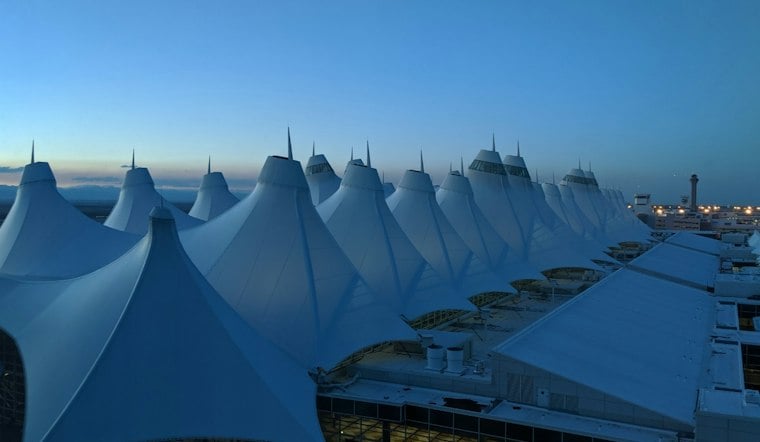
Colorado health officials have confirmed a measles case in an adult from Jefferson County who passed through Denver International Airport on three separate occasions earlier this month and later visited an urgent care clinic in Arvada, potentially exposing travelers, airport workers, and patients along the way. The adult's vaccination status is unknown, and the source of the infection remains under investigation.
According to 9News, the Colorado Department of Public Health and Environment says the person was likely exposed to measles while traveling outside Colorado, per the state health department. The infected adult first arrived at Gate C50 in Concourse C at DIA at 12:25 a.m. on October 3, then rode the airport train to Concourse B before boarding an employee shuttle bus to the employee parking lot, according to the state agency's media release.
Three Separate Windows at DIA
That first exposure window runs from 12:25 a.m. to 3 a.m. on October 3, and anyone who passed through those areas during that time could develop symptoms through October 24. A second window opened the next day, October 4, between 9 a.m. and 1 p.m., when the adult rode the employee shuttle from the parking lot back to Concourse B and ultimately departed from Gate B48 at 10:57 a.m. — people exposed during that stretch may show symptoms through October 25.
A third exposure period stretched from 11:25 p.m. on October 4 into the early hours of October 5, when the adult arrived at Gate A18 in Concourse A, then again rode the train to Concourse B and took the employee shuttle to the parking lot. That window's symptom watch period extends through October 26. The state health department has said it will add any newly confirmed exposure locations to its public exposure webpage as the investigation continues.
Arvada Clinic Added to Exposure List
Beyond the airport, CDPHE identified a fourth exposure site: the CareNow urgent care at 6413 Fig St. in Arvada, where the adult was present on October 7 between 11:35 a.m. and 4:15 p.m. Anyone who visited that clinic during those hours could develop symptoms through October 28. Health officials are urging anyone who was at DIA or the Arvada urgent care during any of the listed windows to monitor for symptoms for 21 days, a step described as critical for people who have not received the MMR vaccine.
People who develop symptoms after a possible exposure should call their health care provider, urgent care, or emergency department before showing up in person, and should tell medical staff they may have been exposed to measles, the state agency says. Measles is a highly contagious but preventable disease, and officials describe vaccination as the best way to protect oneself, family members, and the broader community.
A Growing Pattern Across Colorado
This is not the first time a traveler has triggered a statewide measles scare in Colorado this year. Just last month, state health officials issued a public alert after a separate travel-related exposure involving a visitor whose vaccination status was not stated and who passed through Denver Union Station and a Steamboat Springs hotel, according to the Colorado Department of Public Health and Environment. A different visitor also stopped in Boulder, Westminster and Lafayette.
Denver International Airport has played this role before. A CDC investigation into a May 2025 outbreak found that a single infected air traveler passing through DIA led to nine secondary cases across Colorado, including five among people who visited the airport and four breakthrough cases among fully vaccinated people following intense and prolonged exposure, according to Infectious Disease Special Edition. That outbreak marked Colorado's first measles cluster since the 1990s.
Why Colorado Remains Vulnerable
The state's immunization gaps help explain why a single traveler can ripple into a broader public health concern. Colorado ranked 45th in the nation for kindergarten MMR vaccination coverage, at approximately 87% — well below the 95% threshold generally considered necessary for herd immunity, according to Immunize Colorado. State data also show that roughly one in three young Colorado children missed full recommended vaccinations by age two.
Colorado recorded 36 confirmed measles cases and five hospitalizations in 2025, a sharp jump after years in which the state typically logged zero to two cases annually, per the Colorado Department of Public Health and Environment. Earlier this year, the state had already logged 25 confirmed cases before this month's Jefferson County case emerged.
Nationally, the picture is even starker. The CDC had recorded 4,080 confirmed measles cases across 45 states and Washington, D.C. as of October 8, compared with 2,289 cases for all of 2025 combined. Roughly 96% of this year's U.S. cases have been tied to multi-case outbreaks rather than isolated infections, according to the Centers for Disease Control and Prevention.
What Exposed Residents Should Know
Measles is among the most infectious pathogens known, according to the Centers for Disease Control and Prevention.
For those who are unvaccinated or unsure of their immunity, the CDC notes that the MMR vaccine can still prevent infection or reduce severity if given within 72 hours of exposure, while human immunoglobulin can offer similar protection if administered within six days. Two doses of the MMR vaccine provide about 97% protection against measles, while a single dose offers roughly 93% protection, per the agency's clinical standards.
The financial stakes of the state's vaccination gaps are substantial. A Children's Hospital Colorado study released earlier this year estimated that treating vaccine-preventable diseases generated more than $4.4 billion in medical charges across Colorado hospitals and emergency departments in 2024, with more than 163,000 related hospitalizations and emergency department visits statewide, according to Immunize Colorado. State health officials say the investigation into the source of this latest case remains ongoing.





