

























































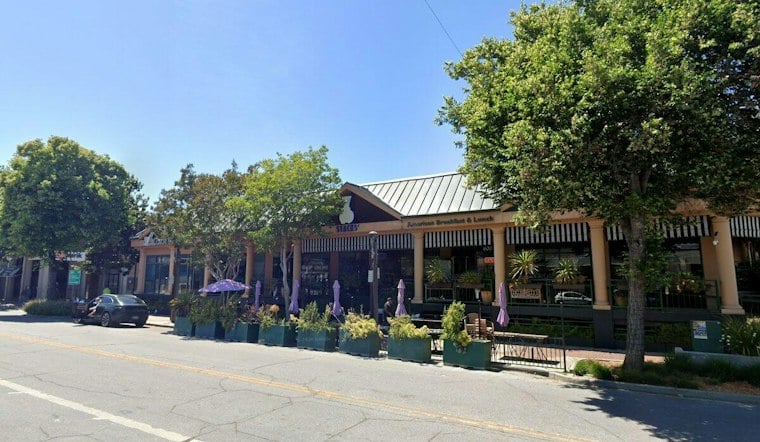
A majority of the Menlo Park City Council now supports piloting a redesign of the 600 block of Santa Cruz Avenue that would reopen the eastbound vehicle lane, eliminate the bike lane, and shrink the public gathering area down to space carved from parking spots. The shift came out of a council study session last week, marking a notable turn for a stretch of road that's spent years closed to eastbound traffic and serving as a gathering spot in the middle of downtown.
As reported by The Almanac, the council held its study session on October 13, with members weighing a middle-ground design for the block rather than sticking with the full pedestrian plaza or fully restoring the street to cars. The block has become something of a political football: the council voted to keep it closed back in June 2025, and members had previously supported building a permanent public plaza. There's also a dating discrepancy in the record — The Almanac has described the segment as closed since 2020, while InMenlo reports the formal eastbound vehicular closure was enacted by the council in August 2023, followed by restaurants expanding outdoor dining into the travel lane and the city installing a bike lane.
Council Weighs a Pilot Before Any Permanent Fix
Councilmember Drew Combs has recommended piloting the reopening redesign for six months to a year, arguing it would give a newly seated council additional data on how the option works in practice before locking in anything permanent. City Manager Justin Murphy said the next step is a formal council vote on reopening the vehicle lane at a future meeting, though no date for that vote has been set.
Not everyone on the dais is on board. Councilmember Jeff Schmidt, who supports making the plaza permanent, warned that running a pilot could destabilize the existing concrete proposal for a permanent plaza. Mayor Betsy Nash has said she'd like to see a larger pedestrian area and possibly an expanded plaza, but believes the timing for that ambition is wrong right now — she's also raised concerns that trash and blight around the current plaza make it less inviting, and that the plaza may get in the way of construction work on nearby developments.
Fourth Fridays and the Case for Keeping Public Space
The debate isn't purely about traffic flow — it's also about what downtown Menlo Park becomes after dark. Fourth Fridays, a free live-music event launched in August 2026 and organized by the Downtown Menlo Fund, has been drawing hundreds of people from Menlo Park and surrounding areas into the district, according to the group's Marnie Foody. Foody said downtown business owners have reported sales increases during the events, and that the nonprofit hopes to build Fourth Fridays into a full schedule of programming in 2027 — a goal she said would be limited if the plaza were removed.
The city has already sunk real money into the space. Menlo Park city staff have spent about $61,000 on plaza furniture and another $30,000 hiring a consultant to design a permanent version, with roughly $250,000 still remaining in that project's budget. Economic Development Director Collette Hanna has estimated that construction of a permanent plaza, under current plans, would wrap by the end of 2027.
Money, Design Options and the Accessibility Question
Money for the broader streetscape work has come from elsewhere in the city budget, too: $477,515 has been available through Menlo Park's Capital Improvement Plan for downtown streetscape improvements, according to the city's reporting carried by The Almanac. The city partnered with urban design consultants from M-Group to explore options for the block, with concepts that have included flexible seating arrangements, protective barriers, shade sails, overhead string lighting and painted roadway treatments. City staff have also been evaluating platforms to level the street's uneven grades and ensure compliance with the Americans with Disabilities Act.
According to InMenlo's account of the October 13 session, three options were ultimately laid out for the plaza: keep the existing closed-lane plaza as is, build a smaller community space while reopening the vehicle lane, or remove the plaza altogether and restore street parking.
Downtown's Bigger Picture
The Santa Cruz Avenue debate is unfolding alongside other downtown changes. A developer plans to build a six-story residential building at 800 Oak Grove Avenue, and the city council is separately pursuing housing on three downtown parking lots — both signs that Menlo Park's center is shifting shape well beyond one contested block.
Menlo Park isn't the first Peninsula city to wrestle with this tradeoff. San Mateo turned two downtown blocks car-free as a pandemic-era pilot, eventually making B Street between First and Third avenues a pedestrian-only stretch, according to ABC7 News. San Mateo's mayor told the station the closure helped shift downtown from a primarily nine-to-five economy to one running from lunch through evening, though the city also had to respond to parking and delivery complaints by adding 24-minute green zones and designated space for food-delivery drivers. Back in Menlo Park, Councilmember Drew Combs previously floated a parklet compromise that would preserve public seating while still allowing traffic onto El Camino Real from downtown — an idea that echoes the middle-ground path the council now appears to be leaning toward.




