

























































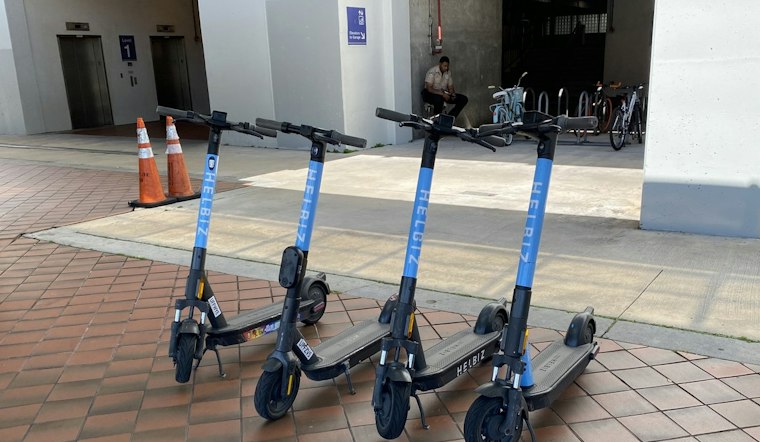
Riding an e-bike or motorized scooter down a Miami sidewalk just became illegal. City commissioners voted unanimously on Oct. 22 to ban the practice citywide, part of a sweeping new ordinance that also caps rider speeds at 20 mph, bars anyone under 16 from operating the devices, and requires riders to carry government-issued photo identification.
The new rules prohibit riding e-bikes and motorized scooters on sidewalks and pedestrian walkways altogether, though riders may still walk their devices across them, according to Miami Today. Where sidewalk riding is out, bike lanes are in: the ordinance requires riders to use bike lanes when they're available, or stick to city streets and rights-of-way with posted limits of 30 mph or less. As Axios reported, the rules take effect immediately unless vetoed by the mayor — though Miami Today's account says the changes were expected to roll out the first week of November, about 10 days after the vote. Those two timelines don't line up, and it isn't clear from available reporting which one prevailed.
What Riders Now Have to Follow
Beyond the sidewalk ban, the ordinance sets a hard ceiling of 20 mph for e-bikes and motorized scooters, even though some e-bikes on the market can reach speeds up to 28 mph under Axios's reporting. Anyone caught violating the rules faces a $100 civil fine, with each offense — and each continuing day of a violation — counted separately, per the same Miami Today account. The restrictions only apply to roads controlled by the city itself, not county or state roads, which means riders crossing into unincorporated Miami-Dade or onto county thoroughfares are governed by different rules entirely.
That patchwork is already a headache across South Florida. Miami-Dade County doesn't maintain one uniform rule book for e-bikes, the Miami Herald notes, so regulations can shift block by block depending on which municipality a rider is crossing into. Any Miami restriction on county-owned roads would still need county approval, per the seed reporting.
A Safety Problem That's Getting Worse, Not Better
Miami proposed the rules amid rising concern over how riders, pedestrians, bicyclists and motorists are sharing the same streets, according to Miami Today's earlier coverage. The city has been here before: it cycled through scooter pilot programs starting in 2018, only to eventually halt them over safety issues, the outlet reported.
The injury numbers help explain the urgency. Memorial Healthcare System in South Broward logged a 178% jump in micromobility-device injuries from 2024 to 2025, a trend that has continued into 2026, according to the Miami Herald. Nicklaus Children's Hospital recorded 37 severe e-bike and e-scooter injuries in 2025 — up from just six in 2021, an increase of more than 500% — and had already logged 46 micromobility-related injuries in just the first five months of 2026, per the same report. The Herald also cautions that these totals likely undercount the real toll, since crashes involving e-bikes and scooters are sometimes filed as ordinary bicycle or pedestrian incidents.
How Neighboring Cities Are Responding
Miami isn't alone in rewriting its micromobility rules this fall. Miami Beach commissioners approved their own safety measures in September, requiring riders younger than 16 to wear helmets and mandating white and red lights from sunset to sunrise along with functioning brakes, according to NBC6. Miami Beach's ordinance won't take effect until July 22, 2027, and carries a steeper $129 fine for violations.
Fort Lauderdale is weighing an even tougher approach. City commissioners are debating a proposal that would prohibit e-bikes and other micromobility devices from both sidewalks and city parks, with fines of $250 for a first offense and $500 for repeat violations, the Sun-Sentinel reported. Fort Lauderdale's draft rules would also set a minimum rider age of 16, require government-issued photo identification, and mandate that every device be registered with the city and display a visible decal, according to the outlet's earlier reporting on the proposal.
Key Biscayne has already taken the most drastic step of any nearby municipality. The village banned micromobility devices entirely in 2024 following a pedestrian's death, and later won county approval to restrict the devices specifically on Crandon Boulevard, where it set its own 20-mph limit and barred sidewalk riding. Doral and Sunny Isles Beach have likewise passed their own rules governing helmet use, age minimums and sidewalk riding, while the University of Miami has banned e-bikes and e-scooters entirely from its Coral Gables campus.





