

























































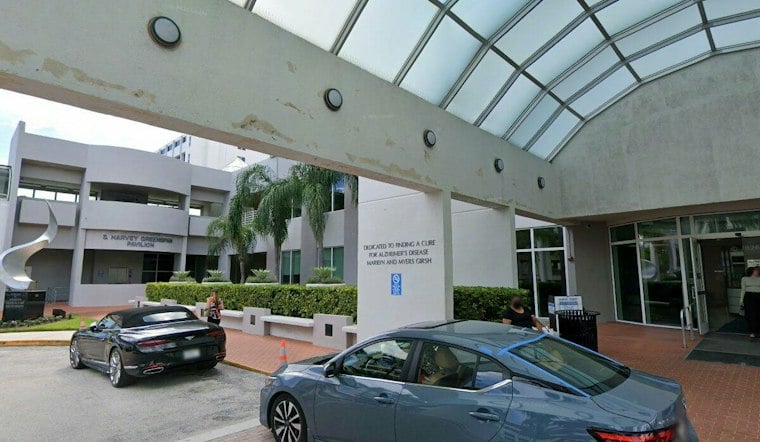
A Miami Beach hospital says it has become the first in South Florida to offer a mastectomy technique that removes breast tissue through a small incision near the underarm instead of across the breast, preserving the skin and nipple while hiding the surgical scar. Mount Sinai Medical Center says breast surgical oncologist Jessica M. Pastoriza is the first surgeon in the region to perform the endoscopic nipple-sparing mastectomy.
According to South Florida Hospital News and Healthcare Report, Pastoriza is a fellowship-trained breast surgical oncologist at the hospital's Braman Comprehensive Cancer Center. The outlet reports that the procedure relies on a surgical access device that allows a high-definition camera and specialized instruments to work through the small underarm incision, giving the surgeon magnified visualization of the tissue being removed while operating at the patient's bedside with handheld laparoscopic instruments.
Importantly, the hospital says the endoscopic approach does not change the extent of the cancer operation itself. The same tissue is removed as in a conventional mastectomy, following the same principles of oncologic safety, per the same report. What changes is the entry point and what remains visible afterward: the skin of the breast and the nipple are preserved, and the scar sits outside the breast, where body contours and most clothing can conceal it.
One Operation Instead of a Staged Recovery
Gary J. Rosenbaum, chief of Mount Sinai's Division of Plastic Surgery, performs the breast reconstruction during the same surgery as the mastectomy, the hospital-news report states. That means a patient undergoes a single procedure rather than a staged series of surgeries spread across weeks or months.
Pastoriza said the cancer-related answer does not change because she removes the same tissue to the same margins, while what changes is the answer to the patient's second question, according to the outlet's report. Rosenbaum added that the technique minimizes visible incisions while preserving the natural breast envelope, per the same account.
Who Might Qualify
The approach is used therapeutically in patients with a breast cancer malignancy and no skin or nipple involvement, the report states. It's also offered for risk reduction in patients carrying BRCA1, BRCA2, or other genetic mutations, those with a family history of breast cancer, and patients undergoing a contralateral mastectomy. Eligibility is determined case by case during consultation, the hospital-news article notes, and the dossier underlying this reporting does not specify Mount Sinai's patient volume, complication rates, or recovery times.
Mount Sinai Medical Center president and CEO Gino R. Santorio said South Florida women can now access the approach close to home, the outlet reported. The hospital is also described in that report as ranking among the top 2 percent of hospitals in the nation. The American Cancer Society puts the lifetime risk of an invasive breast cancer diagnosis for women in the United States at about one in eight, according to the same report.
What the Research Says So Far
A 2025 meta-analysis published in BJS Open found significantly greater patient-reported cosmetic satisfaction with the endoscopic approach along with comparable oncological outcomes, and it also reported a reduced risk of skin and nipple necrosis when the procedure is performed through a single incision, per the hospital-news account. A separate multicenter cohort study, published by Springer, examined 1,722 early breast cancer patients, including 136 treated with the endoscopic technique and 1,586 who had conventional open mastectomy, and found no significant differences between the two groups in any oncological outcome parameter after propensity-score matching. That study reported local recurrence-free survival of 97.8 percent in both groups and concluded the endoscopic approach could serve as a viable alternative to conventional surgery for eligible patients.
The technique remains far from widespread. A surgeon interviewed on a Cleveland Clinic podcast described the current version of the surgery as roughly five years old, noting it's essentially the same operation as conventional nipple-sparing mastectomy performed with a different tool, while minimally invasive breast surgery more broadly traces back about two decades in Asian countries. Cleveland Clinic's Paula Escobar said on the same podcast that only a handful of surgeons nationwide are currently performing it, and Cleveland Clinic separately announced in August that it had completed the first robotic nipple-sparing mastectomy with immediate reconstruction in Ohio.
Other Hospitals Making Similar Claims
Mount Sinai isn't alone in touting a regional first. UMC El Paso recently said it had performed its own first endoscopic nipple-sparing mastectomy and described itself as among only a handful of U.S. clinics offering the technique, according to KVIA. OU Health has made a similar announcement, saying it now offers the endoscopic approach at its Stephenson Cancer Center and calling it the first procedure of its kind available in the Oklahoma City metro, as reported by OKC Fox. Each hospital's first-in-market claim comes from the institution itself rather than independent verification.





