

























































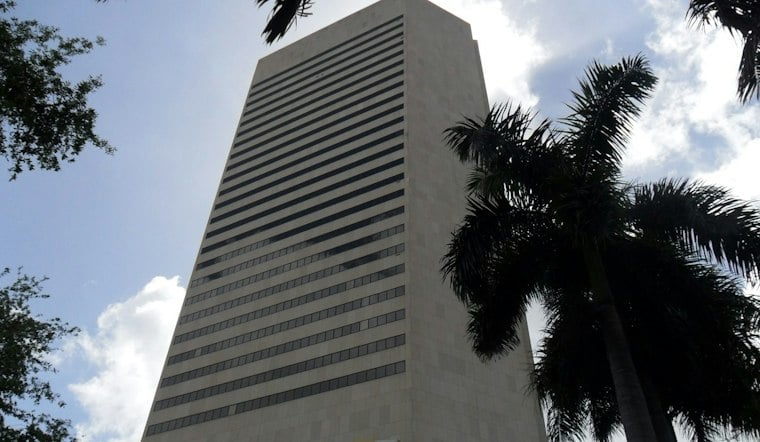
More than 200 people filled the lobby of downtown Miami's Stephen P. Clark Center on September 15 for Miami-Dade County's official kickoff of National Hispanic Heritage Month, a free public celebration packed with live salsa, folkloric dance and a one-day art exhibition featuring paintings donated to help raise funds for victims of recent earthquakes. The event, organized under the national theme “Unidos, Somos Más,” or “Together, We Are More,” landed on a county where roughly 70% of residents identify as Hispanic or Latino.
A Downtown Gathering Rooted in County Government
The Miami-Dade County Hispanic Affairs Advisory Board invited the community to the gathering, according to Miami's Community Newspapers, which reported that county commissioners, constitutional officers, municipal elected officials and members of Miami's consular corps were among those invited to attend. Miami-Dade Mayor Daniella Levine Cava, Commission Chair Anthony Rodriguez and Commission Vice Chair Kionne L. McGhee all hold roles tied to the county government hosting the celebration, per the outlet's reporting. More than 200 attendees ultimately turned out for the event, which Miami-Dade County says coincided with the September 15 independence anniversaries of five Central American nations.
The advisory board itself has deep roots in county government. It was established in May 1992 under Ordinance No. 92-41 to advise county leadership and advocate for the concerns of local Hispanic residents, following countywide efforts to ensure municipal policies reflected Miami-Dade's growing multicultural population. Today the board operates under the county's Office of Community Advocacy, an umbrella agency that also oversees constituent boards representing women's, Asian-American and Black affairs, according to research cited in Miami-Dade County records. Under Section 2-11.38 of the county code, the board is structured to include 26 permanent members, with each of the 13 county commissioners appointing two representatives who must be permanent residents and registered voters of Miami-Dade County.
Salsa Icons and a Celia Cruz Tribute
The celebration's entertainment lineup leaned heavily on Miami's salsa heritage. Performers included Melina Almodóvar, known as “La Muñeca de la Salsa,” Dayma Diamante, known as “La Diamante,” and Marlin De La Salsa, the outlet reported, alongside traditional Central and South American folkloric performances. La Diamante performed a musical tribute to Cuban salsa icon Celia Cruz, a nod to Resolution No. R-663-23, which county commissioners passed on July 6, 2023, to designate every September as Cuban Heritage Month across Miami-Dade. That resolution was sponsored by Rodriguez, who now chairs the county commission.
Almodóvar, for her part, dedicated her performance to the people of Colombia and Venezuela, according to Miami's Community Newspapers. That dedication carried extra weight given the artwork exhibited alongside the performances.
Art Auction Supports Venezuela Earthquake Relief
A one-day exhibition at the kickoff presented more than 40 works of art, with participating artists donating paintings to help raise funds for victims of recent earthquakes, per the outlet's account. South Florida arts organizations and community groups have mobilized similar fundraising efforts throughout the 2026 Hispanic Heritage season to aid Venezuela following two powerful earthquakes — magnitudes 7.2 and 7.5 — that struck the country in June, as Hoodline previously reported. Miami is home to the largest Venezuelan diaspora in the country, with more than 250,000 Venezuelan residents in the metro area.
The Federal Roots of a 31-Day Observance
National Hispanic Heritage Month traces back to 1968, when it began as a one-week observance under President Lyndon Johnson, before President Ronald Reagan expanded it into a 31-day period running from September 15 to October 15 when he signed it into law in 1988. The September 15 start date was deliberately chosen to align with independence anniversaries in Costa Rica, El Salvador, Guatemala, Honduras and Nicaragua, according to records from GovInfo. Mexico marks its independence day September 16, and Chile observes its own September 18, both falling within the monthlong window. The observance also stretches to include Día de la Raza, celebrated by several Latin American countries on October 12 to commemorate Christopher Columbus's arrival on the continent — a date the United States marks as Columbus Day, though in 2026 that falls on the same October 12.
County officials noted that Hispanic Affairs Advisory Board meetings and events remain open to the public, and residents are encouraged to attend throughout the year.



