

























































Jackson Suarez was working alongside his father in July when he found him not breathing. Drawing on CPR training he had learned at school, the Mater Lakes Academy Middle/High School student performed chest compressions until his father, Hector Suarez, began breathing again. Three months later, his school surprised him with a ceremony honoring the rescue.
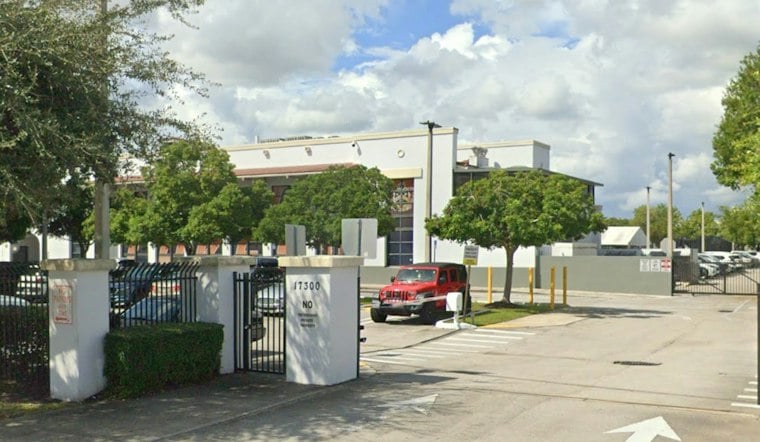
The surprise celebration took place at the Northwest Miami-Dade campus, where Hector Suarez attended in person after being saved by his son, according to WSVN 7News. Christopher Wydra, a teacher at the school, surprised Jackson with the ceremony and a plaque. The plaque depicts Hector Suarez's heart rhythm and includes wording composed by Hector Suarez himself, per the same report.
Wydra said he was proud of Jackson for stepping in to save his father's life, the station's report notes. Jackson's mother described her son as the family's strength and hope during what she called a frightening event, and she said she hoped the rescue would encourage other schools to teach CPR, advocating for the skill to become part of children's standard learning curriculum.
How Jackson Learned to Save a Life
Jackson's ability to act came from a first-responder skills program at Mater Lakes Academy, a tuition-free public charter school in unincorporated Miami-Dade County serving roughly 2,100 students in grades 6 through 12 under Mater Academy, Inc., according to The Miami Laker. Between 150 and 200 students and teachers at the school hold CPR certifications, the WSVN report states.
That training traces back to state law. Under Florida House Bill 157, enacted in 2021, high school students in 9th and 11th grades are required to receive hands-on CPR and AED instruction as part of standard physical and health education coursework, according to CardioCare CPR. More recently, Florida enacted House Bill CS/HB 1607 in June 2025, requiring public and charter schools to establish cardiac emergency response plans, deliver mandatory hands-on CPR and AED training to middle and high school students, and ensure at least one operational AED is on campus by July 1, 2027, per the Florida House of Representatives.
Why Minutes Matter in a Cardiac Emergency
The stakes of that training are measured in minutes. Research presented at a November 2024 American Heart Association symposium found that patients receiving bystander CPR within the first two minutes of cardiac arrest achieve the highest rates of overall survival and preserved neurological function. The American Heart Association has also reported that immediate CPR can double or triple a victim's chance of surviving an out-of-hospital cardiac arrest.
A March 2026 Miami-Dade County report found that Miami-Dade Fire Rescue averages 7.46 minutes to respond to life-threatening emergencies inside the Urban Development Boundary, a window that matters because irreversible brain damage can begin within 4 to 6 minutes without CPR. Nationally, out-of-hospital cardiac arrests occur roughly 350,000 times a year with an overall mortality rate near 90%, per American Heart Association statistics updated in late 2025. The Sudden Cardiac Arrest Foundation's 2024 Cardiac Arrest Registry to Enhance Survival data shows that between 70% and 73% of these cardiac arrests happen in private homes, which is part of why family members like Jackson are so often the first to respond.
Bystanders who step in are also protected under Florida law. The state's Good Samaritan laws offer statutory civil liability protections for individuals and non-medical bystanders who perform emergency CPR or use an AED in good faith, according to SureFire CPR. Public confidence in performing CPR has also been climbing nationally: an American Heart Association survey published in January 2025 found the share of U.S. adults who feel confident performing CPR rose from 33% to 39%, adding an estimated 17.7 million prepared lay responders across the country.
For Jackson's family, those statistics became personal reality in July. A teenager's quick thinking, built on lessons from a classroom at Mater Lakes Academy, gave his father a second chance before help could arrive.





