

























































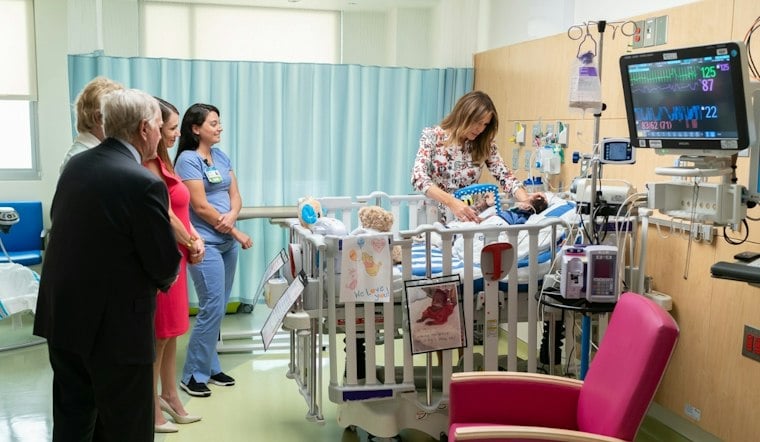
A 2-year-old born with double-outlet right ventricle just became one of the first children in the country to complete a critical stage of heart repair without a single incision. Doctors at Nicklaus Children's Hospital in Miami threaded specialized equipment through a blood vessel to finish rerouting the child's circulation, skipping the open-heart surgery that would normally be required. The child is recovering well and has already returned home.
The announcement, made by the hospital on September 9, describes the operation as one of the first Fontan procedures in the United States performed using a transcatheter-based approach on a child, according to Nicklaus Children's Hospital. A separate account from Cardiovascular Business goes further, describing the operation as what is believed to be the first completely catheter-based Fontan procedure in U.S. history — a distinction the hospital's own release does not make. Either way, the case marks a notable shift in how surgeons are approaching one of pediatric cardiology's most delicate repairs.
What the Fontan Procedure Normally Requires
Fontan completion is traditionally the final planned stage in a series of operations for a child born with a single-ventricle heart defect, a condition in which only one of the heart's two pumping chambers can effectively support circulation, per the hospital's release. The procedure directs oxygen-poor blood from the lower body to the lungs without passing through a heart pumping chamber at all, rerouting blood returning from the body directly to the lungs. In most children, reaching that point means multiple open-heart surgeries, including repeated sternotomies, cardiopulmonary bypass and chest tubes during recovery.
This time, the team used a catheter-based approach instead, guiding equipment through a blood vessel to complete the child's Fontan circulation rather than opening the chest. As a result, the pediatric patient was able to avoid a third sternotomy and did not require cardiopulmonary bypass, and there was no need for chest tubes, Cardiovascular Business reported, citing the surgical team.
How Doctors Planned the Procedure in Advance
Getting there took planning well before the operation itself. The interventional cardiology team planned the procedure together with the cardiovascular surgery team, and preplanning was required during the child's earlier Glenn-stage surgery, when doctors created a controlled connection between the Glenn pulmonary artery pathway and the atrium specifically to make the later catheter-based step possible, according to the same report from Cardiovascular Business. Prior surgeries like that one are what prepare the heart for Fontan completion in the first place.
The anatomy itself was mapped using CT, MRI and invasive angiography, and the same outlet's account notes doctors built a virtual 3D model of the patient's anatomy before going in. During the procedure, the team advanced a covered endograft through the vessels and deployed it to establish the definitive conduit carrying blood from the inferior vena cava to the pulmonary arteries — the core engineering move that let the child's circulation function without a surgical chest opening.
Who Led the Procedure
The procedure was led by Dr. Shyam Sathanandam, who serves as chief of cardiovascular medicine at Nicklaus Children's Hospital, co-director of the hospital's Heart Institute and a clinical professor at FIU Herbert Wertheim College of Medicine. He worked in collaboration with Dr. David Kalfa, the hospital's chief of cardiovascular surgery and a professor and researcher at FIU Herbert Wertheim College of Medicine.
For families facing a diagnosis like double-outlet right ventricle, the appeal of this approach is straightforward. For eligible children, the technique offers no incisions, a shorter hospital stay and a faster recovery compared with traditional surgery, the hospital said in its release, a benefit borne out in this case, as the child was expected to go home within days.
Not Every Patient Is a Candidate
Doctors and researchers are careful to note that this is not a universal replacement for surgical Fontan completion. Whether a child is eligible depends on careful anatomic and hemodynamic factors, Cardiovascular Business reported, and some candidates may not be suitable for the catheter-based route at all. Even so, the outlet noted that transcatheter techniques may eventually let some children reach Fontan circulation with a substantially less invasive intervention than what is standard today.
That cautious optimism lines up with early data from elsewhere. A retrospective review at one center examined consecutive patients treated between 2022 and 2025, according to a study published in Cardiology in the Young. Five patients underwent the transcatheter procedure at a median age of 7, ranging from 4 to 17 years old, with a median ICU stay of two days and a total hospital stay of five days. At a median follow-up of 28 months, all five were clinically stable with a median resting oxygen saturation of 96%, leading researchers to conclude that extracardiac Fontan completion can be performed safely and effectively in carefully selected candidates — while cautioning that larger studies are still needed.
Other published literature has been more guarded about how far the technique has spread. One cited study described transcatheter Fontan completion as remaining experimental and performed only in select cases, underscoring that this is still an emerging option rather than a routine one. For now, the Nicklaus Children's Heart Institute, which provides care for infants, children and adults with congenital and acquired heart conditions, continues to offer the full spectrum of services such cases demand — cardiac imaging, interventional cardiology, electrophysiology, cardiovascular surgery, critical care and long-term follow-up — with consultations and follow-up care available at more than 13 locations across Miami-Dade, Broward, Palm Beach and Martin counties, as detailed in Miami's Community News.





