

























































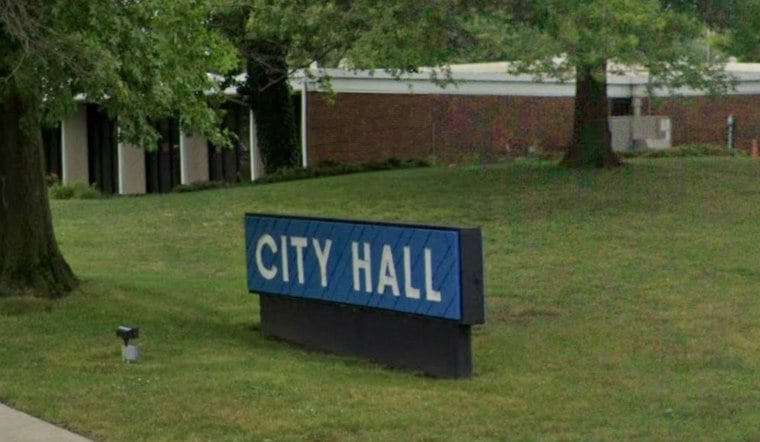
Michigan City officials are pushing forward with a new version of a data-center moratorium that would exclude Google's massive Project Maize development entirely, a move that has reignited tension just weeks after the original proposal was tabled by an 8-1 council vote. The new ordinance would suspend approval of new data-center developments until zoning regulations are added or until July 31, 2028, whichever comes first, but would carve out both phases of Google's current project.
The original moratorium, introduced earlier this year, was tabled in September so the city's planning department could weigh in, according to wvpe.org. That version would have paused permits and tax abatements for data-center-related projects while the city worked out zoning rules, though it already excluded projects underway, including Google's data center at the former Federal Mogul property. Council members had said their plan was to draft a resolution directing the planning department on what to examine next.
A New Draft, Same Core Carve-Out
Council member Bryant Dabney, who has pushed for the moratorium's return, said the pause would give officials time to evaluate the Google project before allowing additional data centers into the city, according to Indiana Public Radio, published by Indiana Public Radio. City officials would look at noise, water usage and energy use at the Google facility during that window, per the same report. Dabney had previously floated keeping a moratorium in place for one year after Project Maize begins operating, telling the Chicago Tribune in September that the facility was expected to be running by 2027, meaning a pause could stretch into 2028.
But the new ordinance text itself sets July 31, 2028 as a possible end date for the pause, and would end the moratorium once city zoning regulations are adopted, whichever happens first, per Indiana Public Radio's reporting. Google is the operator behind Project Maize, an $832 million data-center development at 402 Royal Road on the former Federal Mogul site, a detail the Chicago Tribune confirmed after an earlier Tribune report had said the project's end user had not yet been formally announced.
Sponsors Say They Were Left Out
Joseph Nelson, another council member, did not mince words about how the new draft came together. He said he and resident Nancy Moldenhauer, along with others, had worked hard on the original ordinance, and called the process behind the new version disingenuous. Nelson said he was not consulted about the rewrite and did not appreciate being left out, according to the same Indiana Public Radio report. Sponsors of the original ordinance echoed that complaint, saying they were never brought in on the new language before it surfaced.
The ordinance was not filed in time for the council to take official action at its most recent meeting, so the council has scheduled a formal first reading for its next meeting, per Indiana Public Radio. That delay leaves the carve-out for Google's project, and the frustration it has caused among the original sponsors, unresolved for now.
Residents Split on Emissions, Fuel Storage and Process
Residents who showed up to weigh in gave mixed reactions to the proposed moratorium itself, even as many said they wanted some version of a pause. Their concerns centered as much on how the ordinance was written and presented as on the substance of a pause. Several residents raised worries about potential emissions from the diesel generators planned at Google's data center, as well as how diesel fuel would be stored on site. Those concerns track with earlier reporting: the Indiana Department of Environmental Management approved an air permit in March allowing 66 diesel-fired critical emergency generators at the facility, according to the Chicago Tribune.
Ashley Williams, executive director of Just Transition Northwest Indiana, pushed back specifically on the idea of ending the moratorium as soon as new regulations are adopted. She said the moratorium could create an illusion of action while the city's planning department works on a data-center zoning district behind the scenes without public input, according to Indiana Public Radio. That planning department has reportedly been developing an M-3 data-center zoning district outside public view, the same report said.
A Pattern Across Indiana and Michigan
Michigan City is far from alone in wrestling with how to regulate data centers racing into the region. The Chicago Tribune reported that the Michigan City Common Council passed four resolutions in September 2025 clearing the way for construction of the more than $800 million data center at 402 Royal Road, and by late March 2026, construction was already underway, prompting residents and environmental groups to urge officials to halt the work and related soil disturbance.
Elsewhere in the region, Indianapolis imposed a moratorium on new data centers in Marion County through the end of 2027, giving a newly formed committee time to study public health impacts, resource management, fiscal effects, building size, sound levels and generator testing, according to wfyi.org. That pause, notably, does not touch three data-center projects already approved by Marion County officials before the moratorium took effect.
In Michigan, several smaller communities have taken similar steps. Wixom's City Council approved a six-month temporary moratorium in March before later classifying data centers as special land uses requiring Planning Commission review, according to the City of Wixom. Not every such effort has gone smoothly: Gibraltar's one-year moratorium, approved last March, is now the subject of a federal lawsuit filed in August by CAL Realty and Raeden Acquisitions, which allege the pause unlawfully blocked their proposed data center, according to themorningsun.com.
The scale of what's driving these fights is significant. Hyperscale data centers built for artificial intelligence use far more electricity and water than typical facilities to power and cool their servers, a concern that has fueled moratoriums in communities like Taylor, Melvindale, Hart and Garfield Charter Township, per mlive.com. A separate proposed data center in Van Buren Township was projected to demand as much power as 750,000 homes and more than 2 million gallons of water daily, according to earlier mlive.com reporting. For now, Michigan City's council is left to sort out whether its rewritten ordinance can satisfy both the residents pushing for stronger oversight and the council members who say they were cut out of writing it.





