

























































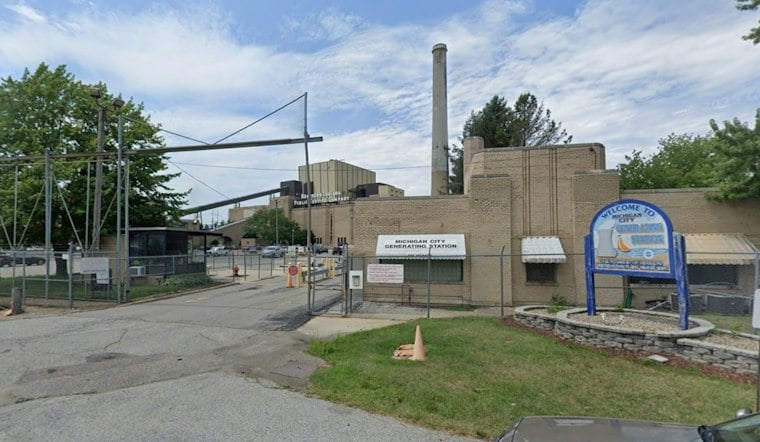
Activists gathered outside NIPSCO's Michigan City Generating Station on Monday, calling on the utility to follow through on its planned 2028 retirement of the coal-fired plant amid growing data center demand across the region. The demonstration focused on concerns about the decades-old facility and its future.
Dave Horn, who has lived in Michigan City for 41 years, called the plant a blight on the area and said the pollution it produces is undeniable, adding that coal is no longer acceptable as an energy source, according to the Post-Tribune. The demonstration was organized by Just Transition Northwest Indiana and Indiana Beyond Coal.
The Michigan City Generating Station first opened on the Lake Michigan shoreline in 1931, and a coal-fired unit began operating in 1974, according to ABC57. NIPSCO has said it plans to retire the unit in 2028, but activists worry that timeline could slip given a recent precedent set elsewhere in the utility's territory.
A Federal Order Raises Fears Of Delay
Those fears were fueled by a U.S. Department of Energy emergency directive that ordered NIPSCO to keep coal-fired units available at its R.M. Schahfer Generating Station in Wheatfield past their planned retirement, citing surging electricity demand tied to artificial intelligence and regional data centers, per the same ABC57 report. Sierra Club and Just Transition Northwest Indiana representatives said that intervention has only deepened concern that NIPSCO could reverse its own commitment to shut down Michigan City's coal unit on schedule.
Coal ash is a toxic waste product left after coal is burned. Concerns about coal ash and the plant's environmental impact have figured into debate over the facility. NIPSCO has said it plans to retire the plant by 2028, while data-center growth has added to regional questions about electricity demand.
Legacy Coal Ash Buried Along The Shoreline
The concerns raised by residents are not new. Beyond the plant's on-site coal ash ponds, extensive legacy coal ash was used as fill behind steel sheet-pile walls to build so-called made land along Lake Michigan and Trail Creek, according to Earthjustice. Last year, NIPSCO began structural repairs on a corroded steel seawall bordering Trail Creek to prevent a potential wall failure that activists warned could release buried coal ash into local drinking water sources and Lake Michigan itself, as reported by WFYI.
The plant's waste disposal history has already caused documented harm off-site. In 2003, groundwater contamination in the neighboring Town of Pines, traced to coal ash dumped from the Michigan City plant at the Yard 520 landfill, led to NIPSCO being required under EPA supervision to pay for municipal water hookups for 270 residential homes, according to Great Lakes Now. The EPA has proposed a rule change that could require cleanup of legacy coal ash fill at sites like Michigan City.
Data Centers Raise Questions About NIPSCO's Power Needs
The protest comes amid concerns about growing data-center power demand in Northwest Indiana. NiSource Inc., NIPSCO's parent company, announced a 20-year energy agreement with Microsoft this month to supply 1,100 megawatts to a planned data center campus in Northwest Indiana, Hoodline previously reported. State regulators also approved a framework this month allowing NIPSCO to trade energy capacity with its unregulated affiliate, NiSource Generation Co., specifically to accommodate large data center power demands.
NIPSCO is developing its next 20-year energy plan. A utility representative did not respond to a request for comment on the protest by the Post-Tribune's deadline.
Regional Activism Focuses On The Plant's Future
The Sierra Club and Just Transition Northwest Indiana are part of a regional coalition.
Memories of this summer's grid troubles still linger for many in the crowd. More than 300,000 NIPSCO customers in Northwest Indiana lost power at one point after the Aug. 11 derecho, per the Post-Tribune. Some communities went without electricity for more than two weeks afterward. The protests also reflect concerns about the plant's planned retirement and growing data-center demand.




