

























































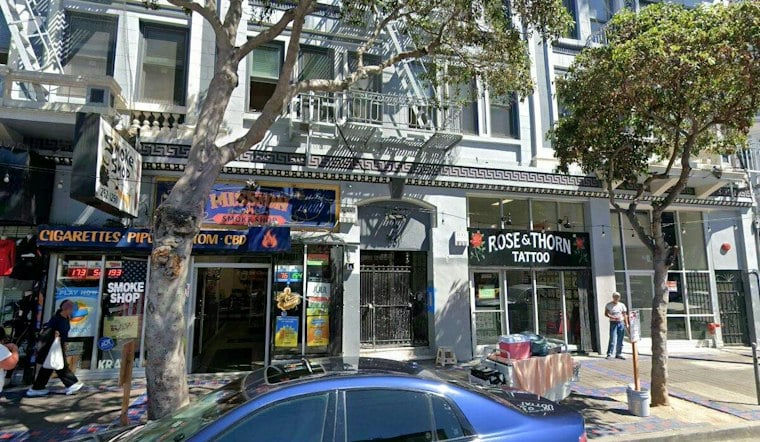
MEDA’s purchase of 2059-2061 Mission Street illustrates both the reach and the financial limits of San Francisco’s nonprofit building-preservation efforts. For Silvestre Rodriguez, it also meant a way back to the home he had shared with his wife, Martha Valdez, since 1996. After temporarily relocating during renovations, he is returning to the same building and paying $862 a month; he had paid $555 when they first moved in.
The 1918-built, 35-unit property near 16th and Mission streets was purchased by the Mission Economic Development Agency, a local nonprofit known as MEDA, which closed on the building on September 6, 2024, according to MEDA. The purchase price was $11.35 million, as reported by the San Francisco Chronicle, which first told Rodriguez's story. Rodriguez works as a truck driver for San Francisco's Recreation and Parks Department, and per the Chronicle's reporting, he was stunned that he could return for the same rent he'd been paying before the sale.
The property had a mix of deteriorating long-term rent-controlled apartments and very small units without bathrooms or kitchens, the Chronicle reported. It also reported that some vacant apartments were used for Airbnb or temporary corporate housing, and that the seller marketed the building as an investment opportunity with renovation and leasing potential.
How a Tenant Nonprofit Beat Private Investors to the Deal
MEDA’s opportunity to buy the building came through San Francisco’s Community Opportunity to Purchase Act, or COPA, approved by voters in 2019. The law gives qualified housing nonprofits a chance to make an offer before multifamily buildings are listed on the open market. City guidance requires owners of residential rental buildings with three or more units to notify certified nonprofits; real estate industry analysis published by Design Change describes the short response and offer deadlines.
Meeting those deadlines requires financing to be ready quickly. The San Francisco Housing Accelerator Fund provided a $22 million bridge loan for the purchase, which is expected to be repaid through permanent financing from the city’s Small Sites Program, the Chronicle reported. Rebecca Foster, head of the Accelerator Fund, said in the Chronicle’s account that MEDA needed to secure financing quickly to protect residents from displacement.
After the sale, MEDA temporarily moved Rodriguez and Valdez to another MEDA-owned building on 16th Street while work proceeded. The renovations included seismic upgrades, conversion from gas to electricity, and replacement of the windows, roof, flooring, electrical and plumbing systems, according to the Chronicle. MEDA has described the building’s central skylight and winding staircase as original 1918 features. Ten rent-controlled households are expected to return to studio apartments after the work is complete.
Preservation Efforts Face a Funding Shortfall
José García of MEDA described the building as one of the Mission’s foundational residential properties. But the nonprofit has no money left to acquire additional buildings, he said, according to the Chronicle. The same report counted more than 300 multifamily buildings hitting the market in 2026, including 17 listed since the start of that month.
The Small Sites Program was created to preserve multifamily buildings vulnerable to gentrification and displacement. It has helped purchase and preserve 63 buildings with 655 units since its creation, the Chronicle reported. Those figures describe the Small Sites Program, not a total of all properties acquired through COPA. Many Small Sites buildings lost money during the pandemic, while maintenance and renovation costs exceeded projections; the city refinanced a $37 million loan MEDA had taken out on 15 buildings and provided another $6 million for renovations, according to the Chronicle. Enterprise Community Partners separately reports that MEDA has preserved 33 Mission properties totaling 286 units through the program.
The Accelerator Fund and its nonprofit partners haven't slowed down despite the funding crunch, making several other acquisitions in 2024 and early 2025, including 63 units at 2901 16th Street, 108 homes at 1155 Ellis Street, 20 units at 3900 Third Street, and five units at 3235 16th Street, according to the Chronicle. The fund has deployed more than $750 million in capital since launching in 2017, financing the acquisition and preservation of over 4,500 affordable homes housing more than 8,000 residents citywide, per its own published statistics. That track record extends beyond San Francisco, too — the fund backed Oakland nonprofit Rooted's purchase of the Temescal teacher housing deal earlier this year, a sign that bridge-loan models pioneered in San Francisco are spreading across the region.
Rents Up 30%, Ballot Measure Looms
Part of the urgency stems from rising rents, which have climbed 30% year over year in many neighborhoods, the Chronicle reports. City records show the Small Sites Program's preservation work is heavily concentrated in the Mission District and Bernal Heights, which together account for 161 of the program's 278 permanently affordable units citywide, according to the Mayor's Office of Housing and Community Development.
Eviction notices and displacement risk
The San Francisco Rent Board recorded 1,488 eviction notices filed from March 1, 2025, through February 28, 2026; that count is of notices, not completed evictions. In its year-over-year comparison, Ellis Act notices rose 43%, from 35 to 50, according to the San Francisco Residential Rent Stabilization and Arbitration Board. Separately, the Metropolitan Transportation Commission’s 2017 displacement-risk analysis identified the Mission among Bay Area neighborhoods at risk. These figures provide broader displacement context, but do not establish a Mission-specific rent trend compared with the city as a whole.
Affordable housing proponents are now pushing Proposition C, which would expand the city's Housing Trust Fund and provide fresh money to acquire multifamily buildings for preservation, the Chronicle reports. The city is also planning a $70 million housing preservation bond next year to help refill the Small Sites Program's depleted coffers. Anne Stanley, cited in the Chronicle's reporting, said plainly that the Small Sites Program currently has no acquisition money left — a gap that officials hope the ballot measure and bond will eventually close.
Rodriguez’s return shows what a nonprofit purchase can preserve for a tenant, but the program’s ability to repeat that outcome is uncertain while acquisition funds are depleted. Under city rules, properties acquired through COPA are converted to permanent affordability: average residential rents must not exceed 30% of 80% Area Median Income, and new tenants must earn no more than 120% AMI. Whether San Francisco can preserve more buildings may depend on whether voters and city leaders provide new funding.



