

























































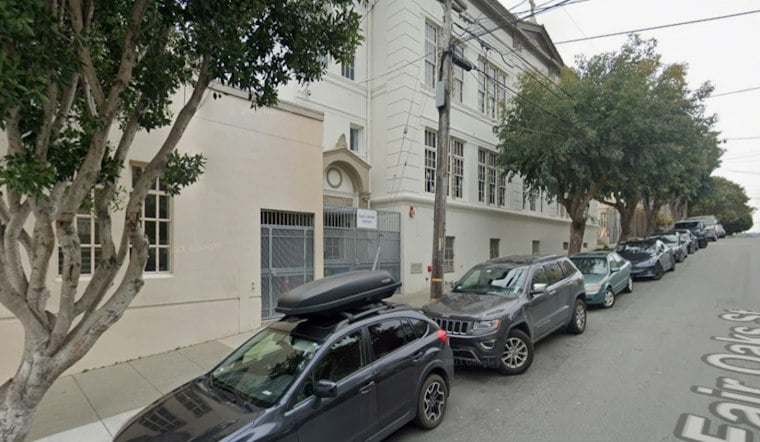
San Francisco Unified says sending a student home for discipline without recording a formal suspension is not acceptable. But the district also says it has no system to count how often students are removed informally, according to The San Francisco Standard. That gap is central to a family’s account reported by the Standard: Roberto Guzman Rivera said his 8-year-old son was sent home early and told he would be suspended for the rest of the day, though no formal suspension was recorded.
The district’s position, as reported by the Standard, is that a disciplinary decision to send a student home must go through the formal suspension process. Without records of informal removals, however, the district cannot readily establish how often students lose instructional time this way or assess whether its response is changing the practice.
What formal discipline requires
California law sets procedures for formal suspensions: Education Code Section 48911 provides for an informal conference with the student, written notice to parents or guardians, and a limit of five consecutive school days, as summarized in the statute. Those protections depend on a removal being handled and recorded as a suspension.
California has also restricted suspensions for willful defiance, with the prohibition extended to grades 6 through 12 through July 1, 2029, according to Liebert Cassidy Whitmore’s summary of Senate Bill 274. The law’s limits on formal suspensions do not, on their own, show whether students are being excluded through other means.
For students with disabilities, federal protections also make accurate records important. The U.S. Department of Education explains that removals totaling more than 10 school days in a year can trigger disciplinary change-of-placement requirements under IDEA, depending on the circumstances. The federal guidance addresses students with disabilities; it does not establish how many informal removals have occurred in SFUSD.
The district’s response—and the measurement gap
The Standard reported that SFUSD issued discipline guidance in July 2026 directing support staff to go into classrooms rather than remove struggling students and requiring interventions and consequences to be documented. The district has said it plans to release remaining referral, removal and transfer records in November 2026, also according to the Standard. Those steps may provide more information, but the district has acknowledged it does not currently have a system for counting informal removals.
SFUSD’s 2026–27 budget includes $12.5 million for student-success strategies, including support for focal student populations and educator professional development, recruitment and retention, the district says. The budget announcement describes broad priorities; it does not specify how much is allocated to in-class behavioral support.
Suspension rates don’t answer every question
The Standard reported that in 2025–26, SFUSD’s suspension rate was 2% overall and about 8% for Black students. Those recorded rates document a disparity in formal suspensions, but they do not measure unrecorded removals. Separately, a February 2026 UCLA study cited by the California School Boards Association found that Black students statewide were suspended at nearly three times the state average rate of 4.3%.
The policy debate extends beyond San Francisco. U.S. Sens. Dick Durbin and Tammy Duckworth have urged the Education Department to define informal removals in Section 504 rulemaking, according to Durbin’s office. That was an advocacy request, not a rule that had taken effect. For SFUSD, the unresolved question remains how often students are sent out of class or home without a formal suspension record—and whether the district’s new documentation guidance will make those removals visible.



