

























































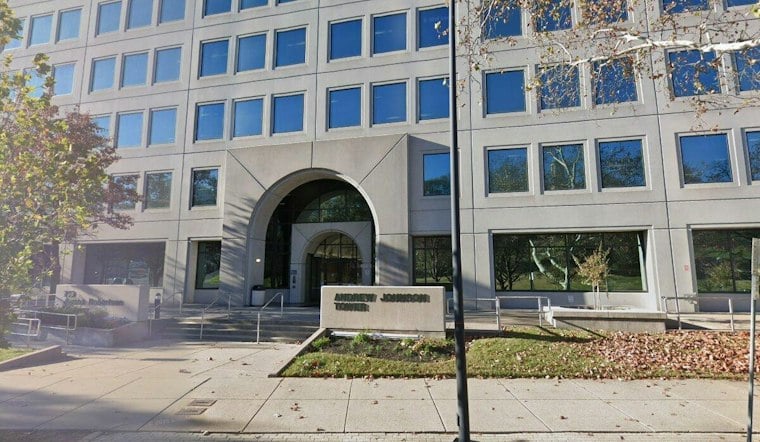
Nashville CARES has sued the Tennessee Department of Health, arguing that new contract language requiring eligibility verification violates state and federal law and puts patients at risk. The Nashville nonprofit filed suit in Davidson County Chancery Court, asking a judge to block the new language from taking effect.
According to the Nashville Banner, the dispute traces back to August 18, when Robertson Nash, the Tennessee Department of Health's director of HIV programs, emailed local case managers to announce that the new eligibility rule took effect immediately. Per the complaint, that email stated patients unable to prove citizenship or legal residency were ineligible for federally funded Ryan White and Housing Opportunities for Persons With AIDS services or benefits. As reported by Tennessee Lookout, the department told HIV-service organizations in August that no patients without documentation of citizenship or legal residency may be newly enrolled in many of these services.
Those same patients could still receive HIV testing, treatment and associated core medical services through the HIV Drug Assistance Program, the complaint states. But Nashville CARES argues the rule otherwise cuts off a broader category of support. Ryan White core medical services include drug and pharmaceutical treatment, home healthcare, mental health services and substance abuse outpatient care, per the complaint, while Ryan White support services cover whatever the Health and Human Services secretary approves as necessary for patients with HIV/AIDS to reach good medical outcomes.
What the Lawsuit Says Is at Stake
Nashville CARES contends that denying patients those support services could undermine their overall success in treatment and limit the benefit of the core medical care they do still qualify for, according to the complaint. The organization describes the rule as imposing burdensome and intrusive verification and record-retention duties, exposing it to arbitrary enforcement, since it requires Nashville CARES and other providers to maintain auditable citizenship-status records for every new program enrollee.
The Tennessee Lookout reports that the contract changes stemming from this policy could affect at least 129 HIV-positive patients who receive help paying for insurance, along with 150 to 160 people getting mental-health and medication-management care and another 80 to 100 people receiving clinic healthcare through Nashville CARES. The outlet also reports that the federal government does not require immigration-status checks for HOPWA or Ryan White services. Nashville CARES argues that screening program beneficiaries for citizenship violates both state and federal law, and that Ryan White and HOPWA programs are meant to serve as payers of last resort for people who cannot afford or access care elsewhere, according to the suit.
A Slow-Moving Administrative Process
Rather than go straight to court, Nashville CARES first tried the administrative route. The organization petitioned the Tennessee Department of Health on September 29 for a declaratory order that would invalidate the rule, then sent an amended petition on October 14 when the agency didn't respond. Per the complaint, the department has not replied to that petition, and state process could allow it up to 60 days after filing to act — a delay that Nashville CARES says ultimately motivated the switch to immediate litigation.
Nashville CARES is represented by the Tennessee Justice Center in the case, which asks Davidson County Chancery Court to block the new contract language from taking effect. Ryan White funding broadly covers the cost of medical care, drug assistance, home health care, case management, financial assistance for health insurance premiums and hospice care for low-income people living with HIV, per the same Lookout account.
Part of a Broader Pattern in Tennessee
This is not Nashville CARES' first run-in with the department over how eligibility and funding decisions get made, and the Lookout notes it is the second lawsuit this year to challenge state health-department efforts to impose immigration-status verification in public safety-net health programs. In July, the department agreed to temporarily pause a separate policy that would have required reporting sick and disabled children to a state immigration-enforcement office, and about 400 children with chronic and sometimes terminal illnesses have remained enrolled in the Children's Special Services program as a result.
The state also announced in January that it would stop accepting more than $8 million in annual federal CDC HIV-prevention funding, according to the Lookout's earlier reporting. And in 2023, Nashville CARES sued the department in the same Davidson County Chancery Court after state officials decided not to award it Ryan White Insurance Assistance Program funding, which it had received from the state since 2001 — serving roughly 5,000 low-income HIV-positive Tennesseans — and instead awarded the grant to Broward Regional Health Planning Council, a Florida nonprofit with no prior history providing HIV services in the state. That 2023 suit called the state's decision illegal, arbitrary and procedurally unlawful, and came after the state's own protest committee had upheld the funding decision, as the Nashville Post reported at the time.





