

























































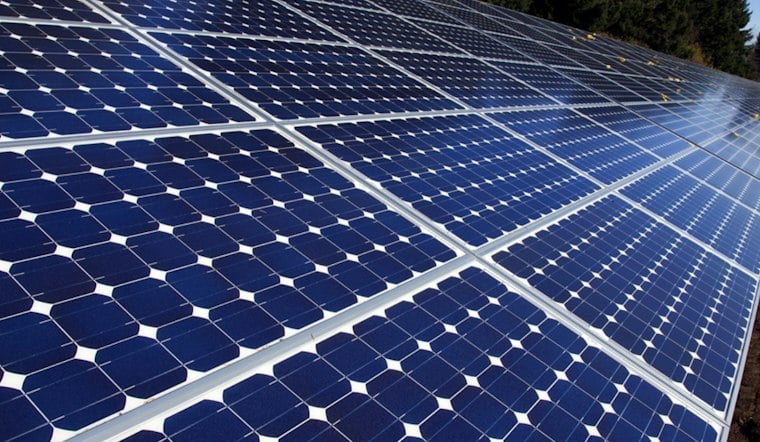
A stretch of rooftops at The Fairgrounds Nashville could soon be covered in solar panels under a Metro Nashville plan that would turn Exposition Buildings 1, 2, and 3, along with the Show Arena, into power generators for the city. The project carries a budgeted cost of roughly $2.4 million and is slated for completion in the first quarter of 2027.
As reported by WKRN News 2, the fairgrounds solar push is among the capital projects included in Metro Nashville's July update, according to Metro Nashville's capital development plans. Those plans lay out the exact physical scope of the installation, confirming the arrays will sit atop the three exposition halls and the Show Arena on the fairgrounds campus.
The financial case for the project hinges on projected power sales. Metro Nashville's own figures show the rooftop array is expected to generate between $100,000 and $130,000 in annual power revenue for the city, while ongoing maintenance costs are estimated at $20,000 to $40,000 a year, according to the same capital development plans. That nets the city as much as $110,000 annually, per the city's documentation.
Contracts and Incentives Behind the Build
Solar panels for the project were procured through Metro's existing contract with LightWave Solar, and the Board of Fair Commissioners approved draft contracts with Nashville Electric Service that would go to Metro Council. The solar flex program is tied to NES's Generation Flexibility initiative, Metro's capital planning documents note.
The push toward fairgrounds solar isn't happening in a vacuum. It's one piece of Metro's effort to comply with Section 2.32.080 of the Metropolitan Code of Laws, which requires Metro Nashville General Government to source 100% of its operating electricity from tier-one renewable sources by 2041, with at least 10% coming specifically from solar power, per the city's energy management plan.
A Citywide Solar Buildout Already Underway
Metro has been moving on that mandate well before the fairgrounds proposal surfaced. Between September 2025 and August 2026, the city added 800 kilowatts of municipal solar capacity by installing more than 1,400 panels across city properties, according to Metro's sustainability office.
Nashville's broader solar ambitions stretch back further still. The city's first community solar park, Music City Solar, opened in August 2018 on a former municipal landfill with more than 17,000 panels. In August, Mayor Freddie O'Connell proposed extending that facility's lease by a decade and adding a utility-scale battery storage system, as reported by Energies Media.
Solar Investment Lands Amid a Fairgrounds Building Boom
The Fairgrounds Nashville itself is a 117-acre municipal campus just under two miles south of downtown. The campus is also home to GEODIS Park, the 30,109-seat, $335 million soccer stadium that opened in 2022 as the home of Nashville SC, a project Hoodline has previously covered in connection with new commercial growth nearby.
The solar proposal also arrives alongside a much larger wave of construction dollars flowing into the campus. Metro is simultaneously funding $23.4 million in infrastructure upgrades around the fairgrounds, including a $4.4 million Wingrove Street entrance project and a $19 million multilane bridge on Lower Coliseum Way, per the capital development documents. Metro estimates the entrance project will be completed in the first quarter of 2027, while the timing of construction for Lower Coliseum Way remains under review.
Land-Use Fights Simmer Nearby
Not every conversation about the fairgrounds' future has been this straightforward. In August, a neighborhood coalition called Restore Our Fairgrounds launched a petition drive seeking a ballot initiative that would replace the historic, 120-year-old Fairgrounds Speedway racetrack with green space and affordable housing, according to NewsChannel 5 Nashville. The effort underscores how contested the campus's long-term identity remains even as city departments push forward with capital projects like the solar array.
The fairgrounds has also found itself at the center of other recent disputes and civic moments. Hoodline has reported on a former driver's lawsuit over a fairgrounds racing ban. The rooftop solar project, by contrast, represents a quieter but financially consequential addition to a campus that has become one of Metro Nashville's busiest sites for competing public investment.





