

























































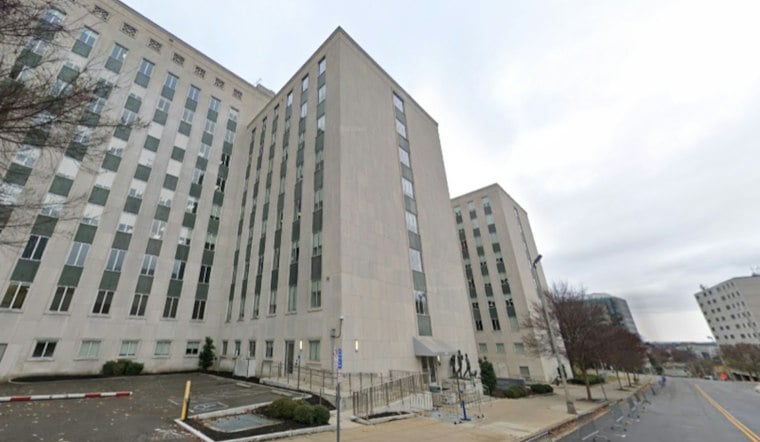
Tennessee House District 60, which covers Donelson, Hermitage and part of Old Hickory, has been narrowly held by Democrats for 15 years, and this November it remains one of Nashville's more competitive statehouse races. Incumbent Democrat Shaundelle Brooks is running for reelection against Republican Eva Angelina Romero, with both candidates having run unopposed in their August primaries.
Brooks has served in the statehouse since 2024, when she was elected by about 2,300 votes, according to the Nashville Banner. She succeeded Darren Jernigan, who represented the district from 2013 to 2024 and had himself won his first term in 2012 by just 95 votes — a reminder of how tightly contested this stretch of eastern Davidson County has remained for well over a decade.
Brooks entered politics to advocate for gun control legislation after her child, 23-year-old Akilah DaSilva, was killed in the 2018 mass shooting at a Waffle House in Antioch. Accounts of the shooting have described DaSilva differently — WSMV referred to DaSilva as Brooks' daughter, while the Nashville Scene described DaSilva as her son. Brooks has said she decided to take action because nothing was working.
Akilah's Law Stalls in Committee
Brooks proposed Akilah's Law, which would have made it an offense to sell, deliver or transfer a firearm to a person with a known history as a patient in a mental institution within the previous five years. The bill moved forward in subcommittee but was later taken off notice in committee this year, according to the Banner's reporting. Advocates have cautioned that the measure could have unintended consequences and discourage voluntary mental health treatment.
For her reelection campaign, Brooks lists violence prevention, mental health crisis response, and youth opportunity and prevention programs among her priorities. She is endorsed by Everytown for Gun Safety, the Tennessee Hispanic Action Network, the AFL-CIO and Tennessee Advocates for Planned Parenthood, and has received donations from Bob Freeman, Gloria Johnson, Mike Cortese, Jacob Kupin and Dan Heller. Her campaign has raised about $7,600 in contributions.
Romero's Background and Property Tax Platform
Romero is a real estate agent and co-founder of a dental clinic with her husband, and she serves as a board member of the Tennessee Housing Development Agency. On fiscal policy, she supports a two percent cap on annual property tax increases and a property tax freeze for homeowners aged 65 and older, saying people should not be taxed out of their homes. She also supports Amendment 2, which would prohibit the Tennessee legislature from establishing a state property tax — Tennessee has not collected state property taxes for more than 75 years.
Property taxes remain Metro Nashville's largest revenue source, accounting for 56.69 percent of the city's $3.85 billion budget; the city collected $1.26 billion in property taxes in 2024. Brooks has introduced a bill limiting county property taxes to $3 per $100 of assessed property value; the bill would decrease Metro Nashville's local revenue by $98 million and has been deferred to the January 2027 legislative calendar.
Policing Technology and Campaign Fundraising
Romero also supports deploying license plate readers across Nashville and backs legislation requiring local officials to allow police departments to connect to available public safety data feeds and technology — a push that comes as license plate readers face growing opposition nationally over privacy concerns. Under Metro Nashville's own rules, the devices must be distributed equitably across the city's north, south, east and west quadrants, and Metro Nashville policy requires reasonable suspicion of a felony, traffic or parking offense before officers may examine data collected more than an hour earlier.
Romero has outraised Brooks significantly, pulling in about $84,000 in campaign contributions compared with Brooks' roughly $7,600. Her donors include 19 real estate agents from California, Texas, North Carolina and other states, along with the Friends of Police PAC and Latinos for Tennessee. Neither candidate responded to the Banner's questionnaire in time for publication.
Early voting for the general election begins Wednesday, October 14, and continues through Thursday, October 29, with Election Day set for Tuesday, November 3.



