

























































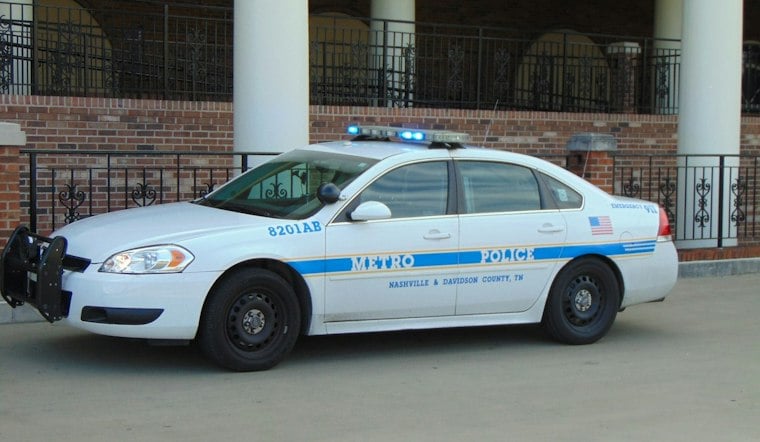
A federal jury has convicted 40-year-old Nashville resident Brandon Ostein on every count in his indictment, finding he ran a large-scale cocaine and fentanyl trafficking operation out of a high-rise apartment on Broadway in downtown Nashville. The case included charges of conspiracy to possess with intent to distribute fentanyl and cocaine, possession with intent to distribute, and multiple firearms offenses tied to his drug activity, and Ostein now faces a mandatory minimum of at least 30 years and up to life in federal prison.
Ostein was found guilty of conspiracy to possess with intent to distribute 400 grams or more of fentanyl and 5 kilograms or more of cocaine, along with possession with intent to distribute fentanyl and cocaine, possession of firearms in furtherance of a drug trafficking crime, and possession of a firearm by a convicted felon, according to WKRN News 2. The outlet reports he had prior felony drug convictions, including a Davidson County case for possessing more than 300 grams of cocaine, and that he's scheduled to be sentenced on January 21, 2027.
Evidence presented by federal prosecutors at trial showed Ostein operated a large-scale drug business and stored substantial quantities of narcotics, according to the U.S. Department of Justice. His Broadway apartment at 1200 Broadway served as his central stash house and packaging facility, where investigators seized tens of pounds of narcotics, firearms, equipment and cash, per the same DOJ release.
A Months-Long Investigation Unravels the Network
Nashville and Murfreesboro authorities conducted a ten-month investigation into the drug trafficking and firearms offenses, per WKRN's reporting. Federal and local agencies relied on physical surveillance, video recordings and controlled purchases of cocaine before executing search warrants, the Justice Department's release states.
When officers arrested Ostein in August 2023, Metro Nashville police discovered 37 pounds of fentanyl-laced cocaine, along with guns, shoeboxes containing about $400,000 in cash, plastic baggies, kilogram presses and vacuum sealers, WKRN reported. At the time of his arrest, Ostein was 36 years old and on parole as a convicted drug felon who had registered with local police as an ex-con in October 2022, according to the Metro Nashville Police Department.
Investigators established Ostein's access to and control over the Broadway apartment through building access records, surveillance footage and his personal belongings found inside, per the Justice Department. They also discovered a telescope aimed toward a nearby parking area, reportedly used to monitor cocaine deals as they happened, investigators said.
Facial Recognition Survives a Suppression Challenge
Pretrial, Ostein's defense tried to block evidence tied to how investigators confirmed his identity. Court documents published by CaseMine show U.S. District Judge Aleta A. Trauger denied Ostein's motion to suppress in November 2025 after the defense challenged law enforcement's use of facial recognition technology on a photo supplied by the apartment building's management. Tennessee Bureau of Investigation agents had used the software on a photo voluntarily provided by building staff to confirm Ostein's identity, according to the court filing.
A federal grand jury had indicted Ostein — who went by the street alias Snake — alongside co-defendant Anthony Gloss in February 2024 on conspiracy, narcotics distribution and firearms charges, the Justice Department announced at the time. Both men faced federal mandatory minimum terms under that indictment. The resolution of the charges against Gloss has not been addressed in the available case materials.
The investigation and prosecution involved the Metro Nashville Police Department, Murfreesboro Police Department, Tennessee Bureau of Investigation, Drug Enforcement Administration and the Bureau of Alcohol, Tobacco, Firearms and Explosives, WKRN reported. Federal prosecutors handled the case.
Why Federal Minimums Run So Long
Federal drug trafficking prosecutions can carry strict mandatory minimum sentences, according to a legal breakdown from Fiola | Parker PLLC. Ostein faces a mandatory minimum of 30 years in federal prison.
The case lands against a grim backdrop in Davidson County. Fentanyl was detected in approximately 70% of overdose-related toxicology reports in year-to-date 2024, according to a surveillance report from the Metro Public Health Department of Nashville/Davidson County, even as overall fatal overdoses dropped 26% from 2023 to 2024. Separate health department data found cocaine was frequently detected.
The case is one of several recent federal and local prosecutions targeting cocaine and fentanyl distribution networks in the Nashville area. Hoodline reported on a North Nashville bust earlier in October that resulted in a two-year sentence for another defendant in a separate multi-defendant case. Ostein is scheduled to be sentenced in January 2027.





