

























































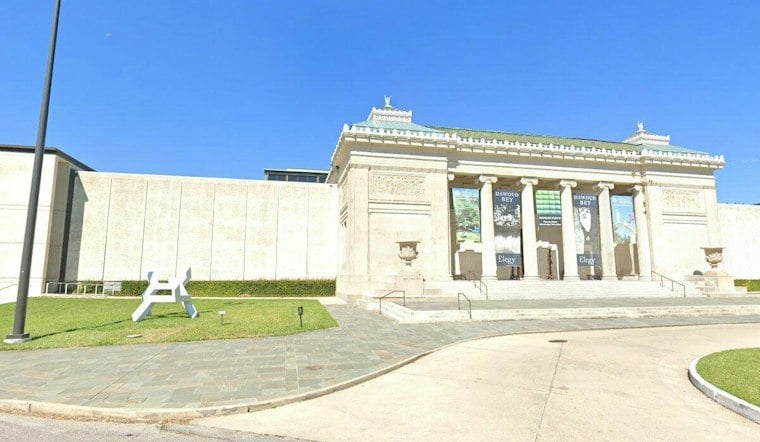
The New Orleans Museum of Art opens its doors Friday to nearly 60 works of Japanese Rinpa painting, a once-niche genre that helped transform the museum from a minor regional collector of Japanese art into a major American repository for it. The exhibition, titled Second Nature: Japanese Rinpa Paintings from the Gitter-Yelen Collection, includes hanging scrolls, folding screens, fans, albums, handscrolls, ceramics, and other decorative arts spanning centuries of the tradition.
According to noma.org, the show is drawn primarily from the collection of Alice Yelen Gitter and the late Dr. Kurt A. Gitter, supplemented with additional pieces from NOMA's own holdings. As reported by seegreatart.art, the exhibition is organized by NOMA with guest curator Yukio Lippit, alongside Jeffrey T. Chambers, bringing together works by Ogata Kōrin, Hon'ami Kōetsu, Tawaraya Sōtatsu, and other figures regarded as originators of the Rinpa tradition.
A Distinctive School Born in the Edo Period
Rinpa stands as one of the most distinctive schools to emerge from Japan's Edo period, which ran from 1615 to 1868, per noma.org's exhibition page for Second Nature. Rather than a formal school with direct master-to-student instruction, Rinpa artists were loosely connected across generations, often studying and reinterpreting the works of their predecessors long after those predecessors had died, as explained by the Epoch Times. That continuity-through-reinvention is visible in the exhibition's focus on later painters including Sakai Hōitsu, Nakamura Hōchū, Suzuki Kiitsu, and the 20th-century master Kamisaka Sekka, according to the same NOMA exhibition page.
The genre's signature look, stylized natural forms rendered in a shimmering, bright polychrome palette, came to define what many picture when they imagine classical Japanese art, the Smithsonian's National Asian Art Museum notes in its own overview of Rinpa's visual legacy. Rinpa painters also developed tarashikomi, a technique of applying wet ink or pigment onto an already-wet surface so that colors pool, bleed, and spread in unpredictable ways, per the Epoch Times report.
The Painting Considered One of the Finest Outside Japan
Among the show's highlights is Sakai Hōitsu's Triptych of Flowers and the Rising Sun, which noma.org describes as widely considered one of the most important Rinpa paintings outside Japan. Hōitsu, who lived from 1757 to 1828, is positioned in the exhibition as a pivotal figure who revived Ogata Kōrin's artistic achievements, according to seegreatart.art. In 1815, Hōitsu marked the centenary of Kōrin's death with an exhibition and publication featuring 100 of Kōrin's paintings, a tribute detailed on NOMA's site.
Second Nature also features a twelve-panel album by Hirai Baisen, per seegreatart.art's account of the exhibition's contents. Kamisaka Sekka, who studied in Glasgow before helping carry Rinpa's aesthetic into the modern era, produced not only paintings but woodblock prints and lacquerware, according to noma.org.
From Six Paintings to a Major National Collection
The exhibition's roots trace back decades, to when Dr. Kurt A. Gitter began collecting Japanese art while building his retinal-surgery practice in New Orleans in the late 1960s, per seegreatart.art. Before Gitter's involvement with the museum beginning in 1972, NOMA had only six paintings in its Japanese art collection, according to a NOMA announcement about the Gitter Gallery. Over the following five decades, Alice Yelen Gitter and Dr. Kurt A. Gitter donated nearly 350 works of art to the museum, the same NOMA announcement states, helping build what is now described as one of the foremost public collections of Edo-period Japanese painting outside Japan.
Gitter joined NOMA's board of trustees in 1973 and later became an honorary life trustee in 1991, per seegreatart.art. The museum presented him with its Isaac Delgado Award in 2003, and in 2024 NOMA dedicated the Kurt A. Gitter, MD and Alice Yelen Gitter Gallery for Japanese Art, a milestone confirmed by Antiques and The Arts Weekly. Gitter died on March 25, 2026, in New Orleans at age 89, the outlet reported, with Alice Yelen Gitter continuing as steward of the collection that bears their name.
Related Programming Around the Opening
Second Nature will be on view in NOMA's first-floor Ella West Freeman Galleries, according to seegreatart.art. The museum plans a half-day symposium on Rinpa and Edo-period painting on Saturday, featuring speakers including Yukio Lippit, John T. Carpenter of the Metropolitan Museum of Art, Frank Feltons of the Seattle Art Museum, and Tomoko Sakomura of Swarthmore College, per the museum's own announcement as relayed by seegreatart.art.
The following week, NOMA will host Japan Fest on October 10 in partnership with the Japan Club of New Orleans and the Consulate General of Japan in Nashville, described as the largest celebration of Japanese art and culture in the Gulf South. NOMA's Salon Supper Club, launched in 2025, will continue on October 15 with an evening inspired by Second Nature, featuring guest chef Sue Zemanick of the Michelin-starred restaurant Zasu, according to the same seegreatart.art report.
How New Orleans Compares to Past Rinpa Showcases
Major Rinpa exhibitions outside Japan remain relatively rare events. In 2012, the Metropolitan Museum of Art and Japan Society in New York staged simultaneous shows that together formed one of the largest Rinpa displays seen outside Japan in years, according to the New York Times. The Met's presentation, Designing Nature: The Rinpa Aesthetic in Japanese Art, ran from May 26, 2012, through January 13, 2013, per the Metropolitan Museum of Art, while the Times noted that the Met's show offered a broad view of the style compared to Japan Society's more concentrated one. Separately, Japan Society presented None Whatsoever, a 2024 exhibition of Zen paintings and calligraphies that opened in March.





