

























































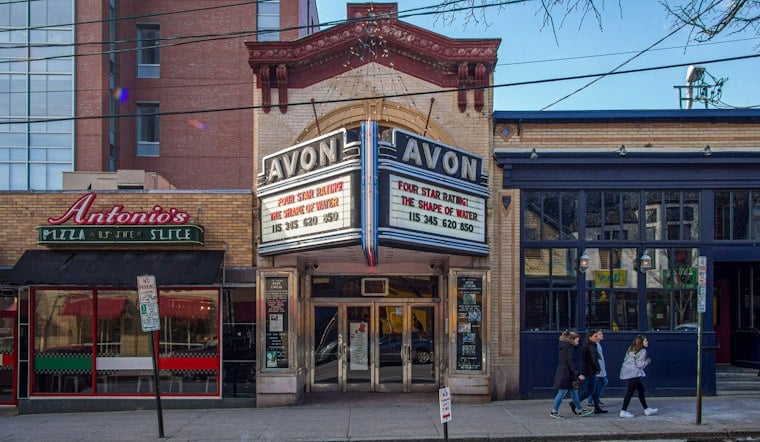
Newport got a jump on the rest of the country this week, hosting an early screening of Ron Howard's new documentary Avedon at the Avon Cinema before the film even lands on Netflix. The screening brought cinematographer Robert Chappell to town for a conversation that dug into how he built the visual language for a movie about one of photography's most exacting eyes.
The event, organized by newportFILM, paired Chappell with Thaddeus Russell, senior critic of photography at the Rhode Island School of Design, for a post-screening discussion. Avedon traces the life and career of photographer Richard Avedon, who died in 2004 at age 81, using access to his personal archives, according to the Festival de Cannes. The film draws on previously unseen stills, behind-the-lens footage and interviews with people who worked alongside him.
Avedon premiered at Cannes in May 2026 to strong reviews, and Netflix later acquired the film for worldwide release, according to The Hollywood Reporter. MovieInsider lists the film for an exclusive Netflix release on November 11, 2026. The production came together through Imagine Documentaries and Fifth Season in association with The Richard Avedon Foundation, per ARTnews.
A Cinematographer Who Hadn't Yet Seen His Own Film
Per Cathleen Carr, newportFILM's executive director, Chappell had not actually seen the finished film before sitting down for the Avon screening. Carr said the organization tries to make sure film talent is present at its screenings, a practice consistent with newportFILM's description of itself as a year-round documentary organization built around filmmaker conversations, and with its stated push to have filmmakers or film subjects at its screenings. Carr described the Newport evening as one that brought together people who love photography and recognize Avedon's cultural impact in the United States.
Chappell told the audience he hoped he could offer Ron Howard something the director couldn't otherwise anticipate or put into words himself, comparing the process of selecting a cinematographer to casting an actor. Howard, he said, was drawn to his earlier work on The Fog of War, the Errol Morris documentary that won the Academy Award for best documentary feature after its 2003 release, according to the American Society of Cinematographers. That film used the Interrotron, a two-way mirror system invented by Morris that let subjects make direct eye contact with the camera while speaking to an off-screen interviewer. Howard wanted a similar effect for Avedon, which is why he enlisted Chappell for the project.
Finding His Own Visual Voice, Not Avedon's
Chappell said Howard showed up to work in sweatpants, and that the two shared an affinity as consummate artists. Chappell noted that Howard looks for subjects and characters he personally identifies with. On the visual side, Chappell said he had considered shooting Avedon entirely in black and white, but decided against it so the film wouldn't simply mimic Avedon's own famously stark, confrontational portraits.
Those portraits, often shot against stark white backdrops, were part of how Avedon sought to decontextualize his subjects and question where meaning lives in a portrait, according to CNN. Later in his career, Avedon turned his lens toward working-class subjects in the American West, photographing butchers, coal miners and waitresses, the outlet reported. The Cannes festival has framed the film as an examination of how Avedon's work reflected and reshaped the visual language of the 20th century.
Chappell said his goal was for the film's lighting and backgrounds to be forgettable, a sign, in his view, that he had done his job correctly. He added that working on Avedon pushed him to keep going in his own craft. For Carr, the hope is that the documentary introduces a new generation of viewers to Avedon's work and his deliberate, careful approach to image-making, once audiences nationwide get their own chance to watch it on Netflix.




