

























































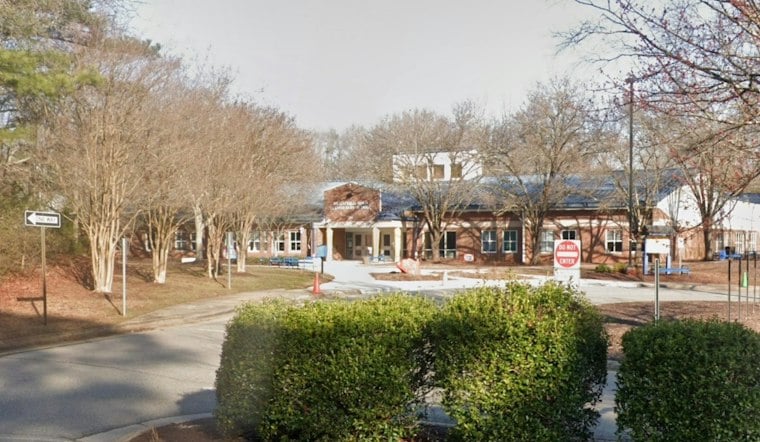
A 199-foot cell tower disguised as a pine tree is headed for a vote at Brassfield Road Elementary School, and North Raleigh neighbors are not going quietly. Residents have asked the Wake County Public School System to reconsider the project, citing worries that the structure would look unsightly and could expose children to radio-frequency radiation, even as the district stands to collect tens of thousands of dollars a year in new rent.
The Wake County Board of Education is expected to take up the Brassfield Road proposal at its facilities committee meeting on October 13, with a full board vote likely to follow on October 20, according to WRAL. Board leadership has assured commenters that the project will be discussed publicly a full week before any vote is taken, the station reports.
Janine Janicelli, a Forest Brook neighborhood resident and cancer survivor, was among five nearby residents who showed up at the board's October 6 meeting to urge members not to approve the tower, per the same WRAL account. She asked the board to conduct thorough research before moving forward, while other speakers that night said research on cell tower health effects remains mixed and argued the structure would drag down nearby property values. One resident floated the idea of a shorter tower as a compromise, the station notes.
What the Science and the Law Actually Say
The worries raised by Brassfield Road neighbors echo a scientific and legal reality that limits just how much the school board can actually do. The American Cancer Society, in health guidance updated in June 2026, states that current evidence does not show ground-level radiofrequency radiation near cell towers causes cancer or poses significant health risks, noting that exposure levels at ground level typically run hundreds of times below Federal Communications Commission safety limits.
That scientific backdrop matters because of what federal law allows local governments to do. Under Section 704 of the Telecommunications Act of 1996, state and local governments are legally barred from denying wireless facility applications on environmental or health grounds so long as a project meets FCC emission limits, a restriction the City of Wilson Springs outlines in its own small-cell wireless guidance. Separately, federal shot-clock rules give local boards only 60 to 150 days to act on wireless applications in the first place, according to reporting from Broadband Breakfast, which caps how long the board can deliberate before federal deadlines force a decision.
A Familiar Revenue Playbook for Wake Schools
This is far from WCPSS's first cell tower. The district has leased land for wireless towers at a minimum of five campuses and has done so since the late 1990s, with Sanderson High School receiving the district's first school-property tower back in 1997, per WRAL's reporting. A 2016 district presentation identified four towers across three campuses generating close to $200,000 in annual revenue at the time, and projected that figure could quadruple as cellphone demand and tower leasing both grew.
Brassfield Road principal Jeff Kleiber told WRAL that at least two more towers have gone up near West Lake schools in Apex and Heritage schools in Wake Forest in the years since, and said locating a facility on school property generates non-tax revenue while improving campus communications. A mandatory legal notice tied to the Brassfield Road project shows expected first-year rental income of $30,000, with a built-in 3% annual increase after that, according to the same report.
The money is arriving at a pointed moment for the district. Wake County Public Schools faced $17.6 million in required budget cuts for the 2026–27 school year on top of $10 million in prior reductions, a squeeze Hoodline previously reported has intensified the district's hunt for revenue that doesn't rely on tax dollars. As the largest school district in North Carolina and the 15th-largest nationwide, WCPSS is projecting enrollment of 161,461 students across 204 schools for the coming academic year, giving it a sprawling real-estate footprint that includes plenty of underused land attractive to wireless carriers.
The Developer's Pitch and the Design Tradeoffs
The applicant behind Brassfield Road, APC Towers, is a Raleigh-headquartered firm founded in 2014 that now manages or develops more than 400 wireless towers across 37 states. The company told WRAL the project addresses a significant gap in wireless coverage and that reliable connectivity supports public safety, emergency communications and 911 calls, adding that towers sited at locations attended by children are common nationally and that this one meets regulatory requirements for radio-frequency emissions.
As part of the deal, APC Towers has agreed to construct a fire truck access lane on the north side of the school building, which Kleiber and the company both frame as a lasting benefit to the campus regardless of how the tower debate shakes out. The proposed structure is designed to resemble a pine tree, a stealth approach that regional development rules increasingly require for taller towers near residential areas.
Wake County isn't alone in grappling with this exact fight. School boards around the country have passed measures restricting new cell towers on or near campuses, including the Loudoun County School Board in Virginia, which prohibited new tower construction for five years starting in 2024. California's Petaluma City Schools introduced its own resolution in September to ban campus cell towers entirely, a debate Hoodline covered that carries echoes of the pushback now playing out in North Raleigh.
For now, the Brassfield Road proposal remains unresolved, with the facilities committee set to dig into the details on October 13 and the full board expected to vote the following week. Neighbors like Janicelli are betting that continued pressure, even against a federal legal framework stacked against health-based objections, might still sway how — or whether — the tower gets built.



