

























































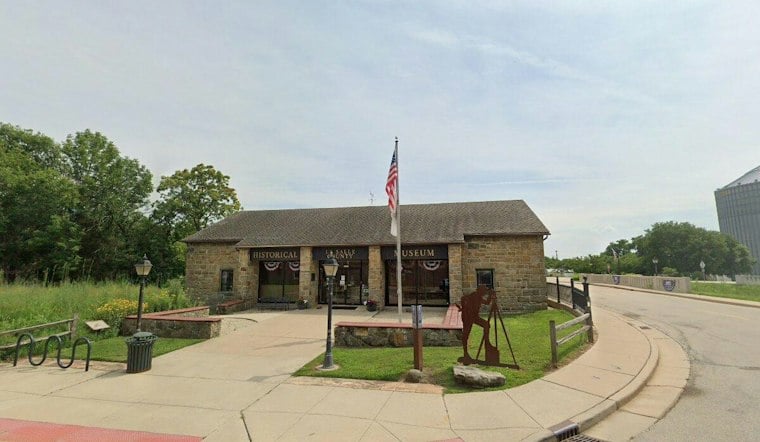
North Utica, a village of roughly 1,300 residents, is about to swell to more than thirty times its size. The 56th Annual Burgoo Festival returns to the tiny LaSalle County community on October 10 and 11. The festival regularly attracts more than 40,000 visitors for a two-day, all-ages, open-air celebration held rain or shine along the banks of the Illinois and Michigan Canal.
The festival's roots stretch back decades, but its centerpiece hasn't changed: a thick, slow-cooked stew called burgoo that has likely been simmering in American kitchens since before the Civil War, according to Shaw Local. The dish may be connected to a 17th-century sailor’s gruel or porridge, though the origin of its name is uncertain, per Food Network Kitchen.
Thousands of Bowls, One Overnight Cook
The LaSalle County Historical Society, which hosts the event, prepares roughly 8,000 bowls of burgoo each year, simmering beef, chicken, pork, and freshly harvested vegetables for at least 10 hours overnight in seven large cauldrons set up along the canal, according to the historical society. The stew is made with freshly harvested vegetables, local meats, herbs, and spices, and cooked in massive cast-iron pots over an open fire, per the Shaw Local report. Burgoo will be served starting at 9 a.m. on October 11 and will continue until it sells out.
The outdoor cooking tradition itself has a borrowed history. When the historical society first began cooking burgoo outdoors for its second festival, organizers learned the technique and borrowed cauldrons directly from burgoo cooks in Arenzville, Illinois, the historical society notes — a detail that ties Utica's signature dish to a wider lineage of small-town Illinois cooking traditions.
Nearly 400 Vendors and Two Stages of Music
The market spans both days in downtown Utica. Saturday's hours are 11 a.m. to 6 p.m., with nearly 400 vendors; on Sunday, more than 375 craft, gift, and antiques sellers are expected from 9 a.m. to 5 p.m., according to Shaw Local.
Live music runs across two stages. At Jamie's Outpost, Kalamit plays Saturday from 1 to 5 p.m., followed by Twisted Whiskey from 7 to 11 p.m.; Sunday brings Tailgate Confessions at 11:30 a.m., Regal Beagle at 4 p.m., and Zazzle Band closing out the night at 7:30 p.m. The Museum Mainstage features Happy Hour on Saturday evening and Fiddle Rock and Dirt Road Reckoning on Sunday. Festival organizers describe the event as featuring Midwestern hospitality, artists, artisans, antiques vendors, and live entertainment, alongside free children's entertainment, blacksmithing demonstrations, and historic reenactments, including a performance from The Old West Regulators.
Getting 40,000 People Into a Town of 1,300
The Village of North Utica's comprehensive plan outlines the village's access from both interstates. North Utica is also about two minutes from Starved Rock State Park.
To ease the crush, NCAT is offering a free park-and-ride shuttle throughout the festival, running continuously during festival hours from a lot at the International Union of Operating Engineers on U.S. Route 6, with a suggested $2 donation per person. Drivers who'd rather park in town can expect to pay about $10 per vehicle at Utica parking areas, per Shaw Local.
Starved Rock's Record Crowds Add to the Mix
State natural-resources figures put Starved Rock State Park's annual visitation at about 2.5 million. Separately, Capitol News Illinois reported that visitation across Illinois state parks reached its highest level in more than a decade; that statewide figure does not establish a decade-long trend for Starved Rock alone. Starved Rock State Park is near Utica, where the festival is held. Starved Rock is undergoing an $18 million trail improvement project in 2026 to repair bridges, stairways, boardwalks, and retaining walls worn by foot traffic, according to the Illinois Capital Development Board.
Park visits and festival attendance are different counts
The roughly 2.5 million figure describes Starved Rock's annual visitation, while the 40,000 figure is an estimate for the two-day festival; the figures measure different things. The information cited here does not provide year-by-year park counts for the past decade. For a separate historical comparison, the Chicago Sun-Times reported that Starved Rock drew 94,000 visitors over Memorial Day weekend in 2016, filling the park to capacity and prompting a temporary closure—not a Burgoo Festival attendance count.
A Festival Built Around Historic Preservation
Revenue from burgoo sales and vendor fees supports the LaSalle County Historical Society's projects, Shaw Local reports. The society operates six museum locations along the historic I&M Canal, including the Canal Warehouse, a Heritage Center, a one-room schoolhouse, a working blacksmith shop, and an original barn dating to 1875.
The canal itself carries national weight beyond the festival grounds. Congress designated the Illinois and Michigan Canal as America's first National Heritage Area in 1984, a law signed by President Ronald Reagan, according to the Canal Corridor Association. Visitors looking for more regional context can also stop by the Starved Rock Country Welcome Center and Illinois Made Gift Shoppe, located one block from the festival in downtown Utica, which offers Illinois-made artisan goods along with brochures, maps, and guidebooks.





