

























































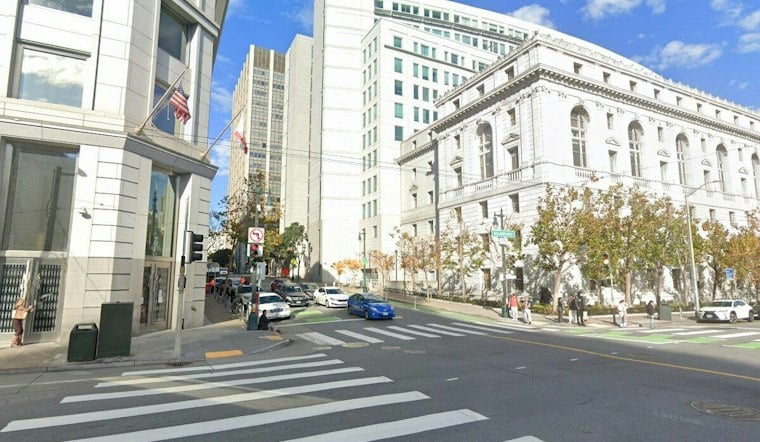
Northern California court interpreters have voted overwhelmingly to authorize a strike after salary negotiations with regional court administrators broke down, a move that includes roughly eight unionized interpreters working in San Mateo County courts. The vote follows a half-day demonstration outside the San Francisco courthouse on Friday, where interpreters protested what they describe as years of being underpaid compared to the contractors who increasingly fill their jobs.
The California Alliance of Legal Interpreters, which represents the court interpreters, announced on October 12 that 96% of its voting members authorized the strike after eight months of contract talks with Region 2 court administrators stalled, according to SFGATE. Bargaining began in February after the union's prior contract expired in December 2025. As reported by the San Mateo Daily Journal, Region 2 courts have proposed mediation to resolve the wage gap and other outstanding issues, while CALI says it wants administrators back at the bargaining table to avoid a walkout altogether.
CALI bargaining spokesperson Mary Lou Aranguren said interpreters earn significantly less than the contractors sometimes brought in to do the same work, per the Daily Journal. The paper reports that courts across the region have lost 42% of their unionized interpreter workforce over the past nine years, as courts increasingly turn to outside contractors to fill gaps.
A Regional Pay Gap That's Pushing Interpreters Out
The numbers behind the dispute are stark. An entry-level union interpreter earns about $85,000 a year plus benefits, while contracted interpreters doing comparable work can earn $140,000 to $300,000 annually without benefits, according to the Daily Journal. Mission Local reports that unionized state court staff interpreters earn between 35% and 47% less than their federally employed counterparts, even though other state trial court staff have achieved wage parity with federal equivalents.
That disparity isn't limited to San Mateo County. Region 2 spans 15 courts across 12 counties by the Daily Journal's count, though SFGATE's reporting puts the broader region at 15 counties total, noting that courts in Napa, Lake, and Del Norte employ zero staff interpreters and rely entirely on independent contractors. SFGATE reports the 10 counties with staff interpreters include San Francisco, San Mateo, Alameda, Contra Costa, Sonoma, Santa Cruz, Monterey, San Benito, Humboldt, and Mendocino. Across that footprint, Region 2 courts lost 42% of their unionized staff interpreters to attrition and non-competitive wages over the past nine years, SFGATE's reporting found, with union representatives attributing the exodus to long-term undercompensation that has pushed certified professionals away from public court jobs.
Union Says Remote Interpretation Threatens Due Process
Pay isn't the union's only demand. CALI is also pushing for contract language that would limit remote video interpretation to non-complex, non-evidentiary proceedings and require in-person interpreters whenever defendants appear in court, according to Mission Local. The union argues that inconsistent remote video platforms prevent non-English-speaking defendants from communicating confidentially with their attorneys off the record, the outlet reports.
CALI also alleges the current compensation structure and reliance on contractors undermine labor relations, per the Daily Journal. The Trial Court Interpreter Employment and Labor Relations Act requires California trial courts to prioritize hiring staff interpreters over independent contractors, except under specific statutory exceptions, SFGATE notes.
Courts Say Essential Services Will Continue
Region 2 Courts Administrative Chair Alicia Vojnik said in an email, cited by the Daily Journal, that courts will remain open and maintain essential operations and language services if interpreters strike. Aranguren, however, said the role requires a competent interpreter for people to actually understand what's happening in their own proceedings, telling the Daily Journal that interpreters serve everyone in the system — defendants, victims, witnesses, attorneys, and judges alike — and that courts must recognize the importance of reliable, staffed interpretation.
Court interpreters translate Spanish, Mandarin, Korean, and other languages for people who don't speak English well across civil, criminal, and immigration proceedings, the Daily Journal reports. CALI is seeking salary parity with both federal courts and the contracted interpreters now doing much of that work, while the Daily Journal notes that current court interpreter pay is considered low income by Bay Area standards.
Part of a Wider Pattern of Courthouse Labor Unrest
Friday's walkout outside the San Francisco courthouse marked the second major court labor disruption in the city this year, following a clerks strike in February that caused significant delays and trial backlogs across civil and criminal courtrooms, according to Mission Local. Hoodline previously covered a one-day clerks strike in October 2024 and its fallout for the courthouse.
A state-mandated study of California's court interpreter workforce was completed in December 2025, according to the Judicial Council of California.
Adding another layer to the standoff, the Judicial Council scheduled an October 16 vote on a proposal to set non-negotiable statewide fee caps for contractor interpreters at federal daily rates of $349 for a half-day and $617 for a full day, according to MultiLingual. The Judicial Council cited state Budget Act requirements barring interpreter compensation from exceeding federal rates so courts don't end up competing against one another for the same pool of contractors, the outlet reports.





