

























































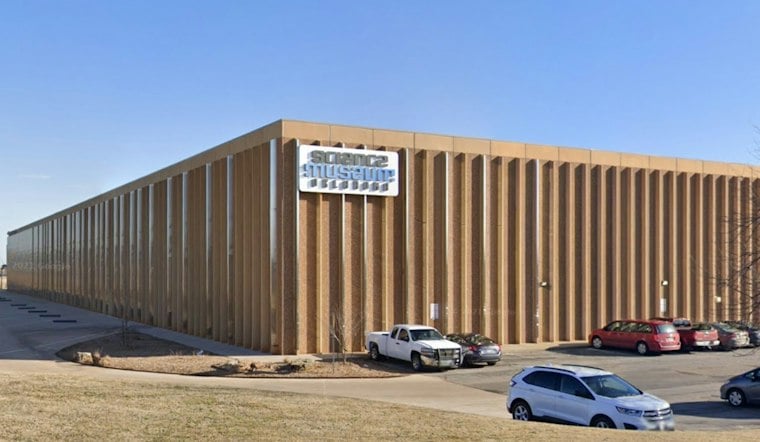
Science Museum Oklahoma formally handed over human remains tied to the Revolutionary War gunboat Philadelphia to a military escort from the New Hampshire National Guard, acting on behalf of the U.S. Army. The remains, held separately from a matching set at the Smithsonian for decades, are set to be reunited and buried together at Saratoga National Cemetery in New York on Oct. 13.
The transfer is part of a story that stretches back nearly 250 years, according to Science Museum Oklahoma. The Philadelphia was an American gunboat sunk by British cannon fire on Oct. 11, 1776, during the Battle of Valcour Island on Lake Champlain. It sat on the lake bottom until 1935, when the vessel was raised and more than 700 objects, including tools, weapon components, and human remains, were recovered from the wreck.
Among those recovered items were teeth that, over time, ended up split between two institutions. Three teeth went to the Smithsonian Institution in Washington, D.C., while three others were sent to Science Museum Oklahoma, according to Seven Days. Military records list all 44 Philadelphia crewmen, but the fates of five remain unknown, and researchers do not know whose remains are whose, the outlet reports. Those five are named in the reporting as Ebenezar Bailey of Bolton, Massachusetts, along with John Leach, Benjamin Walker, Daniel Whitworth and Ezekiah Budthomas.
Years of Research Connected the Scattered Remains
Getting to this point took years of joint work. Science Museum Oklahoma and the Smithsonian conducted research that traced both the teeth and a cache of artifacts back to the same vessel, establishing connections between remains that had been cared for separately for decades. Science Museum Oklahoma, a Smithsonian affiliate, had displayed its collection of 42 Philadelphia artifacts, including cannonballs, uniform buttons and weapon components, from 1963 until 2012, when the items were transferred to the Smithsonian.
Susan Berberet, quoted in the museum's own account of the transfer, said the pieces carry weight well beyond a display case: these artifacts connect us to the earliest days of our country and to the people who served during a defining time in America, according to The Journal Record. The Philadelphia itself remains one of the rare surviving intact American Revolutionary War fighting vessels, a status that has kept both the ship and its contents under close study long after the battle that sank it.
A Battle That Bought Time, and a Ship Still Fighting to Survive
The battle that claimed the Philadelphia and its crew wasn't a win on paper. The American fleet was defeated at Valcour Island, but the fight still delayed the British advance south from Canada, giving American forces additional time to prepare defenses farther south, historians say.
The ship itself is now in the middle of its own race against time. The Philadelphia is undergoing a multiyear conservation project at the Smithsonian's National Museum of American History, where conservators found that the vessel's timbers were shrinking and its iron fittings disintegrating after decades underwater and on display. The work is aimed at preserving the gunboat in time for the 250th anniversary of the United States, and completion was scheduled for summer 2026.
The upcoming burial at Saratoga National Cemetery adds to a string of similar ceremonies tied to the Revolutionary War's 250th anniversary. More than 40 Revolutionary War-era soldiers were laid to rest in upstate New York over Memorial Day weekend, and a separate ceremony honored 28 Continental soldiers and at least 38 British soldiers buried in Wilmington, Delaware, nearly 250 years earlier.



