

























































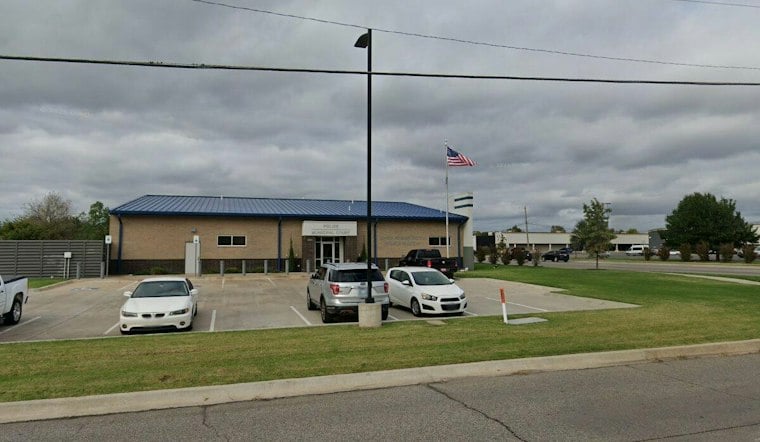
Warr Acres police are pushing back on concerns about their agreement with U.S. Immigration and Customs Enforcement, insisting the deal only comes into play during investigations of serious crimes — not routine traffic stops. The department has also detailed how its six license-plate-reading Flock cameras work, after questions arose about who can access the footage and for what purpose.
The Warr Acres Police Department entered a 287(g) agreement with ICE that gives officers limited immigration authority while they carry out regular law enforcement duties, according to News 9. Assistant Police Chief Jason Allen said that authority is narrower than it might sound. Under department policy, officers may contact immigration authorities only when a person's immigration status comes into question during an investigation involving certain offenses, Allen said, and the agreement does not mean officers will go looking for people in the country illegally.
Allen told the station the referral threshold is DUI, domestic battery and more serious crimes. People stopped for speeding or simply cited for driving without a license are not referred to immigration authorities, he said. Officers may also contact immigration authorities to ask about a detainer after arresting someone on a felony warrant or responding to a domestic battery call, per the same account.
Funding Tied to Training, Not Personnel
The 287(g) agreement provides federal funding that varies with the number of officers who receive training, the station's report notes. That money must go toward equipment rather than personnel, Allen said. Separately, Oklahoma Free Press previously reported that Warr Acres Police Chief Michael Anderson told the city council the arrangement could bring in between $1.2 million and $1.3 million. According to Free Press, the city council never voted on the deal because the chief is empowered to sign agency agreements without council approval, and the agreement took effect September 4.
Free Press also reported that Warr Acres' version of the program takes the form of a Task Force Model, and that at the time of its reporting, Valley Brook was the only other police department in Oklahoma County with a 287(g) agreement. Allen framed the decision in terms of trust, saying the department wrote its policy with community trust in mind and that its first job is protecting and serving residents.
How the Flock Cameras Actually Work
Beyond immigration enforcement, Allen addressed worries that residents may have about being tracked by law enforcement for improper reasons. Warr Acres has six Flock cameras along major roads entering the city, which capture license plate images as vehicles pass. Allen said the cameras provide another tool for investigating crimes but do not create a continuous record of a vehicle's movements — they can only show when a car passed a major intersection equipped with a camera.
Only law enforcement agencies in Oklahoma can search the Warr Acres Flock database, Allen said, meaning agencies outside the state — including ICE — cannot search the system. Officers must enter a case number to run any search, and the system's default data retention period is seven days. Allen said the cameras have already helped Warr Acres police recover stolen vehicles, find missing people and investigate bank robberies. Officers who misuse the system could face discipline up to and including dismissal, he added, and Flock has added reporting tools that can help administrators flag unusual search patterns.
Part of a Statewide Surge
Warr Acres is far from alone. Allen said Oklahoma has dozens of similar 287(g) agreements, with thousands nationwide. That tracks with broader reporting on the program's rapid growth: KGOU reported in August that 46 Oklahoma local agencies had entered collaborative agreements with ICE that year alone, pushing the statewide total of municipal, county and state agencies with agreements to 99 at the time of its report.
KOCO separately reported that at least 112 Oklahoma law enforcement agencies had 287(g) agreements in 2026, up from just three counties — Tulsa, Canadian and Okmulgee — before 2025. The outlet also found more than 1,800 immigration-related arrests through Oklahoma's 287(g) partnerships between January and July 2026, compared with roughly 1,200 for all of 2025. Nationally, NPR reported that more than 29,000 state and local officers were deputized by ICE under 287(g) between January 2025 and October 2026 — far more than the 11,600 deportation officers directly employed by ICE. NPR also cited a FWD.us report finding that state or local police made close to half of all immigration arrests in Oklahoma in June 2026.
Privacy Questions Around License Plate Data
The broader use of Flock Safety's automated license plate readers has drawn scrutiny well beyond Warr Acres. The Electronic Frontier Foundation has reported that Flock systems commonly allow collected plates to be checked against FBI National Crime Information Center hotlists, and that an agency subscribed to the Immigration Violator hotlist may get an alert when a sought vehicle is spotted and could then contact ICE, according to EFF.
Flock Safety itself now recommends agencies cut data retention from 30 days down to seven, while letting existing customers keep their current policies, per News on 6. That outlet found Tulsa, Bartlesville and Muskogee police departments still publicly list a 30-day retention window, putting Warr Acres' seven-day default on the shorter end among Oklahoma agencies. Oklahoma Watch has also documented how the Task Force Model spread early in the state, noting that Sterling Police Chief Brad Alexander was among the first to sign on, doing so in March 2025, according to Oklahoma Watch.



