

























































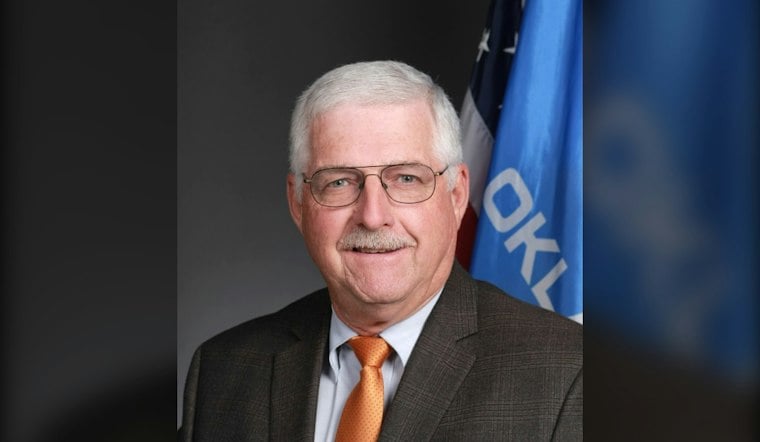
Oklahoma State Sen. Roland Pederson was struck by an alleged drunk driver traveling the wrong way near I-35 and Waterloo Road, leaving him shaken but not physically injured. The crash has prompted a statement from Senate Pro Tem Lonnie Paxton, who said the collision was in no way Pederson's fault.
According to KFOR, the alleged drunk driver was traveling in the wrong direction on the highway when the vehicle hit Pederson. Paxton released a statement saying that other than being understandably shaken up, Pederson was not physically injured, and that the crash was in no way his fault.
Paxton did not hold back in describing what he believes caused the wreck. “I hope the individual responsible for the accident is held fully accountable under the law,” Paxton said, calling the episode a stark reminder of just how dangerous and irresponsible impaired driving can be.
A Senate Leader's Relief
Paxton and his wife, Misti, framed their reaction in personal terms. “My wife, Misti, and I continue to thank God that Roland walked away from this accident unharmed,” Paxton said in the statement carried by the station. The crash remains a developing story, and no additional details about the driver or the circumstances surrounding the collision have been released.
Pederson's close call lands just over a week after state lawmakers gathered to examine the broader problem of wrong-way crashes on Oklahoma highways. On Oct. 19, legislators held an interim study focused on preventing such collisions, looking at tools like electronic highway signs and targeted phone alerts, according to News 9.
The Scale of the Problem Statewide
The numbers behind that study are sobering. From 2020 through 2025, 121 people were killed in 99 fatal wrong-way crashes across Oklahoma, the outlet reported. Wrong-way crashes make up less than 1% of the state's fatal and serious-injury wrecks, but they tend to produce severe head-on impacts at highway speeds, a pattern that has pushed the issue onto lawmakers' radar.
The state has already invested in detection technology, with wrong-way systems deployed at 97 locations statewide, including 86 radar-based systems and 11 camera-based systems, per the same report. The alert concept under discussion would use verified detections from those systems to warn oncoming motorists through electronic highway message boards or audible phone alerts. No pilot program has been approved, and there is no timeline for drivers to begin receiving the proposed alerts, though the issue could surface again in the 2027 legislative session.
A Pattern of Recent Incidents
A Pattern of Recent Incidents Pederson's crash is not an isolated event in the Oklahoma City metro this summer. The Oklahoma Highway Patrol noted that a Tuesday crash on Interstate 44 marked the second wrong-way-driving incident in the metro that week, according to KOCO. In that incident, the wrong-way driver reportedly traveled about three miles the wrong direction on I-44 before becoming disabled near North Expressway and crashing into a wall; the driver was arrested and booked for driving under the influence.
A separate wrong-way stop happened the same week on the Kilpatrick Turnpike, where an alleged drunk driver was pulled over Monday morning for traveling east in the westbound lanes, the station's report noted. Two wrong-way drivers were arrested for DUI in Oklahoma City within that same two-day span.
Lawmakers have also pointed to other recent efforts aimed at impaired driving. The Marissa Murrow Act took effect in July and requires bartenders at event venues to be trained to recognize when someone has had too much to drink, per News 9's reporting on the interim study. The push for that study came after Victims of Impaired Driving requested lawmakers examine wrong-way alert technology, with the Oklahoma House of Representatives agreeing to host the review this fall.
For now, Pederson is recovering from the shock of the crash rather than any physical injury, and Paxton's statement makes clear where he believes responsibility lies. “I hope the individual responsible for the accident is held fully accountable under the law,” Paxton reiterated, as the Capitol community continues to process how close one of its own came to a far worse outcome.





