

























































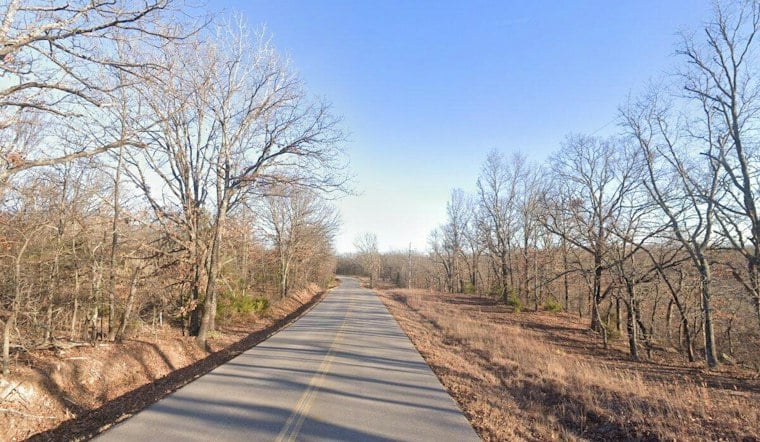
Ten years after he vanished following a domestic disturbance in Okemah, Justin Walker has finally been identified — not alive, but as the person whose remains were found off a rural county road earlier this month. The Office of the Chief Medical Examiner confirmed the identification on Tuesday, closing one chapter of a mystery that has lingered since the summer of 2016 while opening another: how he died, and what happened to him in the years in between.
A Decade-Old Disappearance Finally Has a Name
According to the Oklahoma State Bureau of Investigation
, the Medical Examiner’s Office positively identified the remains as Justin Walker on Tuesday. The discovery traces back to November 14, when the Okfuskee County Sheriff’s Office asked OSBI to investigate human remains found off North 3760 Road in Okemah. Those remains were transported to the Office of the Chief Medical Examiner for further evaluation before the identification was confirmed.
Walker’s cause and manner of death remain under investigation, per the OSBI’s statement, with no further details released at this time. The agency has not said what led investigators to the North 3760 Road location or what else was found there.
The OCME’s identification work can draw on fingerprints, dental and medical records, X-rays and, in some cases, DNA; the office has not said which method established Walker’s identity. Identifying a person and determining how that person died are separate parts of the examination: the OCME determines cause and manner of death, which can remain pending while an investigation continues.
The Case Began With a July 2016 Domestic Disturbance
The story behind Walker’s disappearance stretches back to July 4, 2016, when officers responded to a domestic disturbance call in Okemah. The OSBI’s release says Walker, one of the individuals involved in the dispute, had fled the area before officers arrived on scene. KTUL previously reported he was 26 and last seen by family members around that same date at the Okemah Village Apartments.
Walker was reported missing to the Okemah Police Department on September 28, 2016, the OSBI said. The case did not become an official OSBI investigation until March 23, 2017, when Okemah police formally requested the bureau’s help with the missing-person case.
Oklahoma’s missing-person system has changed since Walker’s case was reported. In November 2019, the Legislature passed Francine’s Law, requiring missing-person cases to be entered into NamUs within 30 days. The law is named for Francine Frost, who went missing in 1981; her remains were found two years later, but she was not identified for more than 30 years. The law postdates Walker’s 2016 report.
Family Describes a Father of Three
In the years the case went unsolved, KTUL’s earlier coverage described Walker as a father of three, standing 6 feet 1 inch tall and weighing 220 pounds, with brown hair and hazel eyes — details that had circulated as investigators and family members hoped for a break in the case.
Anyone with information about Walker’s disappearance can call 1-800-522-8017.
For now, the identification answers the question that has hung over Okemah since 2016 — where Justin Walker was — even as the larger question of what happened to him remains open.
A separate Oklahoma case shows how several forensic tools can contribute to an identification. Bixby police said in August 2026 that remains recovered from the Arkansas River in 2022 were identified as Rudolf “Rudy” Von Koerner after OSBI used genetic genealogy to develop family leads; the OCME then confirmed the identification by comparing the remains with his prior radiology records. Officials have not said whether any of those methods were used to identify Walker.
The OSBI’s cold-case work provides a broader measure of the state’s unresolved cases. The Oklahoma House said in April 2026 that the bureau’s Cold Case Team had helped resolve 98 cases since its creation in November 2018; at the time, the team was tracking about 446 cold-case homicides and 56 cases involving missing or unidentified people. Those figures describe the team’s statewide workload, not a specific assignment in Walker’s case.




