

























































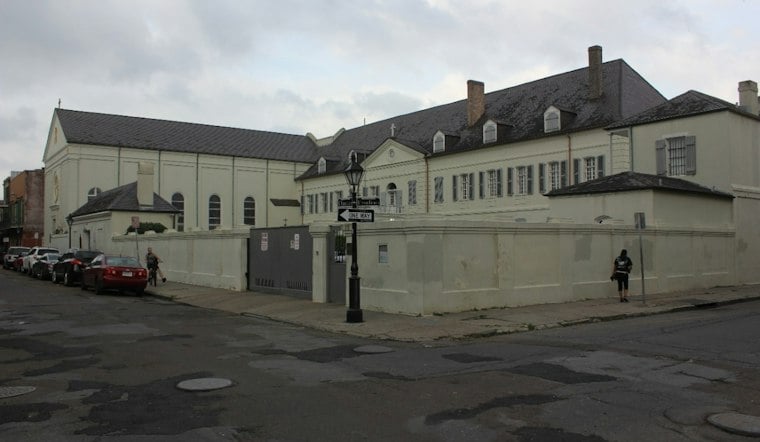
Inside the oldest surviving building in the Mississippi River valley, a French Quarter convent completed around 1752, actors will portray five figures connected to the convent. The Old Ursuline Convent Museum is set to open a new exhibit this weekend marking 300 years since Ursuline nuns first arrived in New Orleans, using live performance to tell stories about people connected to the convent.
According to FOX 8 Local First, the exhibit, titled “Beyond the Veil: Voices from the Ursuline Convent,” is scheduled to open to the public Saturday, October 31, 2026, at the museum at 1112 Chartres Street. Twelve Ursuline nuns came to New Orleans in 1727 and eventually left the French Quarter in 1824, per archdiocesan archives cited by the station. The new exhibit follows five people connected to the convent during the Ursulines' first century in the city, portrayed by actors meant to show visitors how they lived, dressed and where they came from.
Who the Exhibit Brings to Life
The five figures at the center of the exhibit are Sister Marie Madeleine Hachard, an enslaved man named Jean-Baptiste, Marie Turpin, Mother St. Marie and Mother St. Michel, according to the Clarion Herald. Jean-Baptiste worked as an apothecary and surgeon at the Royal Hospital, the outlet reports, and was an enslaved man who the exhibit says played an important role at the convent. Marie Turpin is described as the first Indigenous woman to join the Ursuline Sisters in New Orleans.
The exhibit is scheduled to remain on view at the museum throughout 2027 to mark the Ursulines' tricentennial in New Orleans, the Clarion Herald notes. It also includes an audio play produced by New Orleans theater company Goat in the Road. Sarah Waits, the exhibit's curator and an archivist with the Archdiocese of New Orleans, told FOX 8, “we could really bring their stories to life by having actual actors represent our five people.”
A Colony the Sisters Helped Shape
The Ursuline Sisters' role in early New Orleans extended well beyond the convent walls. They established a hospital, cared for the city's orphans and founded a school for girls and young women, according to Women and the American Story, a project of the New-York Historical Society. The same source notes that the Ursulines were also among the largest enslavers in the colony, a part of their history the new exhibit's focus on Jean-Baptiste directly engages.
Waits described the environment the nuns entered nearly three centuries ago as still being built from the ground up, saying the sisters landed in a developing colony. A 2019 thesis archived by the University of Louisville institutional repository focuses specifically on the agency of the Ursulines in French New Orleans between 1727 and 1732, the same formative years the new exhibit draws from.
A Building With Many Lives
The convent building itself has worn several identities since the sisters departed in 1824. It was used as the private residence of the archbishop after the Archdiocese of New Orleans was established, and at one point the structure was even considered briefly as the seat of the state legislature. Those layered uses, stretching from a working convent and hospital to a bishop's residence, help explain why the museum is treating this tricentennial moment as an opportunity to reintroduce the building's earliest residents to modern visitors rather than simply mark an anniversary.





