

























































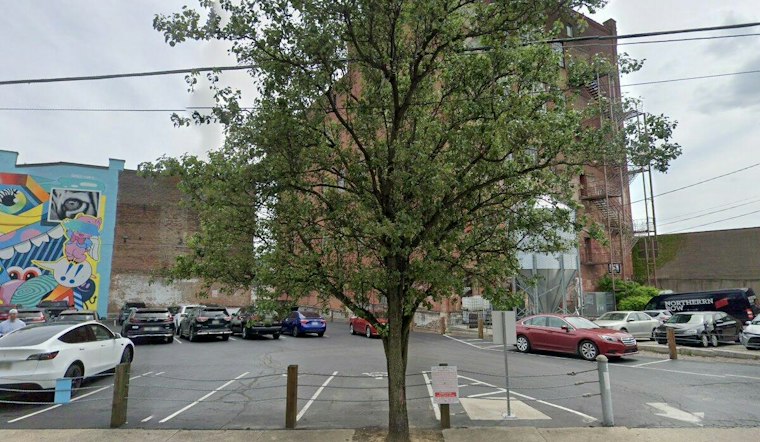
An 800-foot zip line could one day carry riders from Over-the-Rhine's brewery district up a wooded hillside to a long-vacant overlook pavilion in Bellevue Park, under an early-stage proposal the Over-the-Rhine Community Council has put before the city of Cincinnati. The idea, still described as vague and in its infancy, envisions an adventure park with rock climbing, a zip line, and possibly a motorized trolley connecting the two neighborhoods.
According to Local 12, the Over-the-Rhine Community Council approved a community budget request asking the city to help fund the concept, which would send a trolley up to Bellevue Park in the CUF neighborhood, also known as Clifton Heights. Per a Reddit thread detailing the plan, the council is specifically asking Cincinnati to allocate $40,000 in its 2028–2029 biennial budget to pay for a feasibility study — not construction. That distinction matters: this is a request for initial municipal study money, not a greenlit build.
The same Reddit post lays out the physical scope of what is being discussed. The target site covers roughly 8 acres on land owned by the University of Cincinnati, encompassing about half of Bellevue Park, the wooded hillside running down to West Clifton Avenue, and adjacent green space. The zip line itself would run approximately 800 feet, either straight or in a zigzag pattern, linking the area near Northern Row Brewery in Over-the-Rhine with Ransohoff Overlook at the top of Bellevue Park.
A Hillside Crowded With Breweries and History
The hillside targeted for the route sits directly above a one-story industrial building at 112 W. McMicken Ave. owned by Rhinegeist Brewery, which sits across the street from Northern Row Brewery, the same Reddit thread notes. That puts the proposed lower terminus right in the heart of Over-the-Rhine's historic brewery district, where any zip line infrastructure would have to coexist with existing commercial buildings.
It would not be the first time this particular hill carried people between the two neighborhoods. Between 1876 and 1926, the Cincinnati-Clifton Incline Plane, known as the Bellevue Incline, operated along the same hillside, connecting Elm Street in Over-the-Rhine to Ohio Avenue in Clifton Heights, according to the City of Cincinnati. For 50 years, the incline carried commuters up to hilltop leisure spots, making the modern zip line proposal less a novelty than a modern echo of a route Cincinnatians already know.
What Once Stood at the Top of the Hill
Before Bellevue Hill Park existed, the summit was home to the Bellevue House resort, which featured a 400-foot-high rotunda and a wrap-around veranda for dining and leisure, the city's parks department notes. Visitors reached the resort via the Bellevue Incline, making the hilltop a major recreational destination for Cincinnatians long before anyone proposed a zip line.
Today's Bellevue Hill Park features a landmark pavilion designed in 1955 by architect R. Carl Freund in an organic modernism style inspired by Frank Lloyd Wright, complete with a cantilevered roof and concrete pergolas, per the city. Freund served as the Cincinnati Park Board's longtime architect and designed several park structures across the city. The proposed upper terminus of the zip line would connect to Bellevue Park's former concession facility at Ransohoff Overlook, a structure that has stood vacant for many years, the Reddit account states — meaning the project could double as a way to reactivate disused park infrastructure rather than build entirely from scratch.
A Long List of Stakeholders Still Has to Sign Off
Getting from feasibility study to actual zip line would require coordination across a wide range of entities. Advancing the proposal will need buy-in from the CUF Neighborhood Association, the Cincinnati Park Board, the Cincinnati Recreation Commission, and the University of Cincinnati, since the project site touches both municipal parkland and university-owned property.
Cincinnati's Community Budget Request program, which the Over-the-Rhine Community Council used to formally advance this proposal, allows neighborhood councils to submit capital requests biennially, backed by a city policy allocating at least $1 million annually to community-driven projects. Those requests are vetted by municipal departments before potential inclusion in the city manager's budget, meaning the $40,000 ask still has multiple bureaucratic steps ahead before any feasibility work could begin, let alone a shovel going into the hillside above Rhinegeist and Northern Row.




