

























































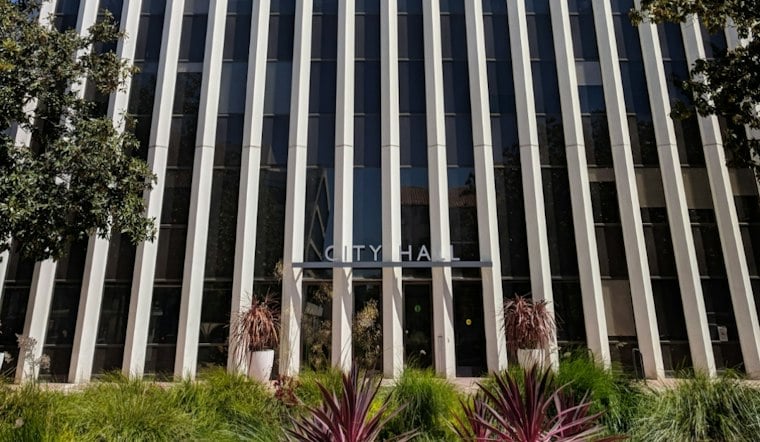
Palo Alto's effort to help local workers buy homes at below-market prices is running into a supply shortage and a fee problem that city auditors say nobody has been tracking closely enough. A city auditor's office report found that hidden costs, mainly undisclosed homeowners association dues, are making below-market-rate (BMR) units harder to afford even for buyers who qualify for the program, and recommended formally tracking BMR turnover and vacancies.
As reported by Palo Alto Online, the city's Policy and Services Committee voted unanimously on Tuesday to approve the audit's findings, with the full City Council expected to take up potential policy changes next year. The program, which covers about 10% of Palo Alto's existing affordable housing units, is administered by nonprofit Alta Housing, which solicits buyers from a waitlist and prefers applicants who already live or work in the city. Palo Alto currently has just 247 active BMR ownership units, a small and aging portfolio that auditors say leaves little room for error.
A Decade of Zero Construction
Part of the problem traces back more than ten years. Palo Alto built zero BMR ownership units during the 2010s, and the city has only added 15 more as of 2025, according to the same report. City staffer Chris Jensen told the committee that legal challenges to inclusionary housing requirements contributed to the construction gap, while committee member Keith Reckdahl said the decade-long shortfall stood out to him during the review.
One contributing factor cited in the audit involves the Maybell Avenue development, which voters overturned in 2013 — though that project would not have included BMR ownership units in the first place. Because the city built nothing comparable to replace it during that stretch, Palo Alto's existing BMR ownership units now lack a corresponding replacement cohort to offset any near-term losses, auditors found. The city does retain some leverage: Palo Alto has right of first refusal for certain BMR units and can buy back some properties to preserve affordability, with resale restrictions designed to keep homes within reach of future qualified buyers.
Older Units, Newer Problems
The BMR resale value formula makes older units significantly cheaper than newer ones, and Alta Housing has reported that waitlisted buyers may simply hold out for those older, more affordable listings. That dynamic can make newer ownership opportunities harder to place, since their pricing is affected by HOA fees, unit condition, mortgage qualification hurdles, and other ownership costs that vary unit to unit.
Committee member Julie Lythcott-Haims said the city should move to fill vacancies and investigate why units sit empty in the first place. Michelle Kraus told the committee the issue is increasingly becoming one of retention, noting that no HOA subsidies have been offered in 20 years, and suggested the city consider subsidies or other policies to offset those costs. Committee member Greer Stone said multifamily housing listings often carry hidden HOA costs that surprise and frustrate him.
Tracking Gaps the Audit Wants Closed
The audit recommended several fixes: increasing visibility of fees for prospective BMR owners, tracking formal complaints for existing BMR units — something Palo Alto does not currently do — and having the city and Alta Housing jointly identify units facing significant HOA dues and maintenance pressures. Auditors also recommended Palo Alto follow neighboring Mountain View's example by formally tracking BMR turnover and vacancies.
Mountain View uses HouseKeys for BMR recertification, according to the City of Mountain View. Palo Alto has no equivalent consolidated system for tracking HOA dues, special assessments, and major maintenance pressures across its ownership portfolio, though the city does have some resources that can help homeowners with HOA assessments in certain circumstances. HOA expenses themselves are not controlled by the BMR program, but they can still affect a household's ability to remain in or maintain a unit.
Regional Pressure Points
A municipal audit in San Jose, released in June 2026, found vacancies, high turnover and a lack of proper processes had produced a three-month property inspection backlog and left compliance reviews uncompleted for a third of properties in 2024 and 2025; it separately noted that outdated software made it difficult to track loans and oversee properties, according to San José Spotlight. San Jose has since accepted recommendations to modernize its software and establish risk-based oversight plans.
The administrative strain comes as regional income benchmarks keep climbing. Santa Clara County's Area Median Income hit a state-high $205,500 for a four-person household in 2026, pushing the maximum state benchmark resale price for moderate-income BMR homeownership in the county to roughly $725,000, per Kostya.io.
State Targets Loom Large
State mandates remain a challenge. During the prior cycle spanning 2014 through 2022, the city permitted only 101 very-low-income units against a 691-unit goal and 99 low-income units against a 432-unit goal, hitting less than a quarter of its lower-income targets even as it exceeded its market-rate quota.
The BMR ownership stock is aging in more ways than one. Some of the earliest units, built in the 1970s, may expire by 2033 if they have not transferred ownership by then, according to the audit findings reported by the same outlet. Auditors note the lack of BMR construction during the 2010s has only added pressure on the units that remain, since the program itself does not create new housing — it can only improve retention and long-term affordability of units already covered.
Competing Priorities for City Land
The administrative findings land alongside broader debates over how Palo Alto uses its own land for affordable housing. The city's Housing Element had identified six downtown parking lots for potential redevelopment into roughly 290 BMR units. Separately, the City Council voted unanimously on Sept. 15, 2026, to advance a $41M Hamilton Avenue garage amid broader debates over parking land and affordable housing, while adjoining space remains available for possible affordable housing. Separately, the city's Policy and Services Committee voted in March to indefinitely defer a local rent control ordinance after registry data showed 62.85% of market-rate units saw no rent increases over the prior year, with staff estimating the program would cost $2 million annually to administer, according to the California Apartment Association.
Residential affordability plans in Palo Alto can include BMR units in new ownership developments or in-lieu fees, with the city's planning and development director setting the initial BMR sale price for qualifying units. For now, Alta Housing's purchase program waitlist remains closed to new applicants as of June, leaving existing BMR owners and the vacancies auditors flagged as the program's most immediate test.





