

























































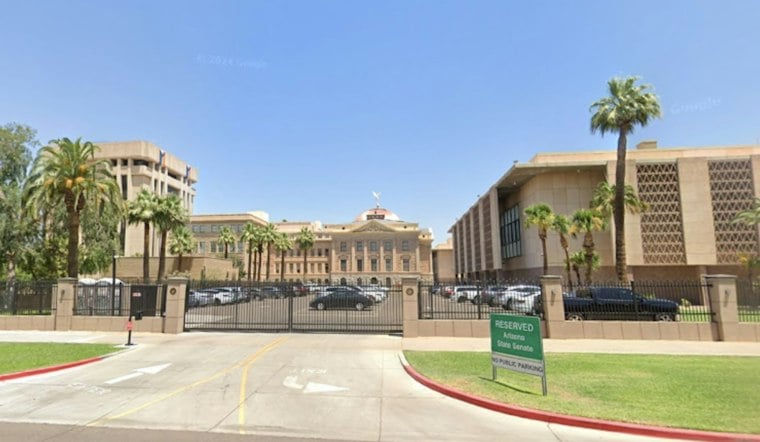
Registration tables open at 7:30 a.m. on November 7 at Wesley Bolin Memorial Plaza, where Phoenix's Walk to End Alzheimer's will once again ask families, caregivers and supporters to turn grief and worry into forward motion. The Promise Garden ceremony starts at 8:40 a.m., and the walk itself steps off at 9 a.m., part of what organizers describe as the world's largest event dedicated to raising awareness and funds for Alzheimer's care, support and research.
The event, detailed by Phoenix New Times, gives participants the chance to walk in honor of someone living with Alzheimer's, in memory of someone lost, or simply to support a future without the disease. Organizers note that people can bring family, build a team, raise funds and walk for someone they love, with registration available at alz.org/phoenixwalk. The timing matters beyond sentiment: an estimated 151,500 Arizonans aged 65 and older were living with Alzheimer's disease in 2020, according to the Alzheimer's Association.
A Promise Garden Built From Personal Connections and Hope
Before the walk begins, the Promise Garden ceremony unfolds in a ritual familiar to Alzheimer's walks nationwide. The ceremony features Promise Garden flowers, a quiet visual moment before the crowd starts moving at 9 a.m.
That visual symbolism sits atop a much larger, harder-to-see burden. In Arizona, 242,000 unpaid family caregivers provided 379 million hours of care to loved ones with dementia, labor valued at an estimated $9.7 billion, the same Alzheimer's Association report found. Those figures underscore a substantial caregiving burden beyond the walk itself.
Arizona's Aging Population Strains Medical and Public Safety Systems
Arizona has long carried an outsized share of this national challenge. The state historically maintained the second-fastest growth rate for Alzheimer's diagnoses in the country, according to a report from KTAR News. That growth has outpaced the medical workforce built to handle it — the state had just 115 practicing geriatricians in 2021, and the number of geriatricians will need to increase by 190.4% by 2050 to meet rising demand, per the Alzheimer's Association's figures.
The financial toll extends into public budgets as well. Alzheimer's and related dementias are projected to cost Arizona's state Medicaid program $617 million in 2025, the association reports. Lawmakers have also moved to address the public safety risks that come with cognitive decline: on September 26, 2025, Arizona replaced its Silver Alert system with the Seek and Find Emergency, or SAFE, Alert program under state law, mandating law-enforcement training twice a year and prohibiting agencies from delaying or denying an alert when the criteria are met, according to the Arizona Department of Public Safety. A SAFE Alert was issued in the Phoenix area for missing 72-year-old Yolanda Garcia after she went missing on foot.
Regional Efforts Reach Beyond the Walk Itself
Neighboring Tempe has taken its own step toward supporting residents with memory loss. A dementia-inclusive park planned for Kiwanis Park is in the design phase, with plans for perimeter fencing, sensory zones and striped walking paths designed for people living with dementia. It's a sign that the response to Arizona's aging crisis is spreading beyond fundraising walks and into municipal planning.
Back at Wesley Bolin Memorial Plaza, none of those statistics will be printed on a banner. But they sit underneath every team name, every flower windmill and every mile walked come November 7 — a reminder that the walk is as much about the 242,000 Arizonans already doing the work of caregiving as it is about the research dollars raised that morning.





