

























































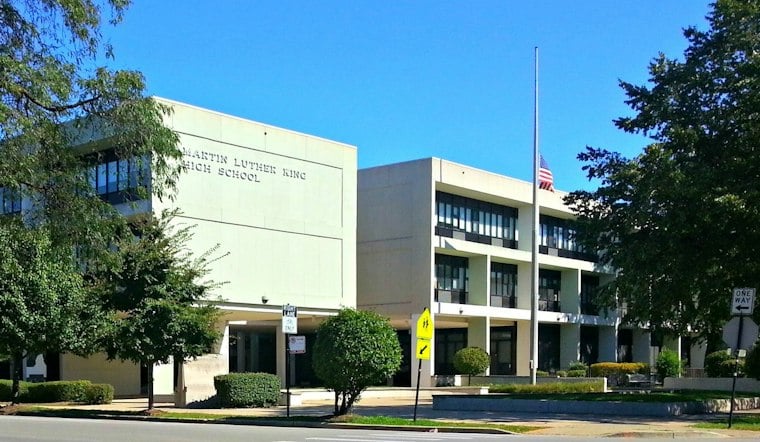
Chicago police swarmed Dr. Martin Luther King Jr. College Preparatory High School Tuesday morning after a 15-year-old boy posted an image on social media suggesting he might have explosives at school. By the time officers finished sweeping the building, they had found something far less dangerous: unused fireworks, both on the teen and scattered nearby, with no explosives anywhere on the campus itself.
According to ABC7 Chicago, officers responded at about 9 a.m. to the 4400 block of South Drexel Boulevard, describing the location as Kenwood. CBS News, however, places the same school in Bronzeville and reports officers arrived at 4445 S. Drexel Blvd. The two accounts differ on neighborhood boundaries and exact address, but agree on the core sequence of events: a 15-year-old boy posted an image referencing explosives at school, prompting a large police mobilization.
Fireworks Found, Not Explosives
Police allegedly found unused fireworks on the boy himself, the station's report notes, and additional unused fireworks turned up nearby on 51st Street. Despite the alarming nature of the initial post, CPD said the school was clear of any explosives. Members of the bomb squad were seen later on nearby 51st Street as the investigation continued, per the same account.
Students remained inside the school throughout the large police response rather than being evacuated, the outlet reported.
School Leader Moves to Reassure Families
According to CBS News, principal Dr. Brian Kelly sent a letter to families stating that the social media post resembled a potential threat, but that there was no threat and everyone was safe. Kelly also asked families to immediately notify the school of any potential safety concerns going forward, the outlet reported.
The scare in Kenwood lands amid a string of similar incidents across Illinois this year. Just two weeks earlier, a juvenile suspect was arrested after a shooting threat against Crete-Monee High School was shared on social media, according to the Chicago Tribune. Crete police arrested that teen at home on a felony disorderly-conduct charge, and a search of the home found no immediate access to guns, the Tribune reported.
A Pattern of False Alarms Statewide
In May, Normal Community High School evacuated roughly 2,000 students and staff to a nearby church after a broad threat against the school, WGLT reported. Authorities searched the building and grounds and ultimately determined the threat was not credible. Earlier in the year, three other central Illinois high schools — Danville, Rochester and Lincoln Community — each fielded bomb threats between March and early April, and no explosives were found in any of those cases, according to NewsChannel 20.
Chicago has seen its own share of false alarms, too. Bomb threats targeting Jones College Prep and John Hancock College Prep were both deemed non-bonafide, or unsubstantiated, by police, Block Club Chicago reported. In the Jones College Prep response, police dispatched officers alongside a SWAT team and bomb unit, placing the school on lockdown as law enforcement swept the area.
CPS Monitors Student Posts, but Questions Remain
Tuesday's incident also underscores the role of CPS's ongoing surveillance of students' publicly posted social media. The district monitors posts for signs of potential violence, self-harm, threats, drugs, weapons or gang activity, according to Chalkbeat Chicago. The district selected Canada-based Safer Schools Together to run the program, with the school board approving an agreement worth up to $161,400 over 13 months, and officials say police get involved only when staff believe a post signals an imminent threat to safety.
Chalkbeat has also reported there is no independent research showing these monitoring programs actually prevent violence or self-harm, and civil-rights advocates worry they could invade students' privacy while worsening discipline disparities for Black boys and other students of color. A University of Chicago study of an earlier CPS monitoring pilot did find significantly fewer misconduct incidents, fewer suspensions and better attendance at participating schools, though the difference in shooting-victim risk was not statistically significant.





