

























































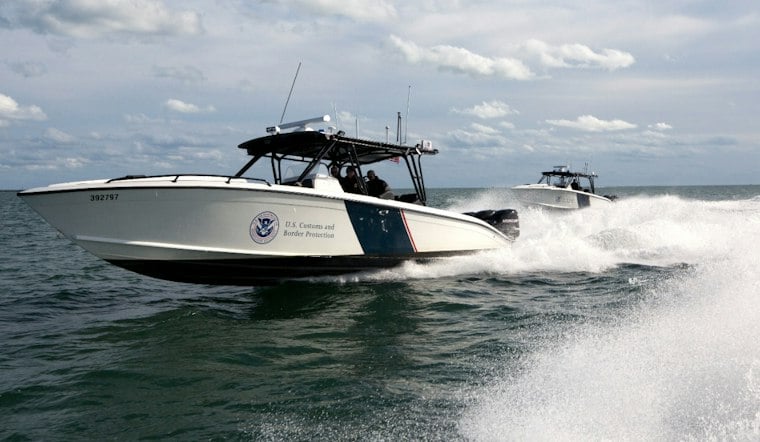
Border Czar Tom Homan and U.S. Customs and Border Protection Commissioner Rodney Scott stood at Port Miami Thursday to tout a dramatic shift in federal resources toward Florida's coastline, pointing to more than 17,000 pounds of narcotics seized by Miami CBP agents this fiscal year — more than double the roughly 7,000 pounds seized in the earlier comparison period officials cited. The visit came as agencies touted steep declines in maritime crossings paired with a buildup of boats, aircraft and personnel along the state's waters.
According to wflaorlando.iheart.com, officials said apprehensions of people trying to enter Florida by sea have dropped 94% even as seizures climbed. Per the report, the task force framed the shift as a direct consequence of tighter control elsewhere: once the southern border was locked down, officials said, Florida's maritime border became a target for traffickers and smugglers looking for new routes. As part of Thursday's announcement, officials also promised additional Coast Guard assets and 7,000 new ICE agents in 2027.
The Port Miami event doubled as a demonstration of how CBP has reallocated manpower, according to WSVN, which reported that the agency has prioritized Florida interdictions of drug and gun traffickers and increased the aircraft, boats and Border Patrol agents patrolling the state's waters. The station reported that drug traffickers and cartels have caused dangerous maritime encounters in Florida waters that sometimes end in gunfire, and that cartels have grown more advanced with technology and drones. Commissioner Scott attributed the rising seizure numbers to greater capacity, more flight and float hours, and enhanced cooperation and coordination among agencies, the station reported.
A Pipeline Freed Up From the Southwest Border
Scott connected the Florida buildup to earlier gains on the southwest border, telling WSVN that securing that border decreased crossings and freed up resources for Florida waters and other areas. He pointed to a 12-mile stretch of the San Diego sector where testing border-security concepts freed up 150 agents every 24 hours, according to the station's report. Homan, for his part, said he had visited Miami several times over the past few months and had asked officials what resources they needed, per the same account.
The San Diego comparison is not just anecdotal. Arrests for illegal entry in that sector fell from more than 320,000 in fiscal year 2024 to just over 11,000 in fiscal year 2026, according to fox5sandiego.com. At the same time, the outlet reported that drug seizures along the San Diego border increased by more than 1,200% in fiscal year 2026, with CBP's Air and Marine Operations in the region seizing more than 302,000 pounds of drugs compared with just over 23,000 pounds the previous fiscal year. A San Diego Border Patrol official told the outlet that cartels and foreign terrorist organizations continue to adapt their smuggling methods even as crossing numbers drop.
A September Interdiction Near Key Largo
Florida's waters have already produced test cases for the strategy officials described Thursday. On September 15, CBP and the Coast Guard intercepted a 27-foot cuddy cabin vessel near Angelfish Creek, close to Key Largo, according to Fox News. The boat was carrying 13 Chinese nationals, eight Ecuadorian nationals, one Dominican national and one suspected Cuban smuggler, the outlet reported.
A CBP Air and Marine Operations aircraft first detected the vessel before CBP and Coast Guard personnel carried out the stop, Fox News reported. The people aboard were transferred to the Coast Guard Cutter Pablo Valent for processing, and authorities seized the vessel, according to the outlet's account.
Nationwide Numbers Behind the Florida Push
Federal law enforcement agencies seized nearly one million pounds of narcotics in 2026, according to WSVN's reporting on the Port Miami event. Separately, preliminary CBP data cited by cbp.gov put the agency's fiscal year 2026 drug seizures at nearly one million pounds, which the agency said was 63% higher than the roughly 600,000-pound annual average of the previous four years.
Officials said they intend to keep building on the momentum in South Florida, according to WSVN's report. With more Coast Guard assets and thousands of additional ICE agents slated for 2027, Thursday's Port Miami event signaled that the shift in enforcement resources toward Florida's coastline is expected to continue rather than wind down.





