

























































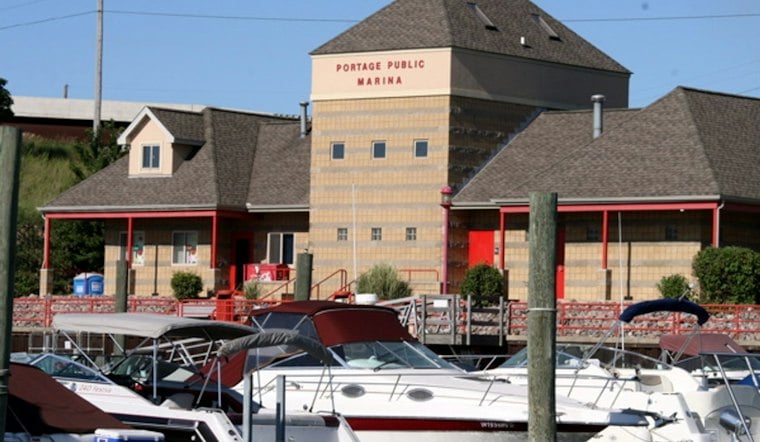
Portage's Board of Zoning Appeals shot down a developer's bid to build a 108-lot subdivision behind National Transmission, with all three members present voting no. The rejection leaves Lotton Development facing a setback on a project that drew pointed questions about whether it belonged before the zoning board at all.
A Separate Lute Road Proposal Also Came Before the Board
According to the Chicago Tribune, the board rejected Lotton Development's 108-lot proposal behind National Transmission, with all three members present voting against it. The board separately delayed action on a subdivision proposal at 5806 Lute Road. Representing the developer, Chris Salatas had shown a sketch for 91 lots for the Lute Road proposal, though that figure would likely have shrunk further once engineering accounted for drainage infrastructure, the Tribune reported.
For the separate proposal at 5806 Lute Road, Salatas described an age-targeted subdivision connected to the bike and pedestrian trail, with Lotton Development hoping to link it to the Prairie Duneland Trail for access to the nearby YMCA and other amenities, the station's report notes. The homes were pitched as 900-square-foot, single-story houses aimed at buyers wanting smaller lots, less maintenance and an affordable price point. To make that pencil out, Salatas requested a minimum lot width of 33 feet and a minimum main floor area of 630 square feet — both well under the standard R2 zoning requirements of 80 feet and 1,000 square feet, respectively, according to the same account.
Mayor Says the Process, Not the Project, Was the Problem
Mayor Austin Bonta told the board the number of requested variances looked more like a zoning change and that the process should instead go through the city council, the Tribune reported. Bonta said the project should go to the plan commission for a comprehensive zoning change rather than seeking multiple variances, explicitly opposing use of the Board of Zoning Appeals as the approval route. He instead suggested Lotton consider a planned unit development with customized zoning and city council approval — a path in which the Portage Planning Commission would hold a public hearing and recommend action to the council, per the article.
Bonta's objection wasn't to the housing itself. He said city staff are directing developers inward into the city and he appreciated the affordable price point, backing infill development over sprawl and saying he hoped the developer would continue working with the city, the outlet reported. Board member Greg Lach echoed that the proposal seemed more appropriate for rezoning, while fellow member Brent Wright said the small-lot project could still be needed in a highly dense part of town, per the same report.
Traffic and Drainage Concerns on Lute Road
Residents raised concerns that Lute Road — which runs parallel to U.S. 6 — is intended as a narrow side road but already carries substantial traffic as an unintended thoroughfare, the Tribune noted. Drainage was also a sticking point: the neighboring Destiny Street subdivision has had drainage problems after heavy rains, though the report indicates the proposed subdivision could actually improve some neighbors' drainage through its own stormwater infrastructure. Portage's stormwater ordinance requires new developments to capture runoff onsite without adversely affecting neighboring properties, per the same coverage.
Lotton Development noted that site neighbors include a planned apartment complex and land zoned for a mobile home park, with nearby parcels already carrying apartment and institutional zoning, according to the article. The company pointed to the lot sizes in the nearby Sandy Trail subdivision, being developed by Lennar Homes, as a comparable model for Sandy Trail East's density. City of Portage planning documents show that area is currently zoned M-1, a low-density multifamily district, and has previously received several development variances from the Board of Zoning Appeals.
How Other Portage Subdivisions Got Approved
Portage has leaned on rezoning and planned-unit-development ordinances for its biggest subdivision approvals in recent years. The Portage City Council approved rezoning for the 80-acre Swanson Trails subdivision, planned for 225 single-family homes, after the project went through more than half a dozen design iterations in response to requests from city officials and residents, according to the Chicago Tribune. The approved design preserves 33% of the acreage, or 26.7 acres, as open space, with a density of 2.79 lots per acre — comparable to 2.85 for Arvilla Acres and 2.89 for Brookview, per that report.
A larger project, Providence at Farmington, needed three separate ordinances to create a custom planned-unit-development zoning category just for that 120-acre, 269-lot subdivision of paired villas, cottage homes and single-family homes. The city council approved that rezoning on a series of 4-2 votes in November 2024, according to the Chicago Tribune. Under city code, Portage's Planning Commission makes recommendations to the city council on proposals to amend the zoning or subdivision-control ordinances, while the Board of Zoning Appeals hears petitions for special exceptions and variances from development standards and use regulations.
A Broader Push for Housing in Portage
The rejection comes as Portage pursues other avenues to expand its housing stock. The Portage Redevelopment Commission has reviewed draft Residential Housing Development Programs for the Bauer Farm and Sandy Trail neighborhoods, though no formal vote or designation was required at that meeting, according to Citizen Portal. Those draft programs were described as a first step toward creating tax-increment-financing allocation areas for new housing development, per the same report.
The city's Planning Commission adopted a new master plan last summer that includes multiple ways to encourage more housing development, and officials are looking to create walkable villages and mixed-use neighborhoods to expand housing options, according to Second Wave. The city is also developing its own 42-home Stanwood Crossings subdivision on a 14-acre parcel near Portage Road and Woodbine Avenue, per that outlet. Whether Lotton Development will refile Sandy Trail East through a rezoning process or pursue some other path remains to be seen.





