

























































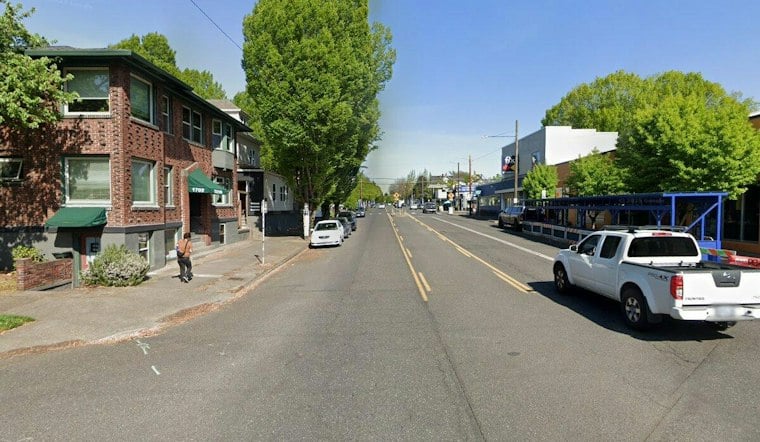
A Multnomah County jury has ordered the city of Portland and driver Eric Whitfield to pay a combined $5.1 million to the family of Elijah Coe, a 46-year-old motorcyclist and chef who died five days after crashing on East Burnside Street in May 2019. Jurors found Portland 70% responsible and Whitfield 30% at fault, concluding that the city should never have let parked cars block sightlines at the intersection where Coe was hit.
According to The Oregonian/OregonLive, Coe was traveling east on Burnside when Whitfield, driving a Saab, turned left from Southeast 17th Avenue into his path. Coe swerved to avoid the car, veered into the westbound lane, and collided head-on with another vehicle. He suffered fractures to his skull, spine and pelvis and died five days later, leaving behind a wife and a 17-year-old son. He had worked as executive chef at Portland catering company Vibrant Table.
Court records describe exactly what blocked the two men's view of each other. Per the Oregon Court of Appeals opinion, signage on Burnside at the time expressly allowed vehicle parking along the south curb all the way up to the intersection with 17th Avenue, and parked vehicles there blocked the view that Coe and Whitfield had of one another. Surveillance video reviewed in the case captured Whitfield stopping before turning onto Burnside.
A Parked Subaru and a Six-Foot Margin
Attorneys for Coe's family argued at trial that a parked Subaru Forester limited visibility at the 17th Avenue stop sign to just 63 to 108 feet, while safety standards called for 200 feet of sightline at the posted 30-mph speed limit, the same OregonLive report notes. Portland had reduced the Burnside speed limit from 35 mph to 30 mph before the crash; since the crash, the city has lowered it further, to 20 mph, as part of its Vision Zero campaign to eliminate traffic deaths and serious injuries.
Speed estimates for Coe's motorcycle varied among experts who testified. A Portland Police Bureau reconstructionist estimated he was traveling 30 to 35 mph, while a city expert put the figure at 40 mph. Attorney Caroline Turco argued that Coe and Whitfield were entirely to blame for the crash, but the jury ultimately found Coe was not at fault for his own death.
Years of Legal Wrangling Before Trial
The Coe family's path to a verdict took years. Multnomah County Circuit Judge Shelley Russell dismissed the family's lawsuit against Portland in 2022 on the city's discretionary-immunity defense, but the Oregon Court of Appeals reversed that dismissal, ruling the city had failed to establish discretionary immunity as a matter of law and sending the case back for trial. The appellate panel noted the city had other options available to address poor sight distances, including lowering the speed limit, installing a signal, imposing turn restrictions, or posting warning signs, as summarized by BikePortland.
That fight traces back to a $5.9 million negligence lawsuit attorney Scott Kocher filed against the city on February 19, 2020, naming both Portland and Whitfield as defendants, the same outlet reported at the time. The suit also sought a court order forcing Portland to implement parking setbacks citywide, arguing the city's failure to provide adequate sightlines at intersections posed an ongoing risk to people using its streets every day.
Verdict Won't Fully Cover the Damages
Despite the $5.1 million jury award, state government-liability limits will sharply cut what the family actually collects. Portland was found responsible for about $3.6 million of the verdict, but a state law designed to limit government liability will reduce the city's payout to roughly $1.45 million, according to OregonLive. Whitfield's own liability is capped at about $1.1 million under wrongful-death tort claim limits, and Portland would cover his share if he's unable to pay — meaning the most the Coe family could ultimately receive from the verdict is $1.45 million.
Kocher said much of the rest would go toward legal fees, experts and trial costs after six years of work by appellate and trial lawyers, the report notes. Kocher said nearly $220,000 will go to Coe's medical bills. Kocher called the intersection's hidden-sightline hazard a known problem, warning that Portland could face more lawsuits from people seriously injured in similar crashes, and said he expects the city to end up restricting parking at additional corners.
A Decade-Old Warning and Unfinished Policy
Portland had been alerted to visibility problems at the intersection long before Coe's death — a representative of a nearby daycare emailed the city in 2010 saying drivers had difficulty telling whether Burnside was clear. Since the crash, the city has created a one-car-length buffer zone at the corner where the parked Subaru had blocked Whitfield's view, and city officials say they are exploring the policy implications of the jury's verdict.
The city's own track record on broader visibility fixes has lagged its promises. PBOT unveiled a vision-clearance-at-intersections policy in September 2018 that included a 20-foot minimum parking setback, but per BikePortland's reporting, those guidelines applied only to designated pedestrian-priority streets and were triggered only by new capital projects. In 2021 the city announced that 350 intersections would receive daylighting treatments and said it intended to spend $200,000 on vision-clearance work, though the extent of that progress has not been established.
Heather Beasley, who was involved in the case, said she hopes Portland will respond to the verdict by improving driver sightlines, telling jurors that Mr. Coe would have seen Mr. Whitfield had the view not been blocked. State law separately requires a 20-foot buffer between crosswalks and the first parked car, underscoring how visibility and street parking remain an active point of friction between Portland's traffic code and its streets.





