

























































A building-wide power outage in Downtown Miami left a woman trapped on the third floor inside a blind shaft elevator on Thursday, triggering a high-angle rope rescue by city fire crews. The woman was pulled free without injury, and Florida Power & Light crews arrived shortly after to restore electricity to the building.
According to the City of Miami Government, the total loss of power caused the elevator to become stuck between floors in a blind shaft — a configuration with no intermediate doors or landings, meaning rescuers could not simply pry open a nearby floor to reach the cab. That architectural quirk forced City of Miami Fire-Rescue's Firehouse 4 and its Technical Rescue Team to improvise a vertical approach instead, accessing the building from the eighth floor and rigging a high-angle rope system to lower a firefighter five stories down the shaft to reach the woman.
Miami Fire Rescue, posting on social media, thanked Telemundo 51
for covering the operation, crediting the station's reporting on the rescue of the woman trapped between floors. The station's Facebook video showed firefighters deploying ropes between floors as they worked to free her, according to
Telemundo 51
.
No Injuries Reported as Power Returns
The woman was evaluated by paramedics and released, NBC 6 South Florida reported. Florida Power & Light crews then moved in to restore electrical service to the building, bringing the scene to a close.
The high-angle technique used Thursday reflects specialized training the department's Technical Rescue Team maintains year-round. Per the City of Miami Department of Fire-Rescue, TRT members train in twin-tension rope systems and skate-block rigging specifically to handle complex extractions in high-rises and blind elevator shafts — scenarios that exceed what standard firefighting training covers.
A Pattern Playing Out Across South Florida
Thursday's rescue wasn't an isolated case for the region. In September, Miami-Dade Fire Rescue's own Technical Rescue Team deployed a similar rope system to lower a firefighter into a stalled elevator shaft elsewhere in South Florida, evacuating occupants one at a time after conventional floor exits weren't available, as reported by WIOD.
Elevator responses to power interruptions can vary. Some systems use safe-landing systems, while fault lockout can occur when power is restored unexpectedly between floors, especially in older systems, according to the ASME A17 Elevator Emergency Power Requirements.
State Rules Govern Access and Backup Power
Florida law already anticipates these kinds of emergencies. Section 399.15 of the Florida Statutes requires all public-access elevators in buildings six stories or taller to be keyed to a standardized master key within each of the state's seven emergency response regions, giving firefighters consistent access options during incidents like Thursday's, per the Florida Senate. Separately, Florida Statute Section 553.509 requires residential multi-family buildings at least 75 feet tall with public elevators to keep at least one elevator running on alternate power for specified hours across a five-day emergency period.
Oversight of elevator safety in Florida falls to the Division of Hotels and Restaurants under Florida Statute Chapter 399, which mandates annual inspections by certified inspectors and requires property owners to report elevator accidents to the state within five working days, according to the Florida Condo & HOA Law Blog. Owners who fail to report or inspect properly can face administrative fines up to $1,000.
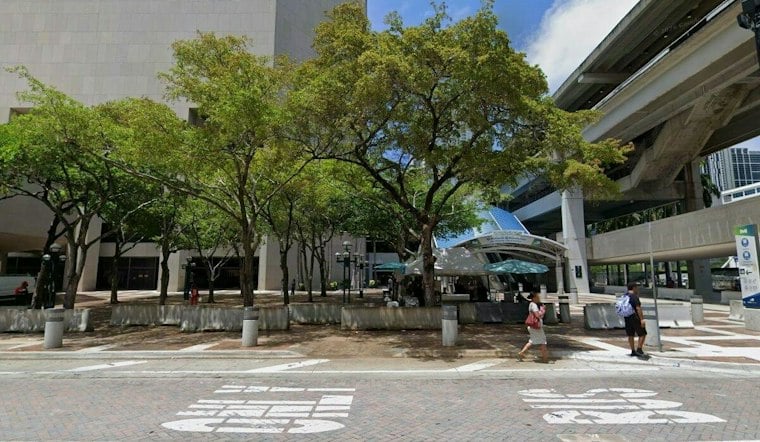
NBC 6 South Florida reported a rescue at the Stephen P. Clark Center in Downtown Miami.





