

























































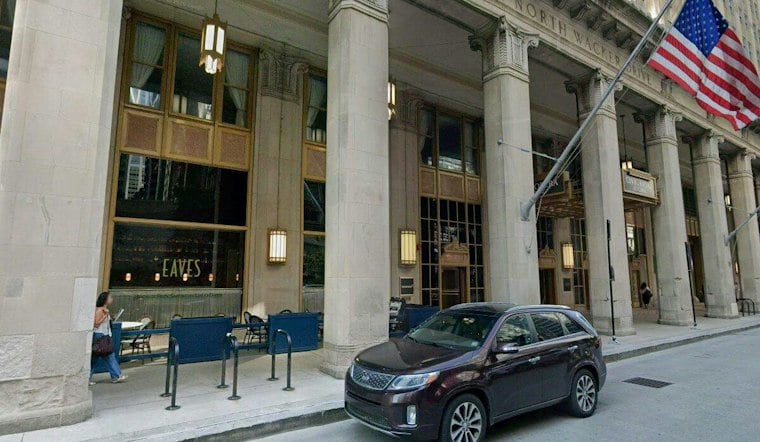
Lyric Opera of Chicago is staging three performances of the Pulitzer Prize-winning opera “Omar” on October 23, 25, and 28, bringing the true story of an enslaved West African Muslim scholar to the stage at 20 N. Wacker Drive under conductor Kazem Abdullah and director Kaneza Schaal. Tenor Issachah Savage sings the title role, with Kearstin Piper Brown as Julie, a fictional enslaved woman who aids Omar, and Zoie Reams as Fatima, Omar’s mother — all three making their debuts in the opera this run.
The production tells the story of Omar ibn Said, a West African scholar who was captured in 1807 at age 37 after spending 25 years studying Arabic, mathematics, astronomy, and theology under Islamic scholars, according to the Library of Congress. He was born around 1770 in Futa Toro, in what is now Senegal, into a wealthy family. He remained enslaved for 57 years until his death in North Carolina in 1864 — one year before the 13th Amendment abolished slavery — according to the Middle East Eye, which notes he was never granted legal freedom despite his regional fame and was buried on the Owen family plantation.
Bass-baritone Kyle Ketelsen takes on the dual role of both enslavers in the story, Johnson and Owen, portraying the South Carolina enslaver from whom Omar escaped before being sold to James Owen in North Carolina, according to BroadwayWorld. Owen later gave Omar a Bible written in Arabic in an attempt to convert him to Christianity, and Omar’s own autobiography cites the Bible alongside references to his Muslim faith, per reporting from WBEZ Chicago. That same account, the station reports, reads as overly gracious toward the Owen family who held him as property — a tension historians have long noted in documents produced under bondage.
A Score Built From Two Musical Worlds
The opera’s score blends traditional operatic orchestration with bluegrass, gospel, spirituals, and West African percussion to trace Omar’s journey from West Africa to the American South, according to the same BroadwayWorld report. Co-composer Michael Abels told WBEZ that although the opera does not use co-creator Rhiannon Giddens’ signature instrument, the banjo, the orchestra itself functions like a banjo within the orchestration. Abels has also said simply that Omar’s story needs to be known, per the station’s reporting.
Giddens, who wrote the libretto and co-composed the music, was a MacArthur “Genius Grant” recipient and trained classically as an opera singer at Oberlin Conservatory before building her career as an acclaimed folk musician, according to Oberlin College. She co-founded the Grammy-winning Carolina Chocolate Drops before the Spoleto Festival USA brought her the idea for “Omar,” and she enlisted Abels — known for his film scores for “Get Out” and “Us” — to work on the project, WBEZ reports. The pair began developing the opera in 2018.
From Charleston to a Pulitzer to Chicago
“Omar” had its world premiere in May 2022 at the Spoleto Festival USA in Charleston, South Carolina, where Omar arrived in 1807, according to The Pulitzer Prizes. Charleston was a major slave-trade port. The opera went on to win the 2023 Pulitzer Prize for Music and has since played in Los Angeles, San Francisco, and Boston before arriving in Chicago, per WBEZ’s reporting.
Lyric Opera president and CEO John Mangum told the station the opera confronts U.S. history and slavery’s impact, and said the timing feels fitting as the production arrives in Chicago as the United States marks its 250th anniversary. Mangum also said recent seasons showed lower demand for contemporary opera titles, but that “Omar” has been selling very well. Tickets for the three-performance run start at $75, a shorter engagement compared to the eight performances of the season-opening “Don Giovanni.”
Only Surviving Arabic Slave Narrative
Omar ibn Said wrote his autobiography in Arabic in the 1830s while enslaved in North Carolina, and it is believed to be the sole surviving Arabic-language account written by an enslaved person in the United States, according to WBEZ. Historical estimates suggest that up to 30% of enslaved Africans arriving in the colonies and later the United States were Muslim during the trans-Atlantic slave trade.
The manuscript spent decades in private collections before the Library of Congress purchased it in 2017; the library provides an online translation. The Newberry Library holds copies of about 200 narratives written by formerly enslaved people, but most of those were written after their authors were freed, since most enslaved people were barred from learning to read or write, WBEZ reports. Will Hansen curates the Newberry’s collection of plantation and genealogical records from the slavery period, the station notes.
Chicago Institutions Join the Conversation
Lyric Opera has partnered with local arts organizations, museums, and universities encouraging Chicagoans to read Omar ibn Said’s original text, with leadership pointing residents to the translation the Library of Congress provides on its website. Lyric Opera is scheduled to host a public round-table on October 22, 2026, according to Lyric Opera of Chicago.
The three-night run adds to a season in which Lyric has leaned into accessibility and engagement efforts, including live ASL interpretation for “Don Giovanni” earlier this month. For a story nearly two centuries old, the opera’s arrival in Chicago offers local audiences a rare chance to encounter a manuscript — and a man — that spent most of American history unseen.





