

























































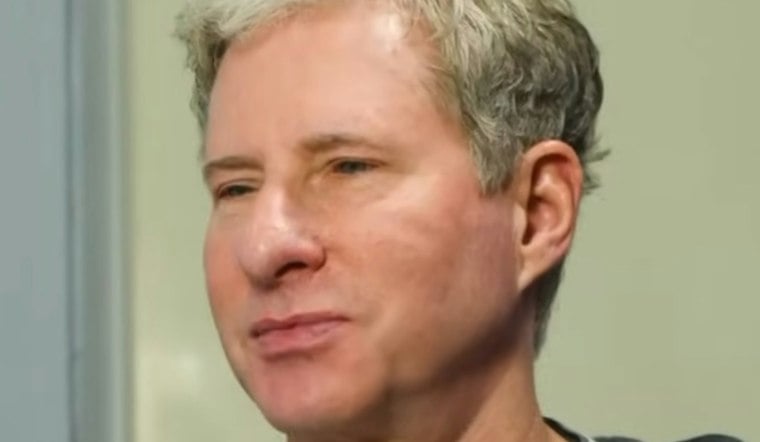
A commitment of $11 million from Ripple cofounder Chris Larsen is now funding a three-year push to bring more precise, real-time whale data into the decisions that have repeatedly delayed and shortened California's Dungeness crab season. The money, funneled through Larsen's Clean Break Fund, is financing a coalition of scientists, conservationists and commercial fishermen who have historically found themselves on opposite sides of the issue.
According to The San Francisco Standard, the coalition plans to use technology including acoustic gliders, drones and fishermen-led surveys off the Bay Area coast to generate data that can inform commercial fishing season designations in closer to real time. Larsen, who cofounded and serves as executive chairman of Ripple Labs, told the outlet he sought to unite organizations historically at odds rather than pursue lawsuits against state regulators. He said current regulations followed political weakness and fishermen being outmaneuvered, while also saying he believes wildlife protection and vibrant fishing communities can both be supported.
Dungeness crab is California's second most-valuable seafood business, behind market squid, per the same report. But the commercial season has shifted further into the new year and ended earlier in spring since the start of the decade, as regulators have pushed for changes over concerns about whales becoming entangled in fishing gear.
A Fishery Built on Tens of Thousands of Vertical Lines
The core hazard is mechanical: California's Dungeness crab fishery relies on tens of thousands of vertical lines connecting traps on the seafloor to surface buoys, creating entanglement risk wherever whales and gear overlap, according to NBC News. Humpback whales have increasingly been following prey closer to shore, directly into the waters where the crab fishery operates, the outlet reported. Last year, 21 dead gray whales were found in the wider Bay Area, the highest number in 25 years, and 36 whales were confirmed entangled off the West Coast in 2024.
Those pressures have already reshaped the season. This spring, regulators closed parts of the fishery off central California to conventional gear because of whale-entanglement risk, per NBC News. SeafoodSource reported that California delayed the start of the commercial season into 2026 after regulators detected numerous humpback whales and leatherback sea turtles offshore, and that state rules require the California Department of Fish and Wildlife to delay the commercial season whenever the three-year rolling average of entanglements exceeds two. On October 14 of last year, CDFW observed 43 humpback whales in Fishing Zone 3, and 20 were seen in Fishing Zone 6 on October 6, according to SeafoodSource.
Framing It As an Information Problem
Kate Kauer, associate director of the oceans program at The Nature Conservancy, described the challenge as fundamentally a problem of information, per The San Francisco Standard. She said scientists had relatively little information available when the current crabbing regulations were first proposed back in 2016, and that good data matters because existing rules already allow for more closures. The Nature Conservancy will expand commercial fishermen-led whale surveys and continue developing AI technology intended eventually to replace the PDFs currently reviewed by regulators, the Standard reported.
Kathi George, director of cetacean conservation biology at the Marine Mammal Center, said organizations simply cannot carry out this kind of work without financial support, according to the Standard's report. The Marine Mammal Center currently has just one 24-foot boat for scientists studying endangered whales, even though its scientists collect data that state decision-makers use in maritime policy. Under the new funding, the center will expand vessel surveys, add shore-spotting resources in Point Reyes, the Farallon Islands and other locations, and pilot a program using acoustic gliders on pre-programmed paths to detect whale movements in real time. That glider program will monitor blue, fin and humpback whales, while acoustic research has traditionally been conducted from fixed buoys. Commercial fishing vessels will also be paid to help with whale surveys, stranded-gear retrievals and entanglement responses.
A Legal Backdrop Already in Motion
The coalition's work builds on an existing regulatory framework. California's Risk Assessment and Mitigation Program, created after a 2019 settlement over whale-entanglement lawsuits, uses scheduled risk assessments to determine whether the crab season should open or close, according to the Pacific Coast Federation of Fishermen's Associations. Governor Gavin Newsom signed SB 1393 last month, extending that program through 2040. Per available legislative text from the California Legislature, the law directs the state department, in consultation with the California Dungeness Crab Fishing Gear Working Group and other stakeholders, to adopt regulations establishing criteria and protocols for evaluating and responding to marine-life entanglement risk.
The Pacific Coast Federation of Fishermen's Associations, which represents the interests of commercial fishing fleets and ports and relaunched in 2024 under executive director Lisa Damrosch, backed SB 1393. The group's own gear testing has shown promise: its 2025 trial of a groundline-connected crab-trap configuration had a 100% success rate, and CDFW has requested a second year of expanded testing, scheduled for spring 2026, to inform a possible 2027 authorization. Still, the federation has cautioned that alternative gear remains a voluntary tool for certain situations rather than a wholesale replacement for the traditional fishery.
What the Coalition's Money Could Change
Larsen told The San Francisco Standard he hopes that others in his financial position will step in with capital where government funding has withdrawn. Per the same report, the research investment could ultimately show that the crabbing season needs to be shortened or delayed further to protect whales — not necessarily that it should be extended. The coalition may enable new regulations by the 2027-28 holiday season, though that timeline remains a conditional outcome of the funding rather than a settled plan.
Technology aimed at reducing whale strikes has also been expanding elsewhere in the Bay Area. An AI-powered network called WhaleSpotter launched in San Francisco Bay earlier this year, scanning around the clock for whale blows and heat signatures up to two nautical miles away and alerting ferry operators and vessel traffic controllers, according to NBC News. The system uses artificial intelligence to flag potential sightings, which trained marine mammal observers then verify before any alert goes out.


