

























































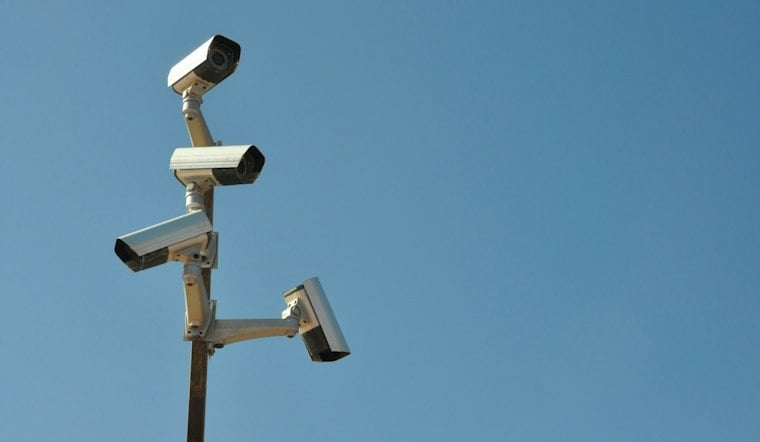
Rockland County has somewhere between 160 and 200 automated license plate reader cameras scattered along its highways, commuter corridors, and the New Jersey border, and a faction of the Working Families Party wants residents to know exactly where every one of them sits. The group is organizing a public walk through Spring Valley later this month to point out camera locations, part of a broader push to roll back a surveillance network that local law enforcement says has made the county safer and that critics say has quietly become a 24/7 tracking system.
The opposition effort, first detailed by the Rockland County Business Journal, is being led by a faction of the Working Families Party and raises concerns about privacy violations, potential law-enforcement abuse, and the sheer accumulation of driver data. Henry Leeker, a member of Rockland's Working Families Party, said the group is pushing for statewide bans to cancel the technology altogether. Leeker and colleagues have joined DeFlock, a national decentralized advocacy group working to ban ALPR technology that maintains a crowdsourced online map showing camera locations nationwide, with Rockland coordinator Matt Brockbank arguing that freedoms have eroded since 9/11 and the Patriot Act, leaving people constantly surveilled.
Clarkstown Is the Only Town Running Flock's AI System
Of Rockland's towns, only Clarkstown has deployed Flock Safety's AI-driven camera system, according to the Business Journal's review of FOIL records. The town contracted with the Georgia-based company in March 2025 to install 14 cameras for three years at a cost of $126,000, funded through a New York State Division of Criminal Justice Services law enforcement technology grant. Five of those cameras sit on state roads — three on Route 59 near North and South Middletown roads and two on Route 303 — while others are positioned near Route 59 and Mountainview Avenue in Valley Cottage and near the Palisades Mall.
Clarkstown entered a separate one-year contract in June 2026 for a single camera at the JCC in West Nyack, though that camera has not yet been installed at the site. The town's Flock contract restricts license plate reader use to public-safety law-enforcement assignments authorized by the chief or a designated official, permitting data use to recover stolen vehicles, locate missing persons, confirm alibis, and support intelligence-led and predictive policing — including recording traffic in high-risk crime locations and detecting unusual traffic patterns. Flock itself operates readers in more than 5,000 communities and 4,800 agencies nationwide, and network agencies can store and share ALPR data for up to 30 days.
A Patchwork Across Rockland's Towns
Elsewhere in the county, the picture is uneven. The towns of Haverstraw and Stony Point have no ALPRs at all, Orangetown police run fixed license plate readers but not AI-powered systems, and Ramapo's police department cancelled a planned Axon ALPR testing program in August, pausing its exploration of newer reader technology over privacy and constitutional concerns. Ramapo Town Supervisor Michael Specht said the town could resume exploring the technology in the future.
The Rockland County Sheriff's Office, which contracts with Motorola for its ALPRs, operates 55 fixed sites and 13 mobile readers, with most of the county's cameras purchased either by the Town of Clarkstown or the Sheriff's Office itself, per FOIL records cited by the Business Journal. New York State has nearly 3,500 ALPRs statewide, and Rockland's cameras are situated along the county border with New Jersey and along state Routes 303, 304, and 59.
Why Law Enforcement Backs the Technology
Rockland County Sheriff Louis Falco has defended the systems, saying ALPR technology used under department policy provides timely data that improves response and community protection. The Rockland County Legislature approved the ALPR project in the wake of the December 28, 2019 antisemitic machete attack at a rabbi's home in Monsey, when five people were stabbed; the technology helped law enforcement track and apprehend the suspect in New York City roughly two hours later after a bystander photographed the fleeing vehicle's license plate, according to TIME.
Rockland County District Attorney Thomas Walsh issued a press release in late July acknowledging law enforcement's access to powerful surveillance technologies. Walsh said increasing surveillance tools help solve crimes, protect victims, locate missing persons, and prevent wrongful convictions, but added that extraordinary technology requires transparency and accountability. Separately, the county has leaned on camera technology for school bus safety: Rockland contracted with BusPatrol, according to Rockland County Government.
Regional Lawsuits Fuel the Opposition
Opponents point to legal and legislative fights unfolding just beyond Rockland's borders for momentum. Westchester and Putnam residents filed a lawsuit in Westchester County Supreme Court seeking class-action status against Westchester County Police's network, which deploys nearly 600 ALPR cameras across residential roads and major commuter highways. The suit alleges the system amassed 1.6 billion plate scans without proper legislative authorization and shared data with federal agencies including ICE, according to AP News. The individual plaintiffs are represented by the NYCLU, the Knight First Amendment Institute at Columbia University, and the NYU School of Law Policing Project.
The ACLU has also pressed the issue at the federal appellate level, joining an amicus brief filed in April 2026 in a Fourth Circuit case challenging ALPR surveillance tied to Norfolk, Virginia's Flock network. The organization argued that ALPR systems give the government unprecedented surveillance powers that violate Fourth Amendment privacy expectations. DeFlock New York, meanwhile, is working with county legislators and city councils around the state on legislation to end ALPR use, and Hoodline previously reported on Troy's first-in-state law cutting Flock data retention to 72 hours and requiring judicial approval before sharing data with outside agencies.
What ALPRs Actually Capture
At a technical level, ALPRs read license plate data along with the make, model, and year of passing vehicles; some systems also capture bumper stickers, vehicle damage, roof and bicycle racks, and images of drivers and passengers. That information — plate photographs, timestamps, locations, and other identifying details — gets uploaded to cloud servers, and law enforcement agencies share the data through AI-powered databases that let departments examine billions of snapshots and track vehicles well outside their own jurisdictions.
DeFlock has reported that police have used Flock data to locate women seeking abortion services, stalk and harass people, monitor protests, and aid ICE, according to the organization. The Business Journal's reporting also cites specific misuse cases elsewhere in the country: Kansas officers used ALPRs to pursue a man who had written a critical op-ed about the police department, and a Colorado police officer wrongfully accused a woman of theft using the technology.
Rally Planned for Spring Valley
The Working Families Party's DeFlock group has already staged one demonstration in Rockland, protesting ALPRs at Four Corners in Nanuet in August. Its next action is set for Spring Valley on Sunday, October 18, from 2 to 4 p.m., where organizers plan to point out camera locations during what they're calling a DeFlock Rockland Flock Walk, according to an event listing on Mobilize. Spring Valley Mayor Schenley Vital did not return requests for comment on the planned rally.





