

























































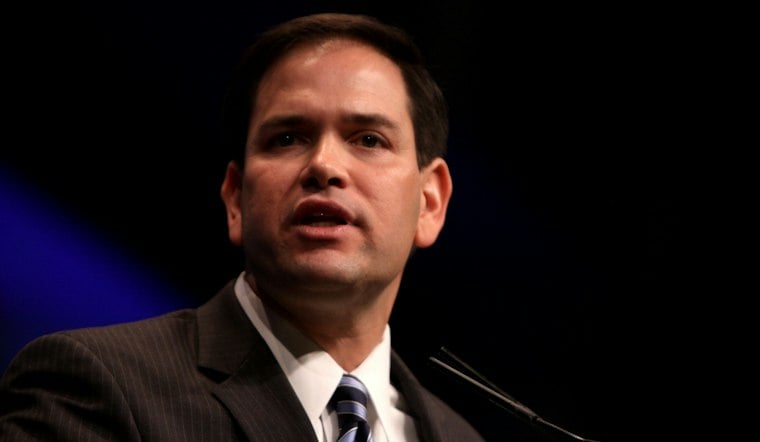
Secretary of State Marco Rubio has waived human rights restrictions on $320 million in military aid to Egypt, funds that had been withheld over concerns about torture, arbitrary arrest and other abuses. The waiver, signed in Washington, credits Cairo's help in dealing with Iran since the conflict began earlier in 2026, and clears the way for the money to reach a longtime U.S. security partner whose human rights record has drawn sustained criticism from independent monitors.
The underlying waiver memo was signed by Rubio on September 4, 2026, and formally submitted to congressional committees on September 21, 2026, according to Devdiscourse, which reported that the notification letter explicitly cited Egypt's “helpful role following Operation Epic Fury.” As reported by ClickOnDetroit | WDIV Local 4, the State Department said Rubio signed off on the waiver in the interest of U.S. national security, and that Egypt's importance reflects the concrete security cooperation it provides to the United States.
Operation Epic Fury began on February 28, 2026, with initial strikes, according to U.S. Central Command. An Associated Press report described Egypt's mediation efforts. ClickOnDetroit reported that Rubio described Egypt's role in the war with Iran as helpful, and the administration has said it will continue raising human rights matters in its dialogue with Egypt even as the funds move forward.
A Decades-Old Security Relationship With Strings Attached
The United States provides roughly $1.3 billion in annual economic and military assistance to Egypt, with $320 million of that allocated specifically for Foreign Military Financing, money recipient nations use to purchase U.S.-produced weaponry. That arrangement traces back to the 1979 Egypt-Israel Peace Treaty and has held at approximately $1.3 billion annually since the late 1980s, according to the Middle East Democracy Center.
Congress inserted the human rights restriction into the aid package specifically to pressure Cairo, and the State Department has pointed to credible reports of torture, arbitrary arrest, child labor and restrictions on expression in Egypt. Annual foreign operations appropriations legislation mandates those human rights conditions on a portion of Egypt's military funding unless the Secretary of State issues a waiver, per The Jerusalem Post, which detailed the statutory criteria Rubio's certification invoked: that releasing the funds was necessary for counterterrorism, border security or nonproliferation programs, or otherwise vital to national security priorities.
A Familiar Pattern Across Administrations
Both Republican and Democratic administrations have granted these waivers routinely. The Biden administration issued one in September 2024, citing Egypt's assistance in U.S. efforts to end the Israel-Hamas war in Gaza, and that decision marked the first time in three years Egypt received its full aid allocation without funds withheld, according to Human Rights Watch. Between 2021 and 2023, the U.S. government had repeatedly withheld portions of Egypt's military assistance over human rights concerns, holding back $130 million in both 2021 and 2022 and diverting $85 million in 2023, as Congress sought to use the funding as leverage for progress on political prisoners and civil liberties, the Washington Post reported.
Rubio's own history with Egypt's aid predates this latest waiver. In January 2025, as secretary of state, he issued an immediate freeze on nearly all U.S. foreign aid pending an 85-day review, but carved out immediate exceptions protecting Foreign Military Financing specifically for Israel and Egypt, even as the administration paused tens of billions in non-military assistance elsewhere.
Rights Groups Push Back
Human rights organizations including Human Rights Watch and Amnesty International have consistently criticized these national security waivers, arguing that overriding congressional conditions grants impunity to Cairo while political repression continues. Amnesty International has reported ongoing abuses in Egypt, including arbitrary arrests and suppression of independent civil society. Egypt's human rights record is regarded as problematic by many experts, and President Abdel Fattah al-Sisi, who took power following a 2013 military coup, secured re-election in late 2023 in a process where main opposition challengers were barred or intimidated, according to Freedom House.
The notification letter went to committees on September 21, 2026, and it remains unclear how members of the relevant congressional foreign relations committees will respond, or whether rights advocates will push for legislative changes to tighten the executive's waiver authority in future appropriations cycles.
The diplomacy underlying the waiver played out publicly in recent days. Rubio addressed audience members last Tuesday ahead of President Donald Trump's scheduled remarks at the Andrew W. Mellon Auditorium in Washington, and Egyptian Prime Minister Moustafa Madbouly addressed the 81st session of the United Nations General Assembly on September 25, four days after the letter reached Capitol Hill on September 21. The episode echoes the broader fight over executive authority during the Iran war, which Hoodline previously reported prompted the House to vote repeatedly to limit the president's war powers.





