

























































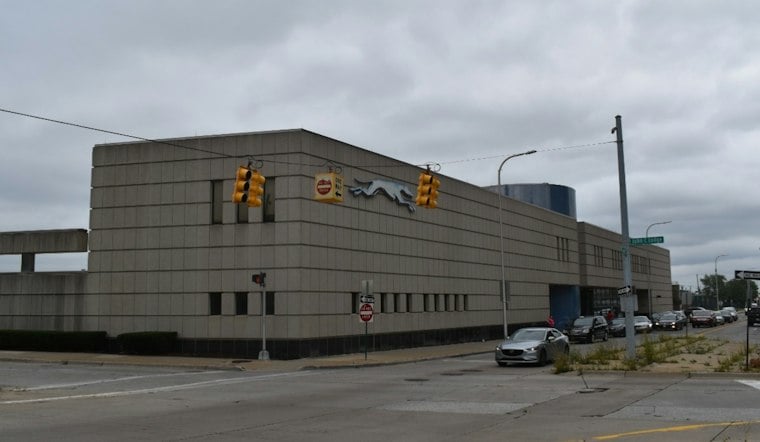
A homeless Saginaw man with a documented history of mental health crises was found wielding a knife at a downtown Detroit Greyhound station earlier this month, just weeks after a judge ordered him into psychiatric treatment — the latest chapter in a case that has left police in two Michigan cities bracing for something worse. Travis Moultrie has had 36 documented interactions with police across four agencies over six years, encounters that included threats, knives, and claims that he was the devil or wanted to kill everyone.
According to WXYZ Channel 7, police reports tied to Moultrie include at least 20 allegations of threatening behavior and 12 reports referencing knives, along with at least five mental-health petitions seeking his hospitalization. In one incident last year, Moultrie pulled out a folding knife during an argument with a liquor-store clerk. In August, a police report said he made threats at local businesses and ran into traffic.
A Cycle of Hospitalization and Release
Moultrie was hospitalized in August and released by September, according to the station's reporting. That same month, police were called after a driver reported Moultrie punching the driver's car outside a liquor store. On September 23, a Saginaw County probate judge ordered him hospitalized for up to 60 days — but he was released within two weeks, placed under a court order for assisted outpatient mental-health treatment in Saginaw County instead of remaining hospitalized.
He was seen back on Saginaw streets earlier that week, the outlet reported. Then, on October 5, Moultrie was found wielding a knife at the downtown Greyhound bus station in Wayne County — just 12 days after the judge had ordered him into psychiatric treatment, police said. Detroit Police Captain James Domine said Moultrie was armed, hostile, and allegedly swinging a knife in the air when officers confronted him. He was arrested by Detroit police before officers took him to a nearby hospital, where he was held until stabilized.
Officers Who Know Him by Name
Bay City Director of Public Safety Caleb Rowell told the station his officers have encountered Moultrie at least 100 times. Rowell described a pattern of many service calls, concerned citizens, and a lack of good answers. Police had arrested and petitioned Moultrie before, Rowell said, but he kept returning to the street without many of the services he needed.
“There’s just not a system set up to deal with that until the unthinkable happens. And somebody gets killed or seriously injured,” Rowell said, per the same WXYZ report. He added that he expected something to happen after Moultrie's release. Moultrie has criminal convictions for home invasion, weapons charges, and assaulting, resisting, or obstructing police, the station reported.
Moultrie's father, Rayshon Moultrie, said his son's behavior had worsened and was the worst he had ever seen. He said Travis's mental health struggles were compounded by bouts of alcoholism, and that he could not help his son because previous stays at mental institutions had not worked.
A Statewide Pattern of Falling Through the Cracks
Moultrie's case echoes a broader problem documented across Michigan's court system. Wayne County mental health providers filed legally required treatment plans in just 453 of 1,380 granted petitions in 2025 — only 33% of the time — according to an investigation by wxyz.com. The Wayne County Probate Court responded by sending a letter to 21 mental health providers countywide, instructing them to follow the court's orders or face consequences. Milton Mack has also discussed provider compliance with court orders.
That gap played out in downtown Detroit weeks before the Greyhound incident. Devon Watson was accused of fatally stabbing 34-year-old Jaquoya Wix after previously threatening to kill people, according to the Detroit Free Press. Police had taken Watson to a Trenton emergency room on July 3 for court-ordered hospitalization. At a probate hearing, a psychologist testified that he was very psychotic and described his threats. A judge granted a treatment plan combining up to 60 days of hospitalization and 180 days of outpatient treatment — maximums that, in Watson's case, preceded the fatal stabbing.
A separate case in Bay County underscores the pattern. On October 16, a 57-year-old Bangor Township man allegedly forced his way into an apartment and attacked his 73-year-old neighbor with a butcher knife before barricading himself inside, according to MLive. The standoff lasted several hours and ended only after the Michigan State Police Emergency Support Team used an armored BearCat vehicle to punch holes in walls and reach the suspect.
Thin Data, Limited Beds
Statewide, Michigan probate courts received 17,425 petitions for involuntary mental health treatment in 2024, according to a data brief from Wayne State University's Center for Behavioral Health and Justice. Of those, 42% — 7,304 petitions — resulted in a court order for treatment. Courts granted 244 assisted outpatient treatment-only orders that year, a 79% grant rate among 308 such petitions filed statewide. Roughly 1.79 million Michigan adults live with mental illness, yet only about 0.4% were subject to any form of court-ordered treatment in 2024, the center found.
The center also noted that Michigan has limited data evaluating how effective assisted outpatient treatment actually is at keeping people stable once they leave a hospital. Michigan's four state psychiatric hospitals had an average census of 568 people in 2024, including 545 adults and 23 children, even as the state reports 2,499 licensed psychiatric beds for adults and 316 for minors statewide. Staff shortages and a lack of specialized facilities have made some of that recorded capacity unusable, pushing patients toward emergency departments, law enforcement, and the justice system, according to Bridge Michigan. State lawmakers have called the system “horribly underserved” after hearing from providers, families, and law enforcement; recently announced projects are expected to add more than 200 new long-term and short-term care beds.
Advocates Call for a Proactive Approach
Kevin Fischer, president of the Michigan chapter of the National Alliance on Mental Illness, said the resources invested in meeting the needs of people with severe mental illness fall far short of those needs. He said responses to these situations are reactive rather than proactive — a dynamic that mirrors what officers like Rowell describe encountering on the street, case after case, long before any crisis forces a change.





