

























































A documentary examining the 1985 tripwire-bomb assassination of Palestinian American activist Alex Odeh screens Saturday evening at the Museum of Photographic Arts in Balboa Park, part of the San Diego Arab Film Festival’s fall event. The film, Who Killed Alex Odeh?, pairs with El Sett, a biopic on Egyptian singer Umm Kulthum, for an evening that opens at 6 p.m. and runs with an Arabic dinner on the side.
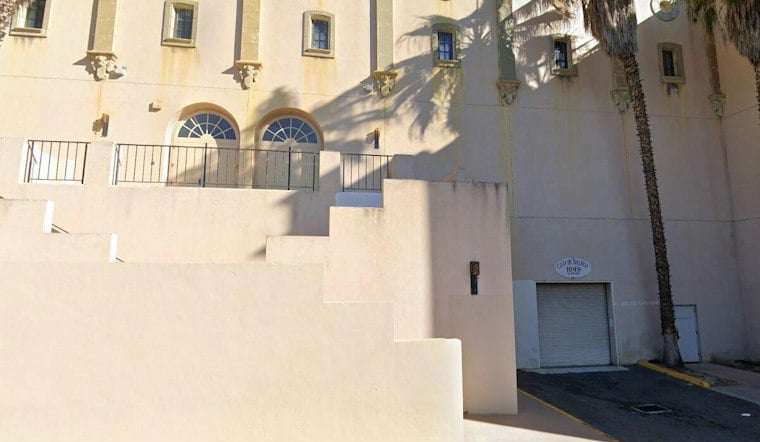
According to KPBS, the fall films event takes place Saturday at the Museum of Photographic Arts at the San Diego Museum of Art, located at 1649 El Prado in Balboa Park. Who Killed Alex Odeh? screens at 6 p.m., followed by El Sett at 8 p.m., with an Arabic dinner available for purchase starting at 5:15 p.m. The event is open to all ages, though general admission runs $15 and student tickets $12, with film and dinner tickets sold separately. Tickets are available online at sandiegoaff.org or at the door.
A 40-Year Search for Answers in Santa Ana
Who Killed Alex Odeh? examines the killing of Odeh, a Palestinian American teacher and community leader who was assassinated by a tripwire bomb planted in his Santa Ana office in October 1985. Despite substantial evidence and identified suspects, the case was never solved, per the seed facts behind this event listing. Directors Jason Osder and William Lafi Youmans built the film around the assassination’s unresolved aftermath, framing it as what the 2026 Sundance Film Festival describes as a 40-year quest for justice that followed the bombing.
The documentary tracks a renewed investigation as it unfolds, following new leads and previously hidden records as they surface, according to Watermelon Pictures, which acquired the film for North American distribution. Watermelon Pictures has said it plans a theatrical release later this year. The film carries a content note from its Sundance listing stating it contains mature material that may not be appropriate for all ages, even though the Balboa Park screening itself is open to all ages.
The film has already drawn attention on the festival circuit. It won the U.S. Documentary Special Jury Award for Journalistic Excellence at the 2026 Sundance Film Festival, one of two prizes it collected there, per the Jewish Film Institute. It also had its international premiere as a documentary selection at the 2026 Berlinale Special, according to the Berlinale.
Umm Kulthum’s Rise Takes the Second Slot
The night’s second film, El Sett, chronicles the life of Umm Kulthum, the Egyptian singer the festival listing describes as the greatest Arab singer the world has ever known. The film opens backstage at her historic 1967 concert at the Olympia in Paris, with Mona Zaki delivering the lead performance, as detailed by the International Film Festival Rotterdam. The movie is based on Umm Kulthum’s real-life story and depicts what organizers describe as her final stage performance, one capable of helping heal a nation after a great defeat.
Rotterdam’s program notes that the film ties Umm Kulthum’s career to major political turning points of her era, including the Egyptian Revolution of 1952 and the broader dream of Arab unity. That thread runs alongside the more intimate story of a singer whose path began in village religious recitations and ended on the largest stages in Cairo and beyond.
A Festival Built on Local Nonprofit Roots
The fall screening is supported by KARAMA, the local nonprofit behind the broader San Diego Arab Film Festival, which sandiegoaff.org describes as focused on understanding Arab and Islamic issues, particularly the Palestinian issue. KARAMA can be reached at 619-243-0827. The group’s festival has grown considerably since its 2012 debut, when it screened three feature films and five short films from six countries; the 2026 edition includes eight features and eight shorts from across the Arab world and its diaspora.
This year’s full festival lineup leaned heavily into Palestinian storytelling, with three films from or about Palestine among those shortlisted for the Best International Feature award, organizers told KPBS in an earlier report on the festival’s main run. Six films in the 2026 program were official country submissions for that same category, representing Palestine, Tunisia, Jordan, Lebanon, Iraq and Morocco. The festival’s standard programming pairs each feature with a short film and offers cafeteria-style Arabic dinners each evening, with all films shown at the John and Irwin Jacobs Theater inside the Museum of Photographic Arts.
The museum itself has anchored Balboa Park’s Casa de Balboa building since its founding in 1983 and operates on a pay-what-you-wish admission policy for its regular exhibits. Pricing for the fall event’s Arabic dinner is listed at $20, though a separate festival-wide listing from KPBS put the dinner price at $18 per evening; the discrepancy between the two KPBS listings was not resolved in the available materials. Either way, dinner and film tickets must be purchased separately for Saturday’s event.





