

























































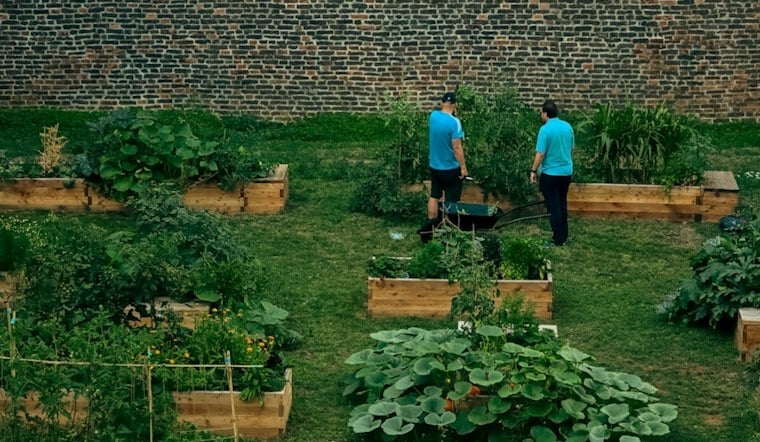
A community garden in San José that spiraled into disrepair during the pandemic and became a site for homeless encampments is getting a second life, Mayor Matt Mahan announced, with the city having built new fencing and irrigation lines and installed planter boxes ahead of a reopening planned for next month.
Mahan said the garden fell apart during the pandemic years and turned into an encampment site before the city cleared the area after moving people experiencing homelessness indoors. “During the pandemic, this garden fell into disrepair and became a site for encampments. After we built more than 1,000 shelter beds to house our homeless neighbors, we moved people indoors, cleared the area,” Mahan wrote in a post on X
. The mayor's office lists the effort as the “Coyote Creek Community Garden Revitaliation” on its community clean-ups page, which describes litter pickup and debris removal as part of the work.
The garden has operated since January 1994, according to a city facility listing. Mahan's post credited several local groups with helping move the project forward, thanking PRNS, SJSU College Corps, the San José Conservation Corps, the Sheriff's Office and the Seven Trees Neighborhood Association. He also encouraged neighbors to join the next clean-up.
Part of a Broader Shelter Push
The garden's turnaround is tied, in the mayor's telling, to the city's larger push to add shelter capacity. San José added more than 1,000 shelter beds in 2025, according to the Office of Mayor Matt Mahan, and officials say that between January 2025 and August 2026 the city moved more than 1,700 people off the streets. The mayor's office also says San José met its goal of bringing 705 additional shelter units online by the end of 2025, a benchmark also reported by the Mercury News.
Housing Director Erik Solivan told the newspaper that the city's shelter network doubled in size over the two years leading up to September 2026. That expansion underlies the city's broader claims about declining street homelessness, though the exact scale of that decline is disputed depending on who's doing the counting.
Conflicting Numbers on Homelessness Trends
The mayor's office says unsheltered homelessness fell 32% in San José over an 18-month period, a figure also cited by San José Spotlight using what the outlet described as a new multi-source counting model. But the Mercury News reported that a separate city-commissioned model put the decline at 30% between February 2025 and August 2026, with the unsheltered population dropping from 5,477 to 3,702 people over that stretch — a different percentage drawn from different dates than the mayor's office figure. The newspaper also reported that Santa Clara County said it had not reviewed the city's model and could not assess its validity or accuracy, since the methodology had not been shared with the county.
Context from the city's own prior counts complicates the picture further: San José's official tallies had shown the homeless population remaining above 6,000 people from 2023 through January 2025, per the Mercury News, before the recent reported declines. San José Spotlight has reported that the city maintains roughly 2,200 shelter beds across about 20 sites, while separate city pages describe plans for nine new or expanded shelter and safe-parking sites expected to bring total capacity to around 1,840 beds and spaces, and other city materials have referenced almost 1,300 interim housing beds once certain construction projects wrap up — figures that come from lower-confidence city snippets and aren't easily reconciled with one another.
Mahan's office has also pointed to state and national trends to frame San José's reported progress, noting that unsheltered homelessness has climbed nearly 7% across California and 26% nationwide since 2019. For now, the more immediate and tangible sign of change will be the garden itself, with fencing and irrigation completed and new planter boxes installed before its planned reopening next month.





