

























































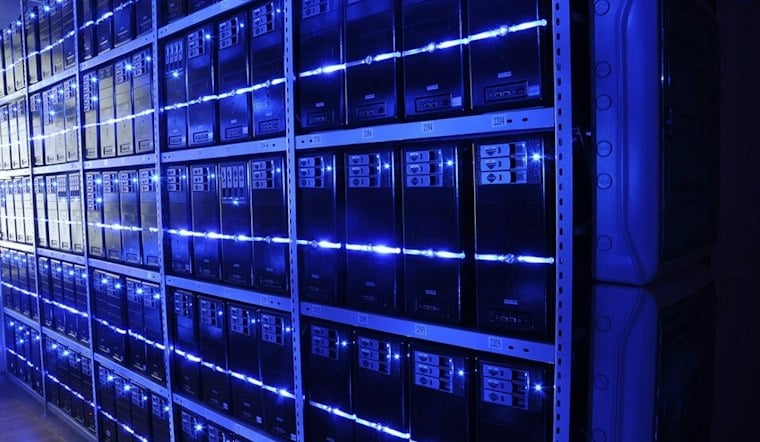
San Mateo County supervisors will consider a resolution on Oct. 20 that could pave the way toward banning new data center construction on unincorporated land, a move triggered by a now-dead proposal to put one of the power-hungry facilities at the county's own Event Center fairgrounds.
The resolution, sponsored by Supervisors Noelia Corzo and Lisa Gauthier, would direct county staff to consider new zoning regulations for data centers and examine how much control the county actually has over them, according to the San Mateo Daily Journal. Corzo said she never supported putting a data center at the Event Center, but added that the proposal kicked off an important discussion about local resource use and the community impacts of data centers — one she said is only growing louder in public discourse.
A Fairgrounds Proposal That Went Nowhere Fast
The controversy traces back to July 2026, when Santa Ana-based Global Stack LLC proposed eight data centers across the Bay Area, including one at the San Mateo County Event Center, as part of a sweeping plan to build edge computing facilities, helipads, and parking garages on 70 California fairgrounds by 2030. The newly formed company, founded that same March with no prior development history, pitched the proposal as a public-private lease arrangement, with a 100-year land agreement proposed for the Cow Palace, according to SFist.
San Mateo County Executive Mike Callagy said there was zero interest in establishing a data center at the Event Center, and the proposal was quickly rejected. The Event Center, located at 1346 Saratoga Drive in San Mateo, spans 48 acres of county-owned land, per the Compute Atlas facility database.
Global Stack's fairground push met resistance well beyond San Mateo. The Calistoga Fairgrounds Advisory Committee dropped its own discussions with the company, while the Cow Palace in Daly City was evaluating a similar pitch, SFist reported. Lisa Diaz Nash was listed as a decision maker on a Change.org petition opposing the Event Center proposal, which also included her supportive response.
County Zoning Has No Rules for Data Centers — Yet
Even though the Event Center proposal collapsed, it exposed a gap county officials want to close: San Mateo County's zoning regulations currently do not regulate the siting, construction, or operation of large-scale data centers on unincorporated land at all. The resolution headed to supervisors would direct staff, per the staff report, to identify ways to avoid adverse effects on community public health, safety, and well-being from future projects.
That staff review will consider whether data centers are an appropriate land use in the county at all, or whether officials should move to ban their construction outright. Any ordinance actually banning data center development would be considered at a later date, separate from the Oct. 20 resolution.
Part of a Wider Bay Area Pushback
San Mateo County's move lands amid a broader wave of Northern California jurisdictions pumping the brakes on data center growth. Brisbane's City Council unanimously approved a 45-day moratorium on Oct. 1, the San Francisco Board of Supervisors followed with its own unanimous freeze on Oct. 6, and the Oakland City Council enacted a similar pause in October, according to the California City News. These interim urgency bans rely on California Government Code Section 65858, which lets cities and counties pass a 45-day freeze by a four-fifths vote to study land-use and grid impacts while permanent zoning rules are drafted, with the option to extend up to two years.
Some cities have already gone further. Calexico passed a permanent citywide data center ban in September, following Monterey Park's permanent ban enacted back in June, reflecting how local resistance across California has shifted from temporary pauses to outright prohibition.
Large-scale data center development is accelerating nationwide alongside the rapid buildout of artificial intelligence systems, and residents in communities that already host major facilities are seeing the trade-offs. Data center construction broadly can drive up energy consumption and water use while generating air and noise pollution, concerns that have shown up repeatedly in local debates across the state.
State Lawmakers Add New Guardrails
San Mateo County's own representative in Sacramento has been pushing parallel reforms. On Sept. 21, Governor Gavin Newsom signed seven data center regulation bills, including Assembly Bills 2469 and 2619 authored by San Mateo Assemblymember Diane Papan, which require developers to disclose estimated water usage and submit water scarcity plans before securing local approvals, according to the Office of the Governor of California. The governor described the package as the nation's most comprehensive data center laws.
A March 2026 Gallup survey found that 71% of Americans oppose a local AI data center.
A countywide ban on unincorporated land would require further staff review and later consideration of an ordinance. The Oct. 20 resolution would initiate the staff review, with the fate of a broader ban still to be decided.





