

























































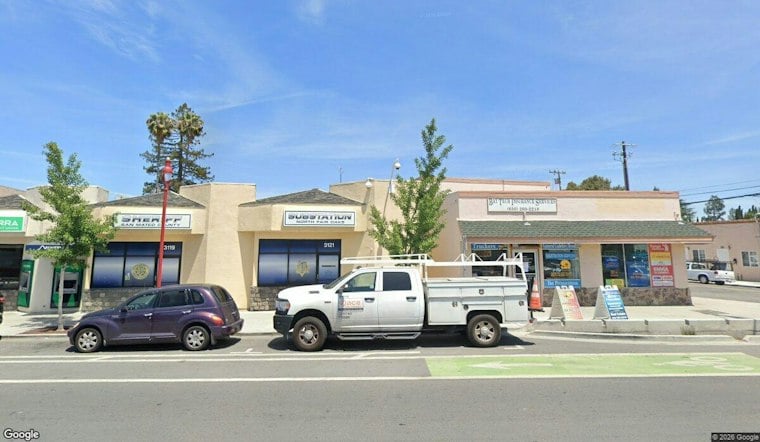
San Mateo County Supervisor Jackie Speier wants to know exactly who the county has shielded from federal immigration holds, and her request for that data has cracked open a debate the board of supervisors has mostly avoided since adopting a zero-cooperation policy with Immigration and Customs Enforcement. The question at the center of it: should the county ever make an exception for people convicted of violent crimes?
A Data Request With Teeth
Speier asked for more detail about immigration detainers, including which requests involved people convicted of crimes — violent felonies among them — and which involved repeat offenders, according to the San Mateo Daily Journal. The newspaper reports that since March 2025, ICE had sent 1,666 administrative requests to the San Mateo County Sheriff's Office asking that people be held an extra two days so federal agents could pick them up. The Sheriff's Office did not comply with any of those requests, and the county's current policy bars its sheriff from coordinating with ICE on immigration enforcement absent a judicial warrant.
Speier said she supports vulnerable communities but believes the public has a right to know the information behind those numbers, the paper's report notes. Her colleague, Supervisor Noelia Corzo, described the inquiry as a step toward amending the county's existing noncooperation policy — a characterization that frames the request as more than a routine records check.
The Board Splits on How Far to Go
The board ultimately approved a motion asking the Sheriff's Office to return with more detailed information on detainer requests from 2022, per the same account, though no return date was specified. Corzo opposed the motion, while Supervisor David Canepa was absent. Supervisor Lisa Gauthier said she saw no problem with the information report as presented.
Supervisor Ray Mueller backed Speier's push for the data but said the request was not a move to address or weaken the county's ordinance — a notable distinction given that Mueller was the lone dissenter when the board originally adopted its noncooperation policy. The board had initially presented the data as a routine report on immigration activities before Speier withdrew the item for further discussion.
What State Law Actually Allows
California's Values Act, known as SB 54 and enacted in 2017, permits — but does not require — local law enforcement agencies to respond to ICE notification or transfer requests when someone has been convicted of serious or violent felonies listed under California Penal Code Sections 1192.7(c) or 667.5(c), according to the California Attorney General's Office. San Mateo County's local noncooperation policy, adopted in April 2023, included no carve-out for violent felony offenders, meaning the county has chosen a stricter standard than state law requires.
That gap between what the state permits and what the county has chosen to do is exactly the terrain Speier's request now opens up for debate. Supervisors have been reinforcing the county's non-cooperation framework rather than loosening it: in November 2025, the board introduced and gave first-vote approval to an ordinance from Corzo and Mueller that restricts federal immigration agents' access to county facilities and requires quarterly reporting by local law enforcement, according to the County of San Mateo.
Leadership Turnover at the Sheriff's Office
The data request also lands amid recent upheaval inside the agency that would carry out any policy change. The board voted unanimously in October 2025 to remove then-Sheriff Christina Corpus from office following independent leadership investigations, according to KQED. Undersheriff Dan Perea temporarily acted as sheriff. Kenneth Binder was appointed sheriff the following month.
Speier, who returned to the board in January 2025 after a roughly four-decade gap — she previously served on the board from 1980 to 1986 before a career that included the California Legislature and 15 years in the U.S. House of Representatives — brings that long institutional memory to the inquiry, per Peninsula 360 Press. She later returned to local governance in other capacities too, including a seat on the SamTrans board, as reported earlier by Hoodline.
A Regional Pattern of Non-Cooperation
The Sheriff's Office had not complied with any of 1,666 ICE requests made since March 2025, according to the San Mateo Daily Journal. San Mateo is far from alone in this posture: Alameda, Santa Clara, and Santa Cruz counties have also pursued similar noncooperation policies. The county has also moved on the land-use front, unanimously enacting an urgency ordinance in August 2026 that temporarily halts new or expanded detention facilities in unincorporated areas.
The county has backed its non-cooperation stance with money as well as ordinances. In June 2025, supervisors unanimously approved nearly $1.75 million in Measure K funding for the Legal Aid Society of San Mateo County to provide rapid response, affirmative, and removal defense legal services to immigrant residents through mid-2026, according to Coastside Buzz.
Looming over all of it is a statewide deadline: California Senate Bill 580, signed into law in 2025, requires local jurisdictions statewide to adopt Attorney General model rules prohibiting local assistance with civil immigration enforcement by January 1, 2027. Whether San Mateo County carves out an exception for violent felony offenders before then — or holds the line on total non-cooperation — now depends on what the Sheriff's Office finds when it digs back through the 2022 detainer records the board has asked for, with no return date yet on the calendar.





